

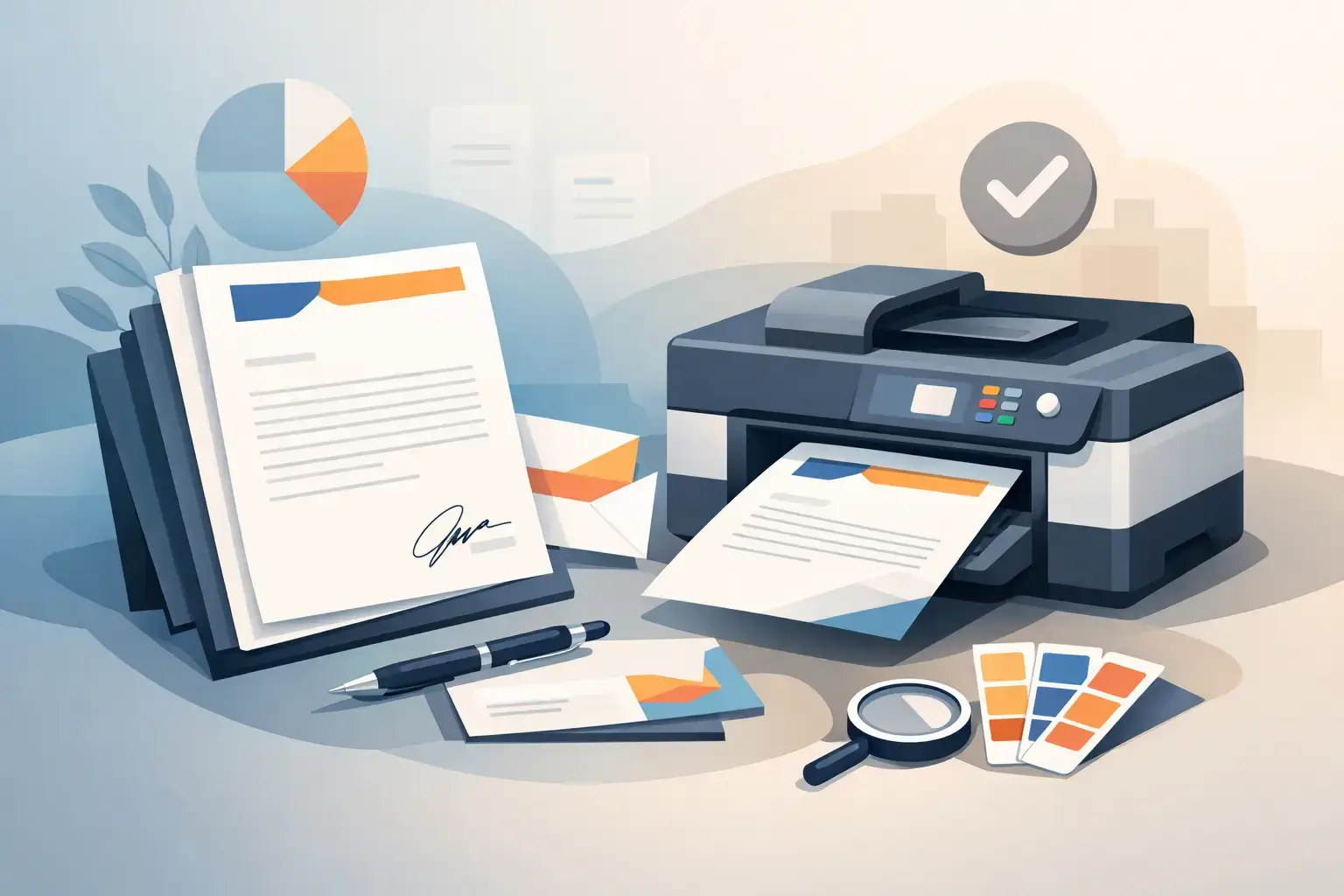
A quote, invoice, contract, or cover letter on plain paper can do the job. But it does not do much for your brand. Custom letterhead printing gives everyday business documents a cleaner, more credible presentation, especially when you are sending paperwork to clients, vendors, partners, or government offices.
For many businesses, letterheads are not a branding extra. They are a working stationery item used for billing, approvals, internal memos, legal documents, welcome letters, and formal correspondence. That means the buying decision is less about decoration and more about print quality, paper performance, and whether the final piece fits daily office use without creating issues with pens, stamps, or printers.
What custom letterhead printing needs to do
A good letterhead has a simple job. It should identify your business immediately, keep the page easy to read, and hold up across repeated use. If the logo looks sharp but the paper jams in a laser printer, that is a problem. If the stock feels premium but the layout leaves no room for text, that is also a problem.
The best custom letterhead printing balances branding with function. Your business name, logo, contact details, and visual identity should be clear, but not so heavy that the page becomes cluttered. Most companies get better results with a clean top header or a controlled header-and-footer layout than with aggressive full-page graphics.
This matters even more for businesses that issue documents at volume. Restaurants sending vendor paperwork, clinics preparing formal letters, retail offices processing invoices, and event teams issuing contracts all need stationery that looks professional and behaves predictably.
Paper stock matters more than most buyers expect
When buyers compare letterheads, they often start with design. In practice, paper stock has just as much impact on the final result. Weight, surface, brightness, and printer compatibility all affect how your stationery performs once it leaves the print box and enters daily use.
A standard uncoated stock is usually the safest option for letterheads. It accepts ballpoint pen writing well, handles stamps better than slick coated paper, and works more reliably in office copiers and printers. If your team plans to overprint names, dates, payment terms, or customized text later, uncoated paper is usually the practical choice.
Thicker is not always better. A heavier stock can feel more substantial, but if the letterhead is meant for frequent office printing, very thick sheets can create feeding issues depending on the machine. Lighter stocks keep operations simple, while mid-range weights often give a better balance of appearance and usability.
Brightness also plays a role. A clean white sheet makes colors look sharper and text easier to read. That said, very bright paper can sometimes make formal stationery feel slightly commercial rather than corporate. It depends on your brand. A law office, consultant, or finance business may prefer a restrained look, while a creative agency or retail brand may want stronger visual contrast.
Designing custom letterhead printing for real business use
Letterhead design works best when it respects how the page will actually be used. Many first-time buyers focus on the header artwork and forget about the body area, margins, and printer-safe zones. That leads to stationery that looks good as a flat proof but becomes awkward once a long document is typed onto it.
Start with hierarchy. Your logo should be visible, but it should not overpower the page. Company name, phone number, email, address, and website should be easy to find without turning the sheet into an ad. If your business has multiple contact points, keep the main office details primary and avoid packing every channel into the top margin.
Spacing is part of professionalism. A letterhead needs enough open area for letters, notices, quotations, and internal communication. Tight layouts may look polished on screen, but they reduce flexibility. This is especially true when multiple departments use the same stationery for different document types.
Color use should also be controlled. Full-color printing can look excellent, but light tints and soft brand elements often work better than heavy color blocks. Large dark areas can interfere with readability, increase visual noise, and make the sheet feel less formal. If your business identity depends on stronger color, using it in the header or footer usually keeps the page more usable.
When premium finishes make sense and when they do not
Buyers familiar with business cards, brochures, and presentation folders often ask whether finishes such as embossing, spot UV, or specialty textures belong on letterheads. Sometimes they do, but this is one of those categories where more finishing is not automatically better.
For daily office stationery, practicality comes first. A basic professional finish on quality paper usually outperforms a decorative approach. Letterheads need to be printable, writable, foldable, and easy to file. Specialty finishes can look impressive on executive correspondence, board documents, or premium welcome packs, but they may be unnecessary for regular billing and administration.
Embossing can add a formal touch for law firms, consultants, real estate agencies, and corporate offices sending high-value correspondence. The trade-off is cost and, in some cases, a slightly less flexible sheet for routine machine handling. Spot UV and glossy effects are less common on working letterheads because they can interfere with writing and make the page feel more promotional than official.
This is where buying intent matters. If the stationery is for general office use, keep it efficient. If it is for senior management, proposal packs, or investor-facing communication, a more refined finish may be worth the upgrade.
Custom letterhead printing for different business types
Not every business uses letterheads the same way, so the right setup depends on what your team sends most often.
A startup usually needs a clean, affordable format that supports quotes, onboarding letters, and vendor communication without overspending on extras. A local retailer may want branded stationery for invoices, supplier requests, and internal paperwork that matches the look of business cards and stickers. Restaurants often use letterheads for official correspondence, licensing paperwork, and purchasing documents, so easy printer compatibility matters more than decorative finishing.
Corporate administrators and procurement teams tend to focus on consistency. They need repeatable print specs, clear sizing, and dependable output across batches. Event organizers may use letterheads less frequently, but when they do, it is often for contracts, sponsorship communication, and venue documentation where presentation still counts.
For service businesses, letterheads can also support trust. Contractors, agencies, clinics, schools, and consultants all benefit when formal paperwork carries consistent branding rather than generic office paper.
Ordering custom letterhead printing without mistakes
Most problems with letterhead orders start before printing. The file may be set up with low-resolution artwork, the margins may be too tight, or the contact details may not match current business information. Small issues become expensive when the order is printed in volume.
Before placing an order, verify the logo quality, spelling, phone numbers, addresses, and email details. Check whether the design includes enough clear space for document text. Confirm whether the letterheads will be handwritten on, stamped, or run through office printers after delivery. Those details affect stock choice and layout.
It also helps to think beyond the first order. If you expect recurring use, choose a format you can reorder consistently. Businesses that source business cards, invoices, envelopes, stickers, and stationery from one supplier usually get a more consistent brand presentation and a simpler purchasing process. For companies ordering across multiple categories, a broad print catalog can save time compared with splitting routine items between different vendors.
Why letterheads still matter
Digital communication handles speed. Printed stationery handles formality. When a client receives a contract, policy letter, payment document, or official notice on branded paper, the message carries more weight than the same text on a blank sheet.
That does not mean every business needs deluxe stationery. It means businesses still need useful, professional stationery. The right custom letterhead printing gives you a document that looks credible, works in the office, and stays aligned with the rest of your printed brand materials.
If you are ordering letterheads, think like a buyer, not just a designer. Choose a layout that leaves room to work, a stock that performs well, and a finish that matches the way the stationery will actually be used. A simple, well-produced sheet usually does more for your business than a flashy one that slows down everyday operations.