

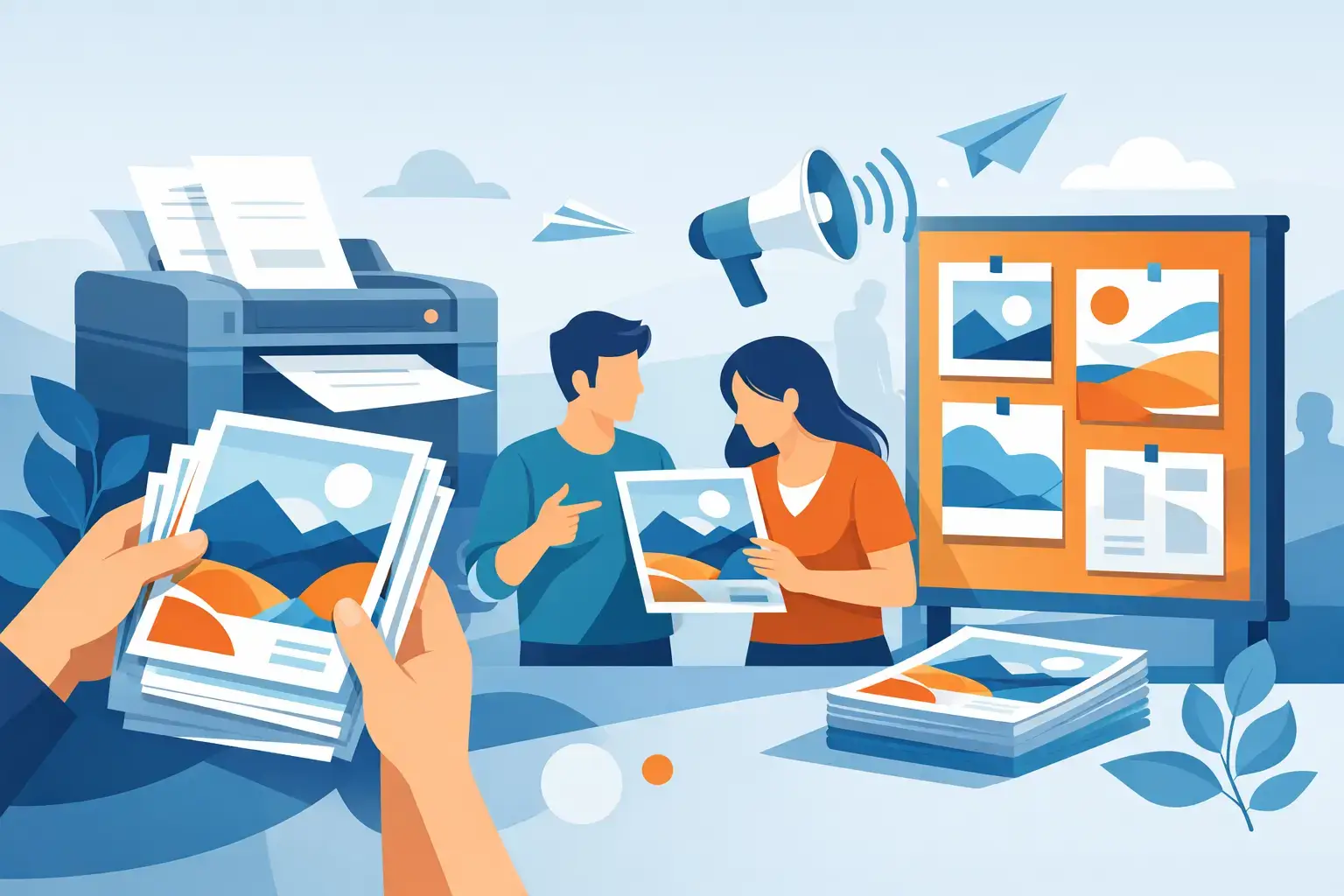
A stack of flyers can either disappear on a check-in table or keep pulling people in all day. The difference usually comes down to a few buying decisions made before print. Flyer printing for events works when the format, stock, finish, and message fit the event itself, not just the artwork on screen.
For event organizers, retailers, restaurants, and small businesses, flyers are still one of the fastest ways to promote attendance, highlight offers, share schedules, or support on-site sales. They are affordable, easy to distribute, and flexible enough to work before, during, and after an event. But low price does not mean every flyer should be ordered the same way.
Why flyer printing for events still delivers
Digital promotion handles reach. Printed flyers handle presence. At local events, trade shows, pop-ups, product launches, fundraisers, school functions, and community promotions, a physical flyer gives people something they can carry, post, hand over, or refer back to later.
That matters when attention is short and foot traffic is mixed. Someone may not follow a QR code in the moment, but they may keep a flyer in a bag and act on it later. A printed piece also helps when your audience is already moving through physical spaces such as lobbies, counters, event booths, reception desks, storefronts, and registration areas.
The practical advantage is control. You decide the size, the paper weight, the finish, the quantity, and the message hierarchy. If you need a simple handout for mass distribution, that is one buying path. If you need a premium leave-behind for sponsors, VIP guests, or exhibitors, that is another.
Choose the flyer around the event, not the default
One common mistake is ordering the same flyer format for every campaign. Event use cases vary too much for that. A nightclub launch, a real estate open house, a school fair, and a corporate conference do not need the same stock or finish.
Standard flyer sizes are popular because they are efficient to print and easy to distribute. Smaller formats work well for street handouts, bag inserts, and front-desk stacks. Larger formats give you more room for schedules, maps, speaker lineups, menus, or sponsor placement. If the flyer needs to explain multiple activities, cramped layout hurts response more than a slightly higher print cost.
Paper stock also changes how the piece is perceived. A lighter GSM can work for high-volume promotional drops where budget and quantity matter most. A heavier stock feels more durable and tends to hold up better during events where flyers are passed around, placed on tables, or carried in pockets and bags. If the event runs outdoors or lasts several hours, durability becomes more relevant.
Paper, finish, and feel affect response
People notice texture and finish even when they do not describe it that way. Gloss can make colors appear brighter and works well for nightlife, food promotions, entertainment events, and image-heavy designs. Matte or uncoated finishes often suit business events, conferences, formal programs, and information-led flyers where readability matters.
If you want a more upgraded presentation, lamination can help. Velvet lamination gives a softer premium feel, while gloss lamination pushes color and shine. These options make more sense when the flyer supports a higher-value event, ticketed experience, brand launch, or upscale venue. For one-day bulk handouts, they may not be necessary.
Special finishes such as spot UV or embossing can also add impact, but they only make commercial sense in the right context. If your event depends on premium brand perception, these upgrades can reinforce quality. If the main goal is low-cost reach at volume, spend the budget on quantity and better distribution instead.
Design for action, not decoration
A flyer should answer the main buying or attendance question in seconds. What is the event, who is it for, when is it happening, where is it happening, and why should someone care now? If any of those details are hard to find, the flyer is underperforming.
Headline space should go to the strongest event message, not a vague slogan. Date, time, venue, and call to action need clear placement. If there is an offer, list it plainly. If there is a program lineup, separate it cleanly. If there is a registration requirement, make that obvious before the flyer gets printed in bulk.
Images help, but only when they support the message. For food events, product visuals can drive response. For business seminars, too many decorative graphics can weaken credibility. For community events, readable details usually matter more than visual effects. The right balance depends on whether the flyer is selling atmosphere, information, or urgency.
QR codes can be useful, especially for ticketing, menu access, maps, or sign-up forms. But they should support the flyer, not replace the basics. Many event flyers fail because all key details are hidden behind a scan. A person should still understand the offer without using a phone.
Flyer printing for events by use case
Pre-event distribution usually needs scale. That means choosing a practical size, an efficient GSM, and a finish that supports high-volume circulation without pushing up unit cost unnecessarily. These flyers often go into bags, onto counters, onto car windshields where permitted, or into direct local handouts.
On-site event flyers serve a different role. They may promote add-on services, future dates, booth offers, food and beverage specials, sponsor messages, or venue maps. In that setting, sturdier stock often performs better because people handle the material more directly.
Post-event flyers can also support follow-up. Retailers may include bounce-back offers. Restaurants may promote catering, lunch specials, or seasonal menus after a food festival or expo. Service businesses may use event handouts to push consultation bookings or store visits. In these cases, the flyer is less about event awareness and more about conversion after contact.
Quantities, timing, and waste control
Ordering too few flyers creates pressure and missed opportunities. Ordering too many can leave you with outdated stock the day after the event. The right quantity depends on venue capacity, expected foot traffic, number of distribution points, and whether the same flyer will be used before and during the event.
A practical approach is to separate campaign stages. Print one quantity for promotion before the event and another for day-of use if needed. That gives you more control over spend and can reduce waste if details change.
Timing matters just as much as quantity. Event print should allow time for proofing, production, and delivery, plus a buffer for corrections. Last-minute flyer orders usually reduce your options. You may have to settle for a stock, finish, or quantity that is available fast rather than ideal for the campaign.
Match flyers with the rest of the event package
Flyers work better when they are not isolated from the rest of your event materials. If the event also needs posters, banners, roll-up displays, stickers, postcards, table signage, branded apparel, or giveaway items, consistency matters. Matching colors, offers, dates, and campaign language across all print pieces reduces confusion and helps the event look organized.
This is one reason buyers often prefer a supplier with a broader catalog. Instead of sourcing flyers from one place and display materials from another, it is easier to coordinate specifications and reorder quickly through one storefront. For businesses managing repeated events or seasonal promotions, that saves time and reduces purchasing friction.
Seaonce fits that buying pattern well because event collateral, signage, and branded support items can be ordered from one source rather than split across several vendors.
Common mistakes that reduce flyer performance
The biggest mistake is trying to say everything. A flyer is not a brochure. If the event has too many messages, decide what matters most and build around that. Another common issue is using premium finishes on low-value handouts where the audience will barely notice the upgrade.
Poor paper choice is another problem. Thin stock may be cost-effective, but it can feel disposable in settings where trust and presentation matter. On the other hand, over-specifying every event flyer increases cost without guaranteed return.
Then there is distribution. Even well-printed flyers fail when they are placed in the wrong locations or handed to the wrong audience. Print quality supports response, but it does not replace a clear offer and a relevant distribution plan.
The best event flyers are usually the simplest ones to order because the decisions are tied to purpose. Start with where the flyer will be used, how many hands it needs to pass through, and what action it should drive. Once those are clear, the right size, GSM, finish, and quantity become much easier to choose. A flyer does not need to be elaborate to perform well. It needs to be printed for the job it has to do.