

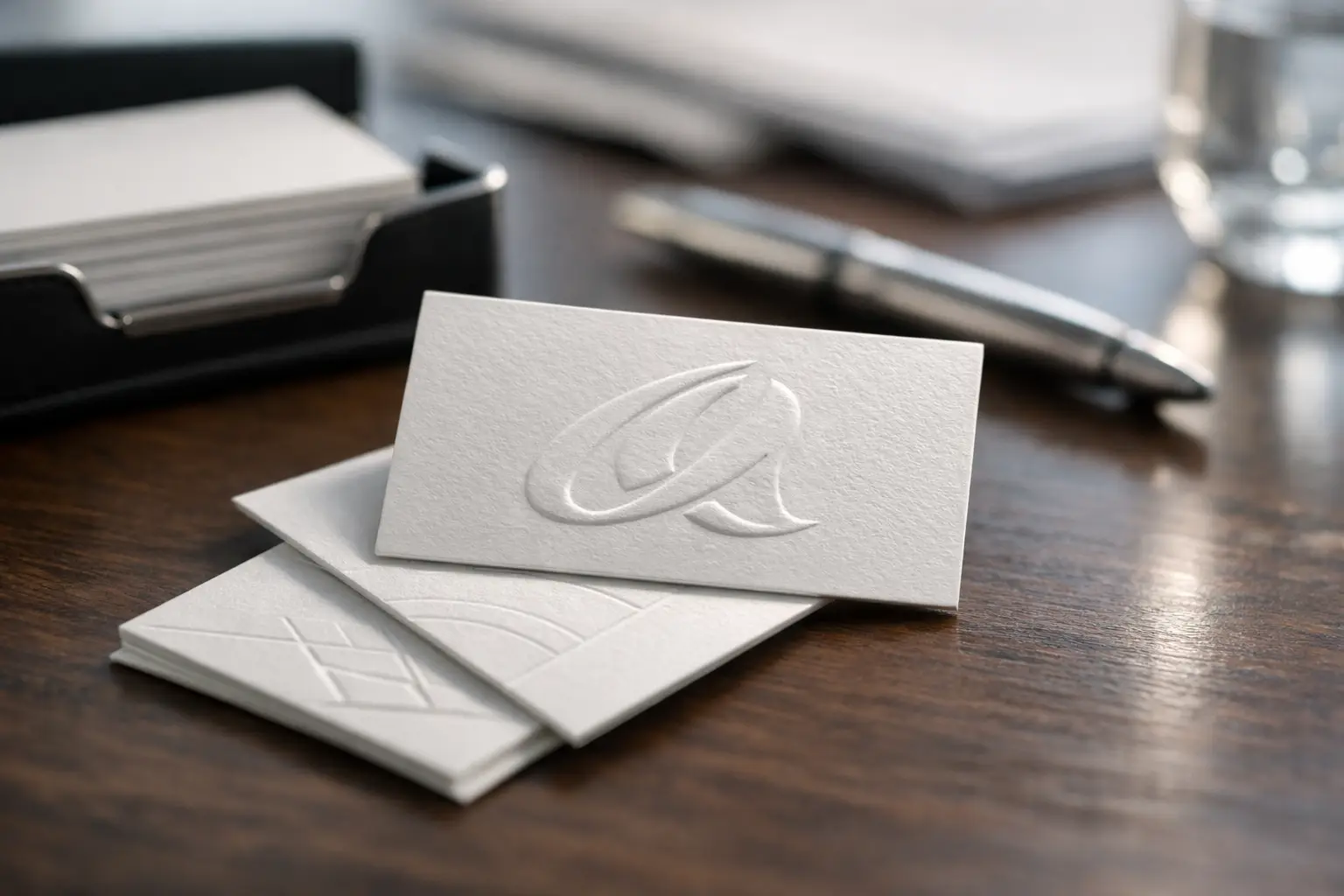
A business card has only a few seconds to earn attention before it goes into a wallet, a desk drawer, or the trash. Embossed business cards give that small piece of print a physical advantage: the recipient can feel the logo, name, or pattern before reading every line. For brands that rely on personal meetings, referrals, events, and premium service, that extra texture can make the card more memorable.
Embossing is not the right choice for every order. It costs more than standard flat printing, requires a design built for the process, and works best when used with restraint. But when the material, layout, and finish match the brand, it turns a routine contact card into a stronger sales tool.
What Embossed Business Cards Add to Your Brand
Embossing creates a raised area on the card stock by pressing the paper with a custom die. The finished result catches light and creates texture that standard ink alone cannot provide. A logo can appear lifted from the surface, a monogram can feel more substantial, or a simple border can add a premium detail without filling the design with extra graphics.
This finish is especially useful when your card needs to support a higher-value service or product. Real estate agents, consultants, law offices, beauty professionals, boutique retailers, hospitality businesses, and event planners often benefit from a card that feels considered rather than mass produced. The card is still practical, but it also signals care in the details.
A raised finish does not automatically make a design better. If the card already has too many fonts, multiple logo marks, long service lists, and crowded contact information, embossing can make it feel even busier. The best results come from a clean hierarchy: one focal point, clear contact details, and enough open space for the embossed area to stand out.
When to Choose Embossed Business Cards
Choose embossing when the card is meant to be kept, handed over in person, or used as part of a premium brand presentation. It is a good fit for appointment-based businesses, high-ticket services, executive networking, launch events, and client gift packages. It can also be effective for a startup that wants a simple logo card to look established without adding unnecessary content.
For high-volume distribution, a standard full-color card or a card with spot UV may be the more practical purchase. If thousands of cards will be placed in takeaway bags, mailed in bulk, or handed out at a crowded trade show, unit cost and fast replacement may matter more than tactile detail. The decision depends on how the cards are used, not just how they look in a product photo.
Embossing works best when your brand already has a strong, recognizable element to feature. That could be a wordmark, icon, initials, seal, or repeating graphic pattern. If the logo has very thin lines or fine internal details, it may need to be simplified for a clean raised result.
Paper Stock and Finish Make a Difference
The paper is the foundation of the emboss. Thick, uncoated card stock generally provides a classic raised effect and a more natural feel. Textured stocks can add character, although their surface may reduce the sharpness of tiny embossed details. A smooth, heavier stock is often the safer choice for logos with defined edges.
Laminated cards create a different look. Matte or velvet lamination can give the card a soft, premium surface, while embossing adds a contrasting tactile point. This combination is popular for modern, minimal business cards with dark backgrounds, white typography, or a single metallic-style design element. Gloss lamination can work as well, but it may reflect more light and compete with subtle raised details.
Consider how the card will be handled. A restaurant owner, contractor, or retail manager may carry cards in a pocket, wallet, or vehicle. A durable stock and protective finish can help the card stay presentable. For a luxury stationery effect, uncoated stock may be preferred, but it can show marks more easily than laminated material.
Embossing should also be distinguished from other specialty finishes. Debossing presses an image into the paper to create a recessed impression. Spot UV creates a glossy, raised-looking coating, but it is not a true paper emboss. Foil stamping adds metallic color and shine. These processes can sometimes be combined, depending on the artwork, stock, and production setup, but each adds cost and design considerations.
Design Setup for a Clean Raised Result
The strongest embossed card designs are usually simple. Use the raised effect on one element that deserves attention, such as the logo on the front of the card. Keep the reverse side focused on the information people need after the meeting: name, title, phone number, email address, website, and location if relevant.
Avoid embossing very small text, hairline rules, dense patterns, or tiny logo details. Fine elements may not hold their shape consistently, particularly on certain paper stocks. Small type should remain printed flat, where it stays legible. Your embossed element needs enough width and spacing to produce a clear impression.
Leave adequate space around the embossed artwork. A crowded layout can cause the raised area to visually interfere with nearby text or graphics. This is particularly important when embossing is close to a fold, trim edge, or an area with heavy ink coverage. A print-ready file should include proper bleed for printed backgrounds, while important text and design elements stay inside the safe area.
Color also affects the result. Embossing itself is defined by light and shadow, so it can be striking on a white or light-colored stock even without special ink. On darker cards, a printed logo, foil accent, or spot color may help the embossed element remain visible. The goal is not to make every effect compete. It is to make the brand mark easy to notice and pleasant to touch.
Before placing a larger order, review the artwork at actual card size. A logo that looks balanced on a large screen can feel oversized, too faint, or overly detailed at 3.5 by 2 inches. If the card will be used by several staff members, confirm that name and contact details are consistent across every version before production begins.
Cost, Quantity, and Ordering Decisions
Embossing requires a dedicated setup process, which is why it normally carries a higher price than standard business card printing. The setup cost has more impact on small quantities. Larger quantities can bring the per-card cost down, making embossing a more sensible choice for businesses that regularly meet customers or maintain a sales team.
Order quantity should reflect how often your details change. A new business may want a moderate run while it finalizes phone numbers, office locations, job titles, and social profiles. A stable business with established branding can order more confidently and reduce repeat ordering costs.
It is also worth planning the card alongside the rest of your printed materials. Matching letterheads, presentation folders, thank-you cards, brochures, stickers, packaging inserts, and event signage create a more consistent customer experience. Seaonce offers a broad range of branded print products, which can simplify purchasing when several items need the same logo, colors, and finish direction.
Best Uses for an Embossed Card
An embossed card performs well when it supports a clear next step. A realtor can hand one to a buyer after a viewing. A salon owner can include one with a product purchase. A consultant can place one inside a proposal folder. A restaurant can use a premium card for private dining contacts, catering inquiries, or loyalty invitations.
For event organizers, embossing can distinguish VIP contacts, sponsor cards, speaker cards, or invitation inserts from standard event materials. For retailers, it can add polish to owner cards, appointment cards, and gift enclosure cards. The format remains small, but the tactile finish gives the recipient a reason to pause before putting it away.
Do not treat embossing as decoration added at the last minute. Start with the purpose of the card, select one brand feature worth raising, and choose a stock that supports it. A well-made card should feel like a natural extension of the service behind it – clear, useful, and worth keeping.