

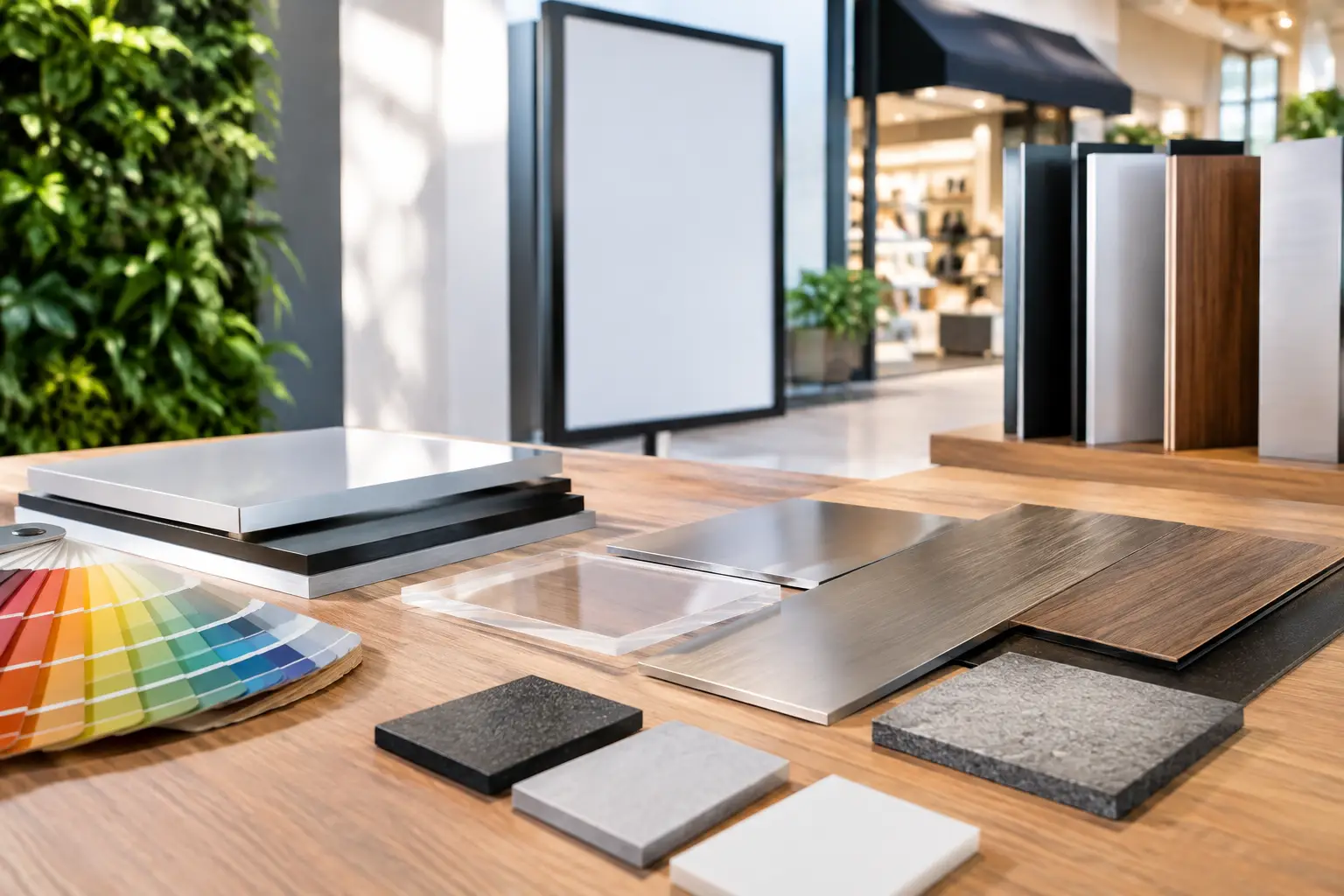
A window graphic that curls after two weeks, a foam board sign placed near a wet entrance, or an elegant acrylic sign printed with the wrong finish can make a good promotion look temporary. This retail signage material selection guide helps you match the material to the location, campaign length, viewing distance, and budget before production begins.
The best material is not always the thickest or most expensive option. A short weekend sale needs a different solution than permanent store hours, a curbside pickup sign, or a branded wall display behind the counter. Start with how and where the sign will be used, then choose the substrate and finish that support that job.
Start With the Sign’s Working Conditions
Before selecting a material, define four basics: placement, expected lifespan, size, and handling. A sign used indoors behind a cashier can prioritize sharp color and presentation. A sign installed outdoors needs weather resistance, stable mounting, and a material that will not warp in changing temperatures.
Also consider how often the message changes. Retailers running weekly promotions usually need affordable materials that are easy to replace. Restaurants may need durable menu boards or table signage that can be wiped clean. Event organizers may need lightweight, large-format displays that travel well and install quickly.
Viewing distance affects the material decision too. Small counter signs are viewed up close, where surface quality and finish are highly visible. Directional signs across a showroom or event hall are read from farther away, so large type, high contrast, and rigid mounting matter more than fine detail.
Retail Signage Material Selection Guide by Application
Adhesive Vinyl for Windows, Walls, and Product Displays
Adhesive vinyl is a practical choice for store windows, glass doors, wall graphics, shelves, counters, and product display areas. It delivers strong color, clean detail, and flexible sizing without the bulk of a rigid board. Use it for sale messages, seasonal graphics, opening hours, QR code promotions, and branded decals.
For short-term promotions, removable adhesive vinyl makes replacement easier and lowers cleanup time. For longer installations, permanent adhesive vinyl offers stronger grip but should be chosen carefully on painted walls, textured surfaces, or leased retail fixtures. Application quality matters. A clean, dry, smooth surface helps prevent bubbles, lifted edges, and poor adhesion.
Window graphics require an additional decision: should customers see the print from inside, outside, or both? Standard vinyl works well for exterior-facing messages. One-way vision film is useful when you want exterior graphics while preserving some visibility from inside the store. It is not the best choice for small text, since the perforated surface can reduce readability.
PVC Board for Durable Indoor Signs
PVC board is a solid option for indoor retail signs that need more strength than paper or foam board. It works well for price boards, aisle markers, service menus, wall-mounted information signs, retail counter panels, and branded displays. The smooth surface supports full-color printing and provides a clean, professional finish.
Choose PVC when the sign will be handled regularly, mounted for an extended period, or displayed in an area where lightweight paper signage would look insufficient. It is also suitable for semi-protected locations such as covered entryways, though prolonged direct exposure to harsh outdoor conditions may require a more weather-ready substrate.
PVC is available in different thicknesses. Thin board is easier to mount and economical for basic indoor use. Thicker PVC has more visual weight and stays flatter at larger sizes. If the sign needs drilled holes, standoffs, or hardware mounting, confirm the final installation method before placing the order.
Foam Board for Short-Term Displays
Foam board is light, cost-effective, and easy to position on easels, counters, shelves, or temporary display stands. It is a strong fit for in-store promotions, presentation boards, product launches, trade show messaging, real estate displays, and one-time events.
Its limitation is durability. Foam board can dent, bend, and absorb moisture, so it is not a good choice for exposed outdoor areas or high-contact locations. It performs best indoors where it can remain dry and protected. For a campaign that lasts a few days or a few weeks, foam board often offers the right balance of price and presentation.
Corrugated Plastic for Outdoor Promotions
Corrugated plastic, often called coroplast, is lightweight, water-resistant, and built for practical outdoor signage. It is commonly used for parking signs, directional signs, curbside pickup notices, construction notices, event wayfinding, and temporary property signage.
The fluted structure keeps the board light while giving it enough stiffness for short- to medium-term outdoor use. It can be mounted with stakes, zip ties, screws, or frames depending on the application. Wind is the main trade-off. Large coroplast signs need secure mounting, and exposed corners can flex in heavy conditions.
For outdoor retail use, keep the message direct. Large lettering, bold colors, and a clear call to action perform better than dense product descriptions. A customer driving into a parking lot has only a few seconds to read the sign.
Aluminum Composite for Long-Term Exterior Signs
Aluminum composite material, often abbreviated as ACM, is a premium choice for durable outdoor signage. It combines a solid core with aluminum faces, creating a rigid, flat panel that works well for storefront information, building signs, parking instructions, site signs, and permanent directional signage.
This material costs more than corrugated plastic or foam board, but it provides better longevity and a more substantial appearance. It is a sensible investment when the same message will remain in place for months or years. For example, a retail center’s pickup-area signs, business hours panel, or tenant directory benefits from ACM’s clean finish and weather resistance.
Plan the installation in advance. ACM is rigid and heavier than temporary boards, so the sign may need drilled holes, brackets, posts, or professional mounting hardware. A strong material cannot compensate for weak installation.
Acrylic for Premium Branded Interiors
Acrylic gives retail signs a polished, modern look. It is suited to reception signs, salon pricing, office directories, wall logos, showroom displays, luxury product information, and branded counter signage. Clear acrylic can create a floating effect, while white or colored acrylic delivers a more solid presentation.
Acrylic is best where appearance matters as much as information. It is more premium than PVC or foam board, but it can scratch and requires careful handling. For added depth, use standoff mounting, layered lettering, or a printed backing. Keep small text large enough to remain readable through reflections and glare from overhead lighting.
Banner Vinyl and Fabric for Large Format Displays
For large promotions, banner material is usually more practical than rigid panels. Vinyl banners work well for storefront sales, outdoor events, temporary fencing, grand openings, and large directional messages. They are flexible, portable, and available in sizes that would be difficult or expensive in board materials.
Fabric displays are a better fit for indoor backdrops, roll-up displays, exhibition booths, and branded photo areas. Fabric offers a softer, higher-end appearance with less glare than vinyl. It is especially useful when customers will be photographed in front of the display.
The trade-off is installation. Banners need hems, grommets, pole pockets, or a display frame based on where they will be used. Do not order a large banner without deciding how it will hang. A properly finished banner lasts longer and looks more intentional.
Choose the Finish for Visibility and Wear
Material selection is only part of the final result. Lamination can protect printed signs from scuffs, moisture, fingerprints, and fading. Gloss lamination makes colors appear more vivid and is effective for bold sale graphics, but it can create glare under retail lighting. Matte lamination reduces reflection and is easier to read up close, making it a practical choice for menus, information signs, and premium displays.
For small-format signs, spot UV can highlight a logo, product image, or callout against a matte surface. It is most effective when used selectively rather than covering every element. If a sign will be touched frequently, such as a countertop price card or service panel, choose a finish that can tolerate daily cleaning.
Avoid Common Ordering Mistakes
Many signage issues begin before printing. Ordering the right material in the wrong size, designing without bleed, or choosing a finish without considering lighting can create avoidable reprints. Measure the installation area, including frames, stands, and mounting points. If the sign sits behind glass, account for reflections and confirm which side of the glass the print will face.
Use high-resolution artwork and keep critical text away from the trim edge. For large-format signs, build files at the correct scale and use readable type sizes. A logo may look sharp on a computer screen but lose impact when stretched across a six-foot banner.
When ordering multiple materials for the same campaign, keep brand colors, fonts, and messaging consistent. A window decal, counter sign, banner, and flyer should look like one promotion, even though each item uses a different substrate.
Order for the Campaign, Not Just the Product
A practical retail signage order starts with the campaign plan. Use vinyl for the window offer, PVC or acrylic for the permanent in-store message, coroplast for parking direction, and a banner or roll-up display for the entrance or event area. This approach prevents overpaying for premium materials where temporary signage is enough, while avoiding low-cost materials in locations that demand durability.
Seaonce helps businesses source signage alongside flyers, stickers, brochures, display products, and branded promotional items from one order flow. Select materials based on the sign’s actual working conditions, then use the finish and mounting method to support its lifespan. A well-chosen sign stays readable, looks professional, and earns its place in the store long after the promotion begins.