

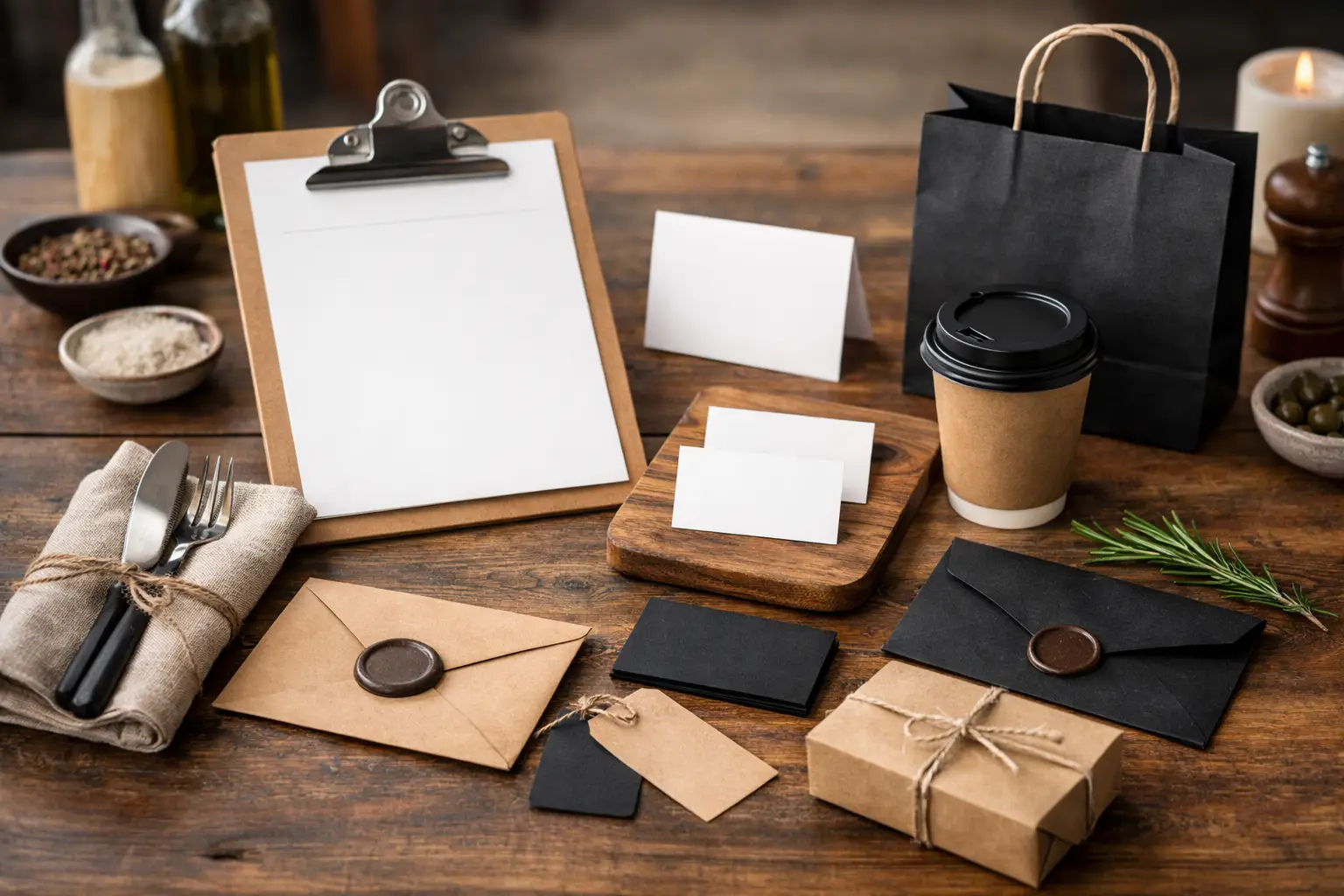
A customer may decide whether a restaurant feels reliable before the first order reaches the table. A clean menu, readable counter sign, branded takeout bag, and well-presented staff uniform all signal care. Restaurant branding print essentials turn those everyday touchpoints into a consistent customer experience, whether you run a café, food truck, quick-service counter, bar, bakery, or full-service dining room.
The goal is not to print every possible product at once. The right mix depends on how customers order, where they spend time, and what they carry away. Start with the items that affect ordering and service every day, then add promotional and premium materials as the business grows.
Restaurant Branding Print Essentials for Daily Service
For most restaurants, the highest-priority print materials are menus, signage, packaging, labels, and operational stationery. These products are handled often, seen closely, and replaced regularly. They need clear design, suitable stock, and a format that works in a busy service environment.
A restaurant with table service may put more budget into durable dine-in menus, table tents, reservation cards, and check presenters. A takeout-focused operation may need branded food boxes, paper bags, stickers, counter menus, and delivery inserts. A food truck may rely heavily on a weather-resistant menu board, vinyl stickers, banners, and staff apparel.
Brand consistency should run through every item. Use the same logo version, brand colors, typefaces, and tone of voice across menus, receipts, promotional postcards, and packaging. Small differences can make a business look disorganized, especially when customers see several printed items during one visit.
Menus Need to Sell and Survive Use
Menus are sales tools, not just food lists. They should make categories easy to scan, highlight profitable items without clutter, and show prices clearly. Keep descriptions short enough for quick ordering, but specific enough to answer common questions about ingredients, spice level, dietary options, or portion size.
Paper choice depends on the setting. A disposable single-use menu can work well for specials, events, counter service, or fast-changing prices. A heavier cardstock menu suits limited-service concepts with moderate table turnover. For long-term dine-in use, laminated menus or wipeable synthetic options are usually more practical, even though the initial cost is higher.
Velvet lamination gives a premium soft-touch finish for upscale restaurant menus, wine lists, or dessert cards. Gloss lamination makes colors stand out and is easy to wipe clean. Matte lamination reduces glare under overhead lighting. If the menu changes weekly, however, a premium laminated format may not be the best purchase. Use an insert system, menu cover, or smaller printed specials card instead.
Menu printing should also account for real lighting conditions. Thin type, low-contrast colors, and dark background designs can be difficult to read in dim dining rooms. Test a proof at the actual size before placing a larger order.
Packaging Carries the Brand Beyond the Restaurant
Takeout packaging is one of the most visible restaurant branding assets because it travels through offices, homes, apartment lobbies, and delivery handoffs. Branded paper bags, food boxes, cups, napkins, stickers, and seals create recognition without requiring a large advertising spend.
For many small restaurants, custom stickers are the most flexible starting point. A die-cut logo sticker can seal a paper bag, label a drink cup, identify a sauce container, or add branding to plain food packaging. Choose a material that matches the use. Paper stickers are economical for dry packaging, while waterproof vinyl stickers are better for cold cups, refrigerated containers, and products exposed to moisture.
Printed packaging should support operations, not slow them down. A complicated folding box may look impressive but create problems during peak hours. A branded bag paired with a clear logo sticker is often faster for staff and easier to reorder. Use packaging colors carefully as well. Dark ink coverage can look strong, but it may show scratches or fingerprints more easily than a simple one- or two-color design.
Add useful details where they matter: social handles, a reorder prompt, catering information, allergen notes, or a QR code for the online menu. Avoid overcrowding every surface. The logo and restaurant name should remain visible from a quick glance.
Signage That Guides Orders and Builds Recall
Restaurant signs need to do two jobs: attract attention and direct customer behavior. Exterior signage brings people in, while interior signage helps them order, wait, pay, find pickup areas, or notice promotions.
A practical signage set may include a storefront sign, window decals, opening-hours decal, counter menu, pickup sign, restroom signs, directional posters, and promotional banners. The exact combination depends on the layout. In a compact café, a counter display and one clear pickup sign may be more valuable than multiple posters. In a larger restaurant, directional signage prevents customers from interrupting staff for basic questions.
Large-format products should be selected for the environment. PVC boards work well for rigid indoor signs and certain outdoor applications. Vinyl banners are suitable for grand openings, seasonal promotions, catering events, and temporary offers. Roll-up displays are useful for mall locations, event catering, trade shows, or restaurant launches because they are portable and easy to store.
Keep the message short. A sign reading “Order Here,” “Pick Up Here,” or “Lunch Special $12” works faster than a paragraph. Use high contrast between text and background, especially for menu boards and window graphics viewed from a distance. If a sign is designed to be read from across a room, increase the type size before adding more copy.
Table Materials Create Extra Selling Opportunities
Table tents, tent cards, placemats, drink menus, and promotional inserts create room for targeted offers. They can promote appetizers, desserts, happy hour, loyalty programs, catering, or limited-time items while customers are already deciding what to order.
These materials work best when they contain one main action. A table tent can feature a seasonal cocktail or a weekday lunch deal. It should not try to advertise every category, event, and social channel at once. Short-run digital printing makes it practical to refresh these pieces for holidays, menu changes, sports events, and local campaigns.
Print Materials for Operations and Repeat Business
Back-of-house and administrative materials are less visible to guests, but they help maintain a professional operation. Receipt books, NCR pads, invoices, purchase order forms, reservation cards, staff checklists, and branded letterheads are useful for restaurants that handle supplier coordination, catering orders, or manual payment records.
NCR pads are especially useful for kitchen tickets, catering order forms, delivery logs, and duplicate receipts. They produce a copy without requiring carbon paper, helping front-of-house staff keep a record while sending instructions to the kitchen or customer. Numbered pads can improve tracking for cash sales, deposits, and custom orders.
For repeat business, postcards and flyers remain effective when they are targeted. A new neighborhood restaurant can use an opening offer postcard. A catering business can hand out brochures to offices and event venues. A QR code can support online ordering, but print should still communicate the core offer without requiring customers to scan anything.
Business cards are also practical for owners, managers, chefs, and catering sales teams. A premium finish such as spot UV or embossing can suit a chef-led concept or high-end private dining service, while standard cardstock is usually sufficient for everyday local outreach. Choose the finish based on the impression you need and the frequency of reorders.
Staff Apparel Makes Service Easier to Recognize
Uniforms help customers identify who can assist them, particularly in busy counters, outdoor events, and large dining spaces. Branded T-shirts, polos, chef coats, aprons, caps, and name badges can also strengthen the restaurant’s visual identity in photos and delivery interactions.
Select apparel for the job, not only the logo placement. Kitchen teams may need breathable chef coats and durable aprons. Front-of-house staff may need easy-care polos or button-down shirts. Outdoor staff may benefit from caps and layered apparel. Screen printing is a cost-effective choice for larger quantities with simple artwork, while embroidery can give polos, caps, and aprons a more structured finish.
Keep logo placement readable and consistent. A small left-chest logo is common for uniforms, while a larger back print can work for delivery teams, event staff, or promotional apparel. Order a sample when color accuracy and fabric feel are important.
Prepare Artwork Before You Order
Good print starts with production-ready files. Use a high-resolution logo, ideally in vector format, so it can scale from a small sticker to a large banner without becoming blurry. For full-color printed products, use CMYK artwork rather than RGB where possible. Extend background artwork beyond the trim edge with bleed to prevent unwanted white edges after cutting.
Check every proof for spelling, prices, phone numbers, social handles, operating hours, and QR codes. Restaurants change menus frequently, and one incorrect price can create avoidable service issues. Review artwork at the final product size, not only on a phone or laptop screen.
If several products are being ordered together, create a basic brand file with approved logo files, color references, fonts, and sample layouts. This reduces inconsistency when menus, signs, stickers, apparel, and promotional products are reordered at different times. Seaonce can support this kind of consolidated purchasing across routine print, signage, packaging-related labels, and branded apparel.
Start with the printed items customers see and touch most often. When those pieces are clear, durable, and consistent, every order, takeaway bag, and counter interaction has a better chance of bringing customers back.