

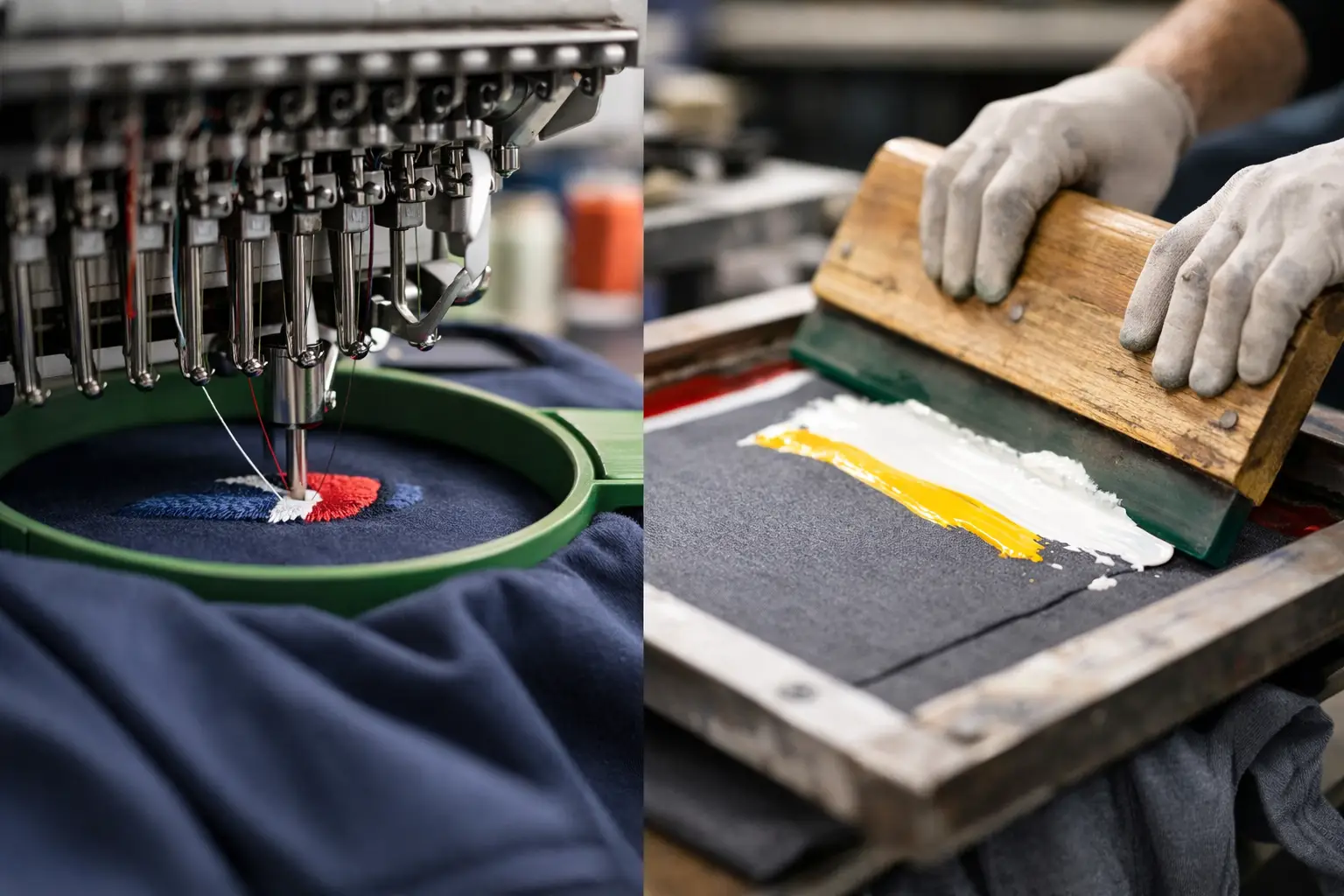
A polo shirt for a front-desk team has different requirements than 200 giveaway T-shirts for a product launch. That is where embroidery vs screen printing becomes a purchasing decision, not just a design preference. Both methods create branded apparel, but they differ in appearance, fabric compatibility, setup, cost, durability, and the type of artwork they handle best.
For businesses ordering uniforms, retail merchandise, staff apparel, or event giveaways, choosing the wrong method can make a logo look too heavy, too small, too expensive, or less durable than expected. The right choice starts with the garment and its job.
Embroidery vs Screen Printing: The Main Difference
Embroidery applies thread directly to the garment using a digitized stitch file. The finished logo is raised, textured, and visible from a distance. It is commonly used on polo shirts, caps, chef coats, jackets, work shirts, bags, and corporate uniforms.
Screen printing applies layers of ink through a mesh screen onto the garment surface. The print sits flat on the fabric and can reproduce bold graphics, large logos, text, and solid colors across a wide area. It is a standard option for T-shirts, hoodies, event apparel, promotional garments, and team wear.
The practical difference is simple: embroidery adds dimension and a premium uniform look, while screen printing gives you more design area and usually better value for larger quantities of graphic apparel.
When Embroidery Is the Better Choice
Embroidery is usually the first choice when a business needs polished, long-term branded workwear. A stitched left-chest logo on a polo or button-down shirt looks established and professional without covering the garment with a large graphic. It works especially well for businesses where staff meet customers face to face, including restaurants, clinics, retail stores, hotels, salons, security teams, and service companies.
Thread holds up well to regular wear and repeated washing. It does not crack or peel like a damaged ink print can. For uniforms that will be worn week after week, that durability is a major advantage.
Embroidery also performs well on thicker fabrics and structured products. Caps, aprons, chef coats, fleece jackets, canvas bags, and outerwear are natural embroidery products because the fabric can support the stitching. A small embroidered logo can make a standard uniform item feel more customized and higher value.
There are limits. Fine detail can disappear when converted into stitches, particularly at small sizes. Thin lines, tiny text, gradients, and detailed photographic artwork are not ideal. A logo may need to be simplified before digitizing so lettering remains legible and stitch density does not make the fabric pucker.
Embroidery can also feel heavy on lightweight T-shirts. A large stitched design across the back of a thin cotton shirt may pull the fabric and be uncomfortable to wear. For that type of garment placement, screen printing is generally more suitable.
Embroidery cost considerations
Embroidery pricing is often based on stitch count, logo size, placement, and garment quantity. A compact one-color-looking logo can still require many stitches because thread coverage, not ink colors, drives production time. There may also be a one-time digitizing charge to convert artwork into an embroidery file.
For a small run of premium polos or caps, the higher unit cost often makes sense. For hundreds of basic promotional shirts, embroidery may add more cost than the campaign requires. It depends on whether the goal is a durable uniform or a high-volume giveaway.
When Screen Printing Is the Better Choice
Screen printing is designed for bold, visible artwork. It is the stronger option for large front designs, back prints, event names, campaign messages, sports graphics, and promotional T-shirts. If your design needs to cover a wide area, screen printing delivers more impact without the weight of dense thread.
It also handles clean typography and simple logo artwork very well. A restaurant can print a large logo and staff slogan on the back of a T-shirt. An event organizer can add sponsor logos, dates, and a themed graphic. A startup can order branded shirts for a launch, trade show, or volunteer day. These are typical screen printing jobs.
For larger quantities, screen printing is often more cost-effective. The screens require setup, but once production begins, the per-piece cost can become attractive for the same design printed across many garments. This makes it a practical choice for 50, 100, or several hundred pieces, especially when the artwork uses a limited number of colors.
Screen printing works best on cotton, cotton blends, and many common apparel fabrics. Ink type matters. Standard plastisol ink creates strong color and coverage, while water-based options can provide a softer feel on suitable garments. The best choice depends on the fabric, intended finish, and order requirements.
Screen printing limitations
Every ink color usually requires its own screen and setup. A simple one- or two-color logo is efficient, while a complex multi-color design can increase cost and production requirements. Fine gradients and photo-style art may need a different decoration method, depending on the desired result and garment material.
Screen prints are durable when produced correctly, but they need proper care. Turning garments inside out, washing in cold water, and avoiding high heat helps preserve the print. A print may eventually fade, crack, or wear after heavy use, especially on garments washed frequently for industrial or restaurant work.
Screen printing is also less suited to textured or heavily structured products. It is not the usual solution for caps, thick seams, or the small curved areas where embroidery performs better.
Compare Appearance, Fabric, and Order Quantity
The fastest way to choose is to compare the final use of the apparel.
For a corporate polo, a small embroidered logo usually looks more appropriate than a screen print. The texture communicates a uniform standard and works well on a left chest, sleeve, or collar area. For a branded T-shirt intended to be seen across a room, screen printing gives the logo or artwork a larger, flatter canvas.
Fabric makes a difference too. Embroidery is reliable on pique polos, twill, fleece, denim, canvas, and structured caps. Screen printing is a strong fit for cotton T-shirts, sweatshirts, jerseys, and soft promotional apparel. Lightweight fabrics may need special attention with embroidery to prevent pulling, while performance fabrics may require inks selected for polyester compatibility.
Quantity affects the budget. Embroidery can be practical for smaller orders of high-value garments because the logo is stitched individually. Screen printing tends to improve in value as the quantity rises, particularly for simple designs repeated across the same shirt style and color.
Design complexity is the other major factor. Use embroidery for recognizable logos with solid shapes and readable text at a compact size. Use screen printing for large artwork, detailed layouts, big lettering, and designs that rely on wide color areas. If your logo includes tiny lines or an intricate illustration, request an artwork review before ordering either method.
Best Uses by Apparel Type
Polo shirts, woven work shirts, jackets, caps, aprons, chef coats, and tote bags generally favor embroidery. The decoration is durable, professional, and sized appropriately for these products.
T-shirts, hoodies, event shirts, staff tees, promotional apparel, and campaign merchandise generally favor screen printing. These garments provide more space for messaging and are commonly ordered in quantities where screen printing offers stronger value.
Some organizations should use both. A construction company may order embroidered jackets and caps for supervisors, then screen-printed safety shirts for field crews. A restaurant may choose embroidered aprons and chef coats while using screen-printed T-shirts for a food festival. Using one logo across different decoration methods keeps the brand consistent while matching the product to the job.
Prepare Your Artwork Before Ordering
Start with a clean logo file. Vector artwork such as AI, EPS, PDF, or SVG is preferred for sharp edges and accurate sizing. High-resolution PNG files may work for some screen print jobs, but low-quality web images often produce soft edges and unclear details.
For embroidery, provide the original logo and allow for digitizing. Avoid assuming that a design will stitch exactly as it appears on screen. Small type may need to be enlarged, thin gaps may need to be opened, and color transitions may be simplified for thread.
For screen printing, identify the intended print size, garment color, and number of ink colors. A light design on a dark shirt may require an underbase layer for color brightness. This affects production and pricing, so it should be decided before approval.
Choose Based on the Job, Not Just the Logo
Embroidery and screen printing are both proven options, but they solve different branding needs. Choose embroidery when the garment is part of a professional uniform, needs a compact logo, or must withstand frequent use. Choose screen printing when the design is large, graphic-led, quantity-driven, or built for events and promotion.
Before placing an apparel order, consider who will wear it, how often it will be washed, where the logo will sit, and how far away people need to see it. A decoration method that fits the garment will look better, wear longer, and make every branded item work harder for your business.