

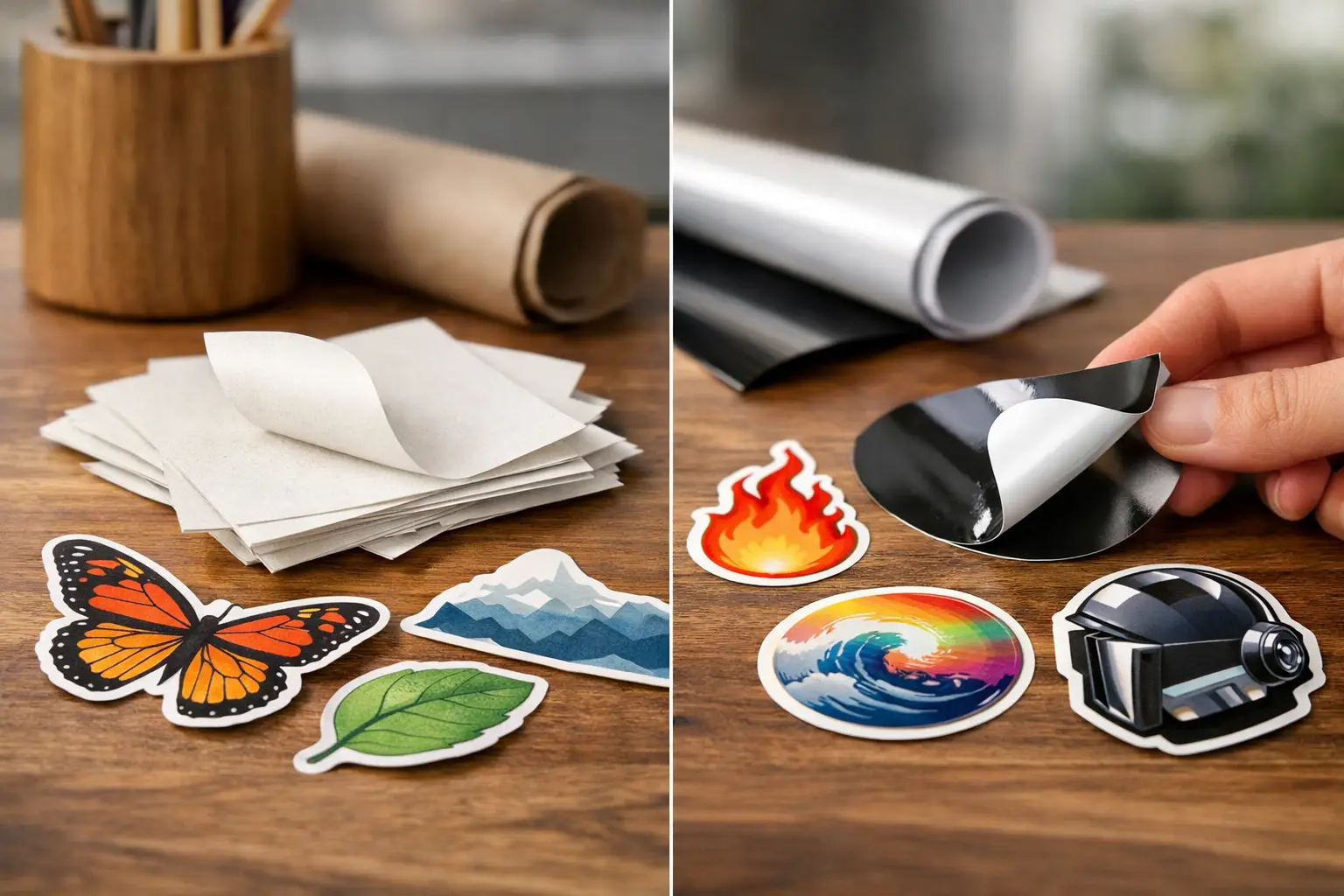
A product label that peels at the freezer door, a takeaway seal softened by oil, or a mailer sticker scuffed in transit can make a good brand look unprepared. The choice between paper stickers vs vinyl stickers is not just about price. It affects durability, finish, application, and how well the sticker performs in its actual environment.
For many business orders, paper is the efficient choice. For products, equipment, outdoor use, or long-lasting promotions, vinyl is usually worth the higher material cost. The right option depends on what the sticker needs to do after it leaves your hands.
Paper Stickers vs Vinyl Stickers: The Main Difference
Paper stickers are printed on adhesive paper stock. They are a practical option for short-term labeling, dry indoor packaging, event materials, retail promotions, and high-volume handouts. They can be supplied in standard shapes or custom die-cut formats, depending on the required look and application.
Vinyl stickers are printed on a flexible plastic film, commonly PVC-based material. Vinyl resists moisture, scratches, fading, and handling better than paper. It is better suited to bottles, jars, vehicles, windows, tools, outdoor signage, refrigerated items, and branded merchandise that will be used repeatedly.
The simplest way to decide is to ask one question: will this sticker face water, friction, sunlight, grease, or frequent handling? If the answer is yes, vinyl is the safer specification. If it will be applied to a dry box, paper bag, envelope, product sleeve, or event giveaway and used briefly, paper often delivers the best value.
Choose Paper Stickers for Fast, Affordable Indoor Use
Paper stickers work well when appearance matters more than long-term resistance. A bakery adding logo seals to pastry boxes, a retailer labeling shopping bags, or an event organizer preparing name labels does not always need waterproof stock. Paper keeps the order economical, especially at larger quantities.
Paper also suits campaigns with short timelines. Seasonal offers, limited-edition packaging, price labels, QR code promotions, thank-you seals, and sampling events are common applications. The sticker performs its job, communicates the message, and does not add unnecessary material cost to every unit.
Where paper performs best
Use paper stickers for dry, indoor applications such as product boxes, paper bags, stationery packs, promotional envelopes, gift packaging, folders, event kits, and temporary shelf labels. They are also suitable for businesses that frequently change product information, offers, or packaging artwork.
A matte paper finish can give labels a natural, understated appearance for handmade goods, cafés, craft packaging, and eco-focused branding. Gloss paper is often preferred when color needs more pop on retail packaging or promotional pieces.
Paper has limits. It can absorb moisture, tear more easily, and show wear at the edges. Oil, condensation, refrigeration, and repeated rubbing can affect both the print surface and adhesive. Do not specify paper for bottles, cold drink cups, bathroom products, or outdoor equipment unless the intended use is very short and conditions are controlled.
Choose Vinyl Stickers for Durability and Tougher Surfaces
Vinyl stickers cost more than paper because the material is designed to last longer and handle more demanding use. That additional cost can protect the finished look of a product and reduce the chance of replacement labels, damaged branding, or customer complaints.
For restaurants and food brands, vinyl is often the better choice for cold cups, beverage bottles, sauce jars, takeaway containers, and refrigerated packaging. Condensation is common in these settings, and standard paper labels may wrinkle or lift. Vinyl is much more dependable when a label needs to stay clean and attached.
Vinyl is also the preferred material for outdoor and semi-outdoor promotions. It can be used on windows, vehicles, helmets, equipment cases, delivery bags, water bottles, and display surfaces. For stickers exposed to direct sunlight, weather, and regular cleaning, request a suitable protective finish or lamination based on the expected lifespan.
Where vinyl earns its cost
Vinyl is a strong option for product labels that need to survive shipping, handling, moisture, or regular use. It gives startups and established businesses a more durable branded asset for promotional giveaways, equipment labeling, membership decals, and retail products.
Die-cut vinyl stickers are particularly useful when the sticker itself is part of the promotion. Customers may place a well-designed decal on laptops, tumblers, notebooks, vehicles, or phone cases. In that situation, durability is part of the marketing value. A sticker that stays attractive for months gives your logo more exposure than one that tears after a few days.
Vinyl is not automatically necessary for every order. If your stickers will be placed on dry cardboard packaging and discarded after delivery, vinyl can add cost without adding useful performance. Match the material to the actual job instead of choosing the most durable option by default.
Consider the Surface Before You Order
The item receiving the sticker matters as much as the sticker material. Smooth glass, coated boxes, plastic jars, metal tins, kraft paper bags, fabric, and textured containers all behave differently. Adhesion can change based on dust, oil, moisture, texture, temperature, and curves in the surface.
For smooth, clean surfaces, both paper and vinyl can perform well in the right conditions. For curved bottles or flexible containers, vinyl is generally easier to apply because it has more flexibility. On heavily textured surfaces, adhesive contact may be reduced, so testing a sample is recommended before placing a large production order.
Cold storage is another major consideration. A label applied to a chilled or damp surface may not adhere properly, even if the finished product will be refrigerated later. Apply stickers to clean, dry containers where possible, then allow the adhesive time to settle before packing or chilling.
Finish, Shape, and Artwork Affect the Final Result
Material selection is only one part of a sticker order. The finish and cut shape influence how professional the product looks and how clearly the design communicates.
Gloss finishes make colors look brighter and can support bold logos, food photography, and high-contrast promotional artwork. Matte finishes reduce glare and suit minimal branding, premium packaging, handwritten details, or muted color palettes. A protective laminated finish is especially useful for vinyl stickers exposed to moisture, rubbing, or repeated handling.
Standard circles, squares, rectangles, and ovals are efficient for labels and seals. Custom die-cut stickers create a stronger branded look by following the outline of a logo, mascot, product illustration, or campaign graphic. Die-cut shapes work particularly well for promotional decals, but clean artwork and adequate spacing around the edges are essential.
Keep text readable at the final sticker size. Small labels can look crowded when too much information is included. Product names, flavor details, social handles, QR codes, safety notes, and batch information all compete for space. Prioritize the message that customers need to see first.
A Practical Buying Guide for Common Business Uses
For packaging seals on boxes, bags, and tissue paper, paper stickers are usually the efficient choice. They are cost-effective, easy to order in volume, and available in shapes that work well for logo seals and promotional messages.
For food and beverage labels, choose based on storage conditions. Dry shelf products may use paper successfully. Chilled drinks, sauces, refrigerated desserts, and products likely to collect condensation are better matched with vinyl.
For events, paper is ideal for short-term labels, thank-you stickers, branded envelopes, and campaign handouts. Vinyl is better for premium giveaway decals, reusable bottle stickers, outdoor event equipment, or branded items attendees may keep.
For shipping and fulfillment, paper can work for dry mailers and boxes. If labels may encounter rain, warehouse moisture, or rough handling, vinyl offers more protection. For industrial or operational labeling, vinyl is generally the practical choice because it handles contact, cleaning, and extended use more effectively.
Order the Material That Matches the Job
Before approving artwork, confirm the sticker size, quantity, application surface, exposure to moisture or sunlight, required lifespan, cut shape, and finish. These details are more useful than choosing material based on appearance alone.
Seaonce offers sticker formats that can support routine packaging, retail promotions, event materials, and custom branding requirements. For repeat orders, keeping the same approved size, finish, and material specification also helps maintain consistent presentation across product batches and locations.
A lower-cost paper sticker is the right purchase when it is used indoors, kept dry, and intended for short-term branding. A vinyl sticker is the right purchase when durability protects the product, the customer experience, or the visibility of your brand. Specify for the conditions your sticker will actually face, and your order will perform the way it looks.