

A menu gets handled more than almost any other printed item in a restaurant. It meets spills, fingerprints, table sanitizers, takeout counters, patio weather, and repeated updates from the kitchen. Choosing the best restaurant menu materials is not only a design decision. It affects replacement cost, cleaning time, perceived food value, and how quickly your staff can put revised pricing or seasonal items in front of guests.
A single material is not right for every restaurant. A coffee shop with weekly specials needs flexibility. A fine-dining room may need a heavier, more refined finish. A busy bar needs something that can survive moisture and constant wiping. Start with how the menu will be used, then select a stock and finish that match the job.
Best Restaurant Menu Materials by Menu Type
The practical choice comes down to durability, appearance, update frequency, and budget. The menu format matters as much as the printed material. A one-page breakfast menu, a folded dinner menu, a wine list, and a table tent do not need the same construction.
Coated Paper for Short-Term and High-Volume Menus
Gloss or matte coated paper is a practical option for promotional menus, inserts, counter menus, and menus that change often. A 100 lb text or 100 lb cover stock provides a clean print surface for food photography, color blocks, and detailed item descriptions. It is economical when ordering larger quantities and works well for flat menus distributed once or replaced regularly.
Gloss coating gives images and bright colors more impact, making it useful for casual dining, dessert menus, pizza menus, and quick-service restaurants. Matte stock reduces glare under overhead lighting and generally feels more restrained. For menus with extensive text, matte is often easier to read.
Paper alone is not the right fit for tables that require frequent sanitizing. It can absorb moisture at the edges, wrinkle after repeated wiping, and show wear quickly. Use it for disposable or limited-life menus rather than daily permanent table service.
Laminated Paper for Everyday Table Service
Laminated paper is one of the most common restaurant menu choices because it improves durability without moving fully into plastic stock. A printed menu can be finished with gloss, matte, or velvet lamination to protect the surface from splashes, grease, and regular cleaning.
Gloss lamination is easy to wipe and offers strong color contrast. Matte lamination has less shine and suits restaurants with a more understated visual identity. Velvet lamination adds a soft-touch feel that can elevate a premium menu, though it may show marks more easily than standard matte in high-contact settings.
For many restaurants, a 100 lb or 120 lb cover stock with lamination is the best balance of cost and service life. It looks professional, supports full-color printing, and gives staff a menu that can be cleaned between tables. Ask for rounded corners when menus will be handled heavily. They reduce bent corners and make the piece more comfortable to hold.
Synthetic Paper for Waterproof Menus
Synthetic paper is designed for locations where moisture is part of daily operation. It is waterproof, tear-resistant, and more durable than standard laminated paper. This makes it a strong option for poolside dining, patios, breweries, beach restaurants, food trucks, cocktail bars, and family restaurants with frequent spills.
Unlike a paper menu with a film applied on top, synthetic stock is built to handle water and rough handling throughout the sheet. It is also useful for drink menus, happy-hour menus, and all-day menus that stay on tables from opening to close.
The trade-off is cost. Synthetic material generally costs more than laminated paper, so it makes the most sense for menus that will remain in use for months rather than weeks. Its finish can also feel less traditional than a premium paper stock, which may not suit every upscale concept.
PVC Menus for Maximum Durability
PVC is the heavy-duty choice for restaurant menus that need a long service life. It is rigid or semi-rigid depending on thickness, water-resistant, and easy to clean. PVC menus work especially well in fast-paced casual dining, outdoor venues, bars, cafeterias, and locations where menus are passed between many guests each day.
A PVC menu has a substantial feel in the hand and maintains its shape better than paper-based materials. It can be printed in full color and paired with rounded corners for a polished result. For simple, permanent menus with stable pricing, this material can reduce the need for frequent reorders.
The limitation is flexibility. Updating a PVC menu requires a full reprint, so it is not efficient for concepts that adjust items, prices, or availability every week. Restaurants with rotating specials often use PVC for the core menu and add printed inserts for temporary items.
Menu Covers with Replaceable Inserts
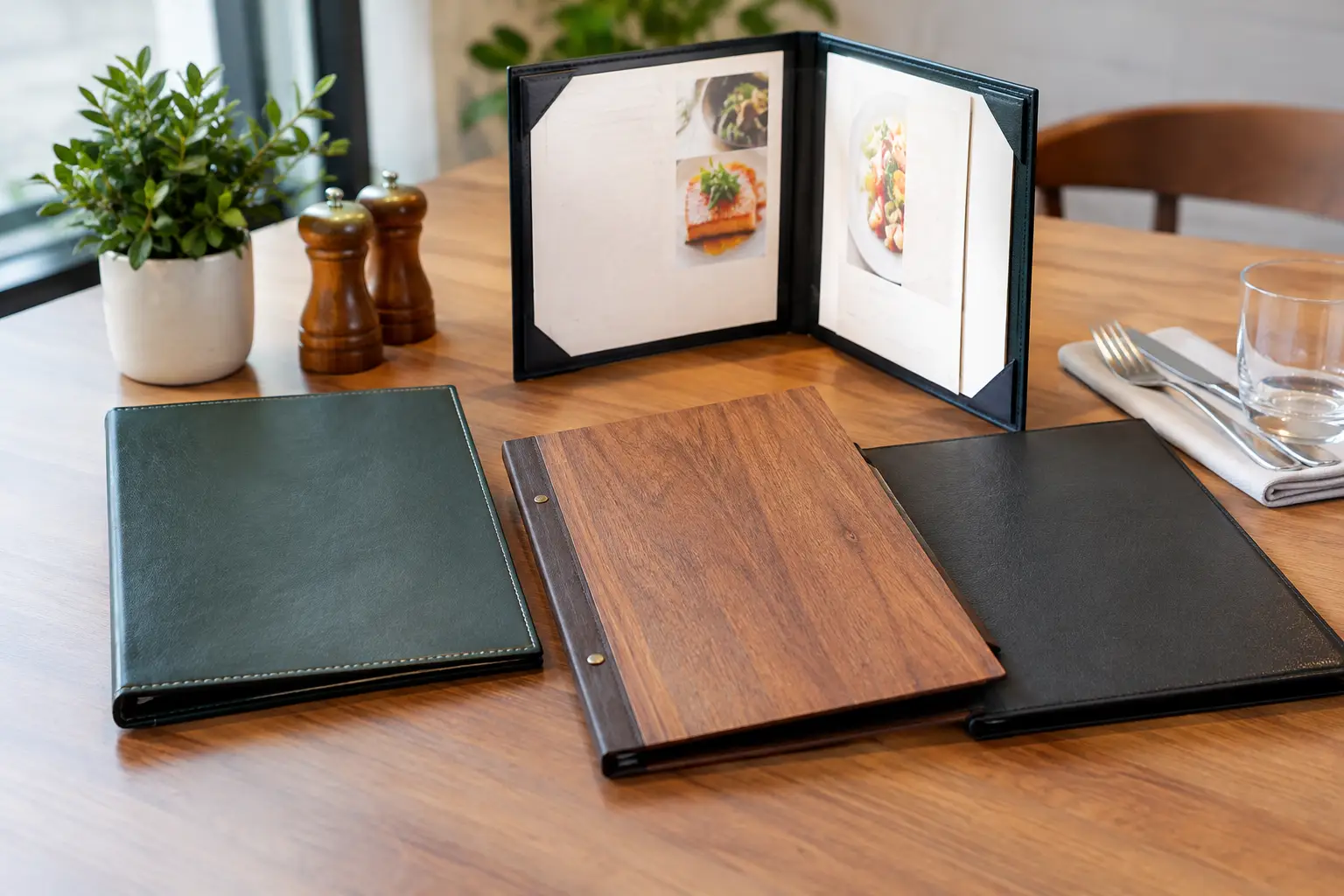
Menu covers are a smart buying decision when your restaurant needs a premium presentation but changes its offerings throughout the year. The cover can be leatherette, fabric-style, vinyl, or another durable material, while the printed pages inside can be replaced as needed.
This format works well for fine dining, hotel restaurants, steakhouses, wine programs, and multi-page menus. The cover creates a more formal first impression, while the insert system prevents you from replacing the entire menu whenever prices change.
Choose insert paper based on the menu’s purpose. A heavier uncoated or matte cover stock may fit a refined dining room. Laminated inserts are better for cocktail lists, dessert cards, or pages exposed to frequent cleaning. The cover itself should be easy for staff to wipe down and should hold pages securely without looking overfilled.
Match the Material to Your Restaurant Environment
Before ordering, look at the conditions your menu will face during a normal service. The best material is usually the one that prevents the most replacement work at a reasonable unit cost.
For a quick-service restaurant, laminated paper or synthetic stock keeps costs controlled while standing up to high turnover. For an upscale restaurant, menu covers with quality printed inserts provide a more premium presentation and make updates easier. For an outdoor restaurant, brewery, or poolside bar, synthetic paper or PVC is usually worth the added investment. For a café with handwritten specials, use a durable core menu plus separate table tents, inserts, or signage for changing offers.
Lighting is another practical consideration. High-gloss finishes can create reflections under pendant lights or direct sun. Matte lamination is easier to read in bright dining rooms, while gloss can make food photography more vivid in a counter-service environment. If your menu has QR codes, test the printed code after lamination and confirm it scans under typical restaurant lighting.
Print Specifications That Improve Menu Performance
Material is only one part of a menu order. The right print specifications make a menu easier to use and more durable in service.
Use heavier cover stock for menus guests will hold and review at the table. Choose a lighter text stock for folded inserts, temporary offers, and single-use menus. Full-color printing is standard for food images and branded layouts, but a limited color palette can reduce visual clutter and support a cleaner dining experience.
For folded menus, keep important text away from the fold line. For double-sided menus, make sure the layout has enough contrast so pricing and descriptions remain readable. Small type may look efficient on screen but becomes difficult to read in dim restaurants. Clear hierarchy, consistent section headings, and adequate spacing help guests order faster.
Finishing also matters. Rounded corners reduce edge damage. Spot UV can highlight a restaurant logo, signature dish, or drink category, but it is better used sparingly on premium menus. Embossing can add a tactile detail to menu covers or branded folders, though it is not necessary for high-volume daily menus.
Plan for Updates Before You Print
Restaurants rarely keep the same menu forever. Ingredient costs change, seasonal dishes rotate, and new promotions need space. A menu that is expensive to replace can become a problem when changes are frequent.
If your core menu is stable, PVC or synthetic material may offer a better long-term return. If pricing changes regularly, choose laminated inserts, menu covers, or smaller printed components that can be replaced individually. A practical setup is a durable main menu combined with separate drink menus, dessert cards, and promotional inserts.
Order enough menus for every seat, plus a working reserve for cleaning, damage, and busy periods. Keep the print file organized so reorders are fast and the appearance remains consistent across locations or future batches.
For restaurants sourcing menus alongside table tents, window signage, stickers, takeaway packaging, uniforms, and promotional materials, Seaonce provides a convenient place to compare print formats and finishing options. The best result comes from selecting materials based on real service conditions, not just the lowest initial unit price.
A menu should look right on day one, but it should also still look presentable after hundreds of orders, spills, wipes, and dinner rushes. Choose the stock that fits your update schedule and service environment, then build the rest of the print specification around it.