

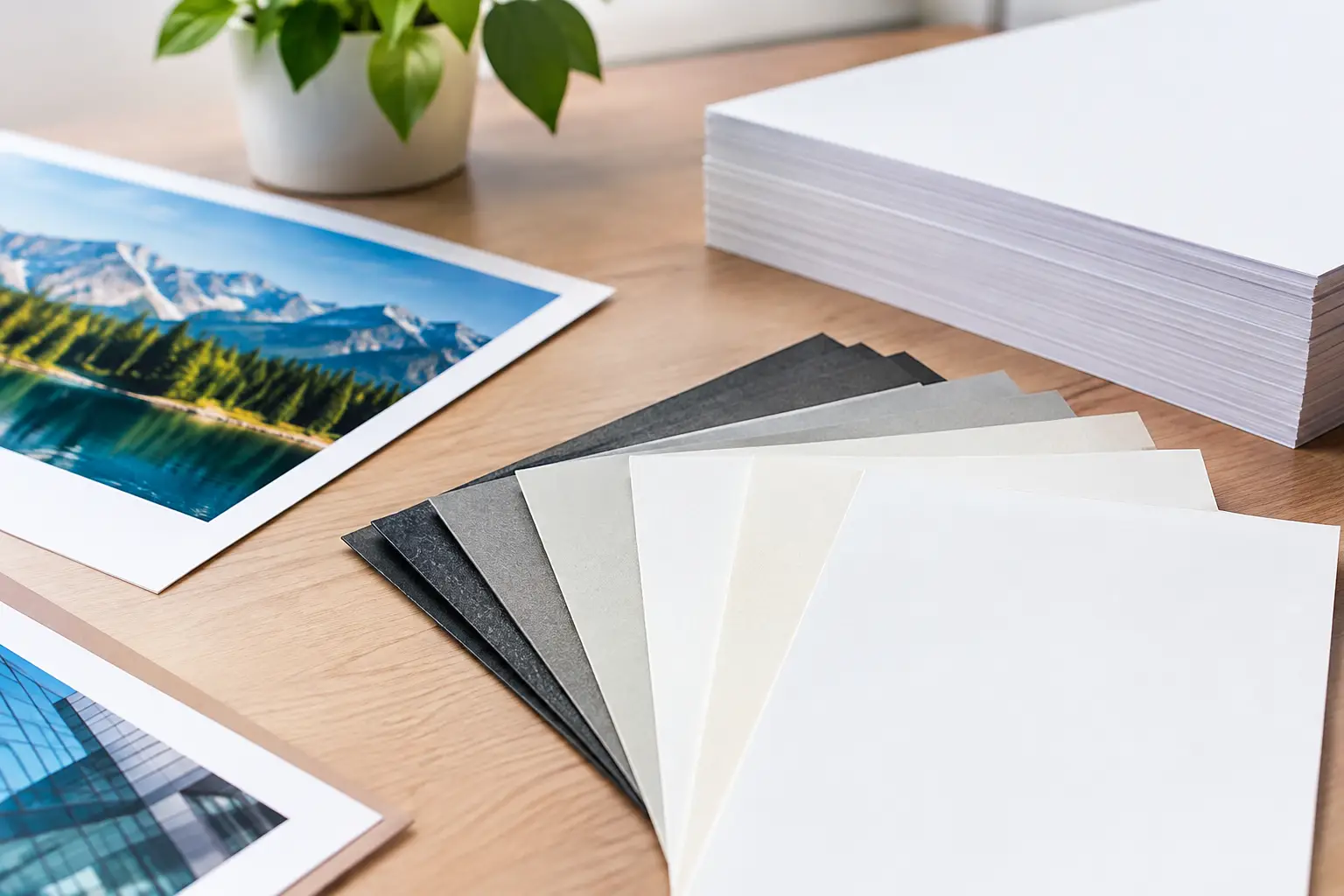
A business card that bends in a wallet, a menu that absorbs fingerprints, or a flyer that feels like office copy paper can weaken an otherwise strong design. Paper is not a background detail. In a practical paper stock comparison, the right choice depends on what the item needs to do, how often it will be handled, and the impression your business needs to make.
For most print orders, start with three buying factors: GSM weight, coated or uncoated surface, and finishing. These decisions affect durability, color, writing ability, folding performance, and price. A heavier stock is not automatically better. It simply needs to suit the product.
Paper Stock Comparison: Start With GSM
GSM means grams per square meter. It measures the weight of paper or cardstock, making it one of the clearest specifications for comparing print materials. Higher GSM usually feels thicker and more substantial, but paper thickness can also vary by paper type and coating.
Standard 70 to 100 GSM paper is commonly used for letterheads, invoices, NCR pads, forms, and everyday office documents. It feeds well through printers, folds easily, and keeps costs low for high-volume use. If customers need to write on the item, uncoated stock in this range is usually the practical choice.
Paper around 130 to 170 GSM works well for flyers, posters, inserts, takeout menus, and promotional handouts. It has more body than office paper without becoming difficult to fold or distribute. A 150 GSM glossy flyer, for example, gives product images stronger color while remaining cost-effective for bulk campaigns.
Stocks from 250 to 350 GSM are the standard range for business cards, postcards, invitations, certificates, premium menu covers, and presentation cards. These products are handled repeatedly, so they benefit from a firm card feel. A 300 or 350 GSM card stock is a reliable choice when a business wants its printed materials to feel established and professional.
For luxury cards, 400 GSM and thicker options create a noticeably heavier result. This range is best reserved for small quantities, high-value contacts, executive cards, premium invitations, or brand pieces where tactile impact matters. The trade-off is cost, and very thick stock may limit folding, scoring, or certain finishing options.
Weight Is Not the Only Measure of Quality
Two sheets with the same GSM can feel different in the hand. Coated art paper is often dense and smooth, while uncoated paper may feel softer or bulkier. A textured stock can also appear more premium than a heavier smooth stock, depending on the application.
Rather than ordering the heaviest available material, match weight to the use case. Restaurant flyers need easy distribution. A company certificate needs a formal, durable feel. A direct-mail postcard needs enough stiffness to survive mailing without making postage and production costs unnecessary.
Coated vs. Uncoated Paper Stock
The surface of the paper changes how ink sits on the sheet and how the finished item performs. Coated stocks have a sealed surface that produces sharper images and stronger color. Uncoated stocks absorb more ink and have a natural, writable finish.
Glossy paper is a coated option with a reflective shine. It is a strong fit for photo-heavy flyers, product catalogs, real estate postcards, event promotions, and retail offers. Color appears vibrant and black areas look rich. However, gloss can show fingerprints, glare under bright light, and handwriting may smudge or resist ink.
Matte paper has a non-shiny coated surface. It gives brochures, menus, folders, and premium flyers a clean, modern look while retaining good image quality. Matte is easier to read under overhead lighting than gloss, making it useful for restaurant menus, service price lists, and corporate marketing pieces.
Uncoated paper is the working choice for letterheads, forms, envelopes, appointment cards, notepads, and any item that needs writing or stamping. Its understated appearance can also suit law offices, consultants, wellness brands, and businesses that prefer a natural presentation over a glossy promotional finish.
Choose Paper Stock by Product Type
Business cards and appointment cards
Use 300 to 350 GSM cardstock for most business cards. Matte lamination offers a refined, low-glare finish, while gloss lamination supports bright colors and photo-based designs. For a more premium result, choose velvet lamination, spot UV, embossing, or a thicker card stock. If the card will double as an appointment reminder, leave a writable uncoated area or select an uncoated stock.
Flyers and promotional sheets
For short-term handouts, 130 to 170 GSM is usually enough. Glossy stock works well for retail promotions, food photography, beauty services, and product launches. Matte stock is better when the flyer contains more text, price lists, maps, or detailed service information. Use heavier stock only when the flyer is intended to be kept, displayed, or mailed.
Brochures and folded menus
Brochures generally print well on 150 to 200 GSM stock, depending on fold count. A tri-fold brochure needs a stock that creases cleanly. When using heavier paper, scoring before folding helps prevent cracking along the fold, especially with dark ink coverage. For frequently handled menus, a heavier matte or laminated stock provides better resistance to spills and wear.
Postcards and direct mail
Choose 250 to 350 GSM for postcards. This range feels durable, presents offers professionally, and holds up better in mail handling. Gloss is effective for promotional imagery, while matte provides a more upscale surface and easier readability. If addresses, stamps, or handwritten notes are part of the mailing process, plan an uncoated writing panel on the back.
Letterheads, invoices, and NCR pads
These products require function before decoration. Use uncoated 70 to 100 GSM paper for letterheads and invoice sheets so signatures, stamps, and handwritten entries remain clear. NCR pads use specialized carbonless paper, designed to transfer writing through multiple sheets. A glossy or laminated finish is not appropriate for paperwork that must be completed by hand.
Certificates and awards
Certificates should look formal without being excessively thick. A 200 to 300 GSM uncoated or lightly textured stock is often a suitable range. It accepts signatures and seals well, while giving recipients an item worth framing or keeping. If foil, embossing, or a raised seal is planned, confirm that the selected stock supports the required finish.
Lamination and Special Finishes Change the Result
Lamination adds a protective film over printed stock. Gloss lamination increases shine and color contrast. Matte lamination reduces glare and gives cards or covers a cleaner look. Velvet lamination has a soft-touch finish that works particularly well for premium business cards, presentation folders, beauty brands, and upscale hospitality materials.
Spot UV applies a glossy raised or flat highlight to selected areas, often a logo, pattern, product image, or name. It creates contrast best on matte or velvet-laminated stock. Embossing adds physical depth, while die cutting changes the shape of the finished piece. These options can make a simple design feel more valuable, but they should support the brand rather than compete with it.
Keep in mind that lamination makes paper difficult to write on and may affect recycling requirements. It is excellent for durability, but it is not the right finish for forms, writable cards, or documents that require stamps.
Avoid Costly Paper Selection Errors
Do not choose stock from a screen image alone. A digital preview can show layout and color placement, but it cannot show stiffness, texture, glare, or the difference between matte and velvet lamination. When the order represents a major campaign, event, or new brand rollout, reviewing physical samples is the safer buying decision.
Also consider where the item will be used. Outdoor promotions may need weather-resistant synthetic material rather than paper. Busy restaurants may need laminated menus. Trade show handouts may benefit from a heavier flyer stock that survives bags and travel. For high-volume promotions, a slightly lighter stock can protect the budget without making the piece feel cheap.
Seaonce customers ordering cards, flyers, brochures, stationery, menus, or certificates can simplify selection by choosing the product purpose first, then matching GSM and finish to handling, writing needs, and expected lifespan.
Your print piece only has a few seconds to make a physical impression. Choose stock that fits the job, request a sample when the finish matters, and let the paper support the value of what your business is offering.