

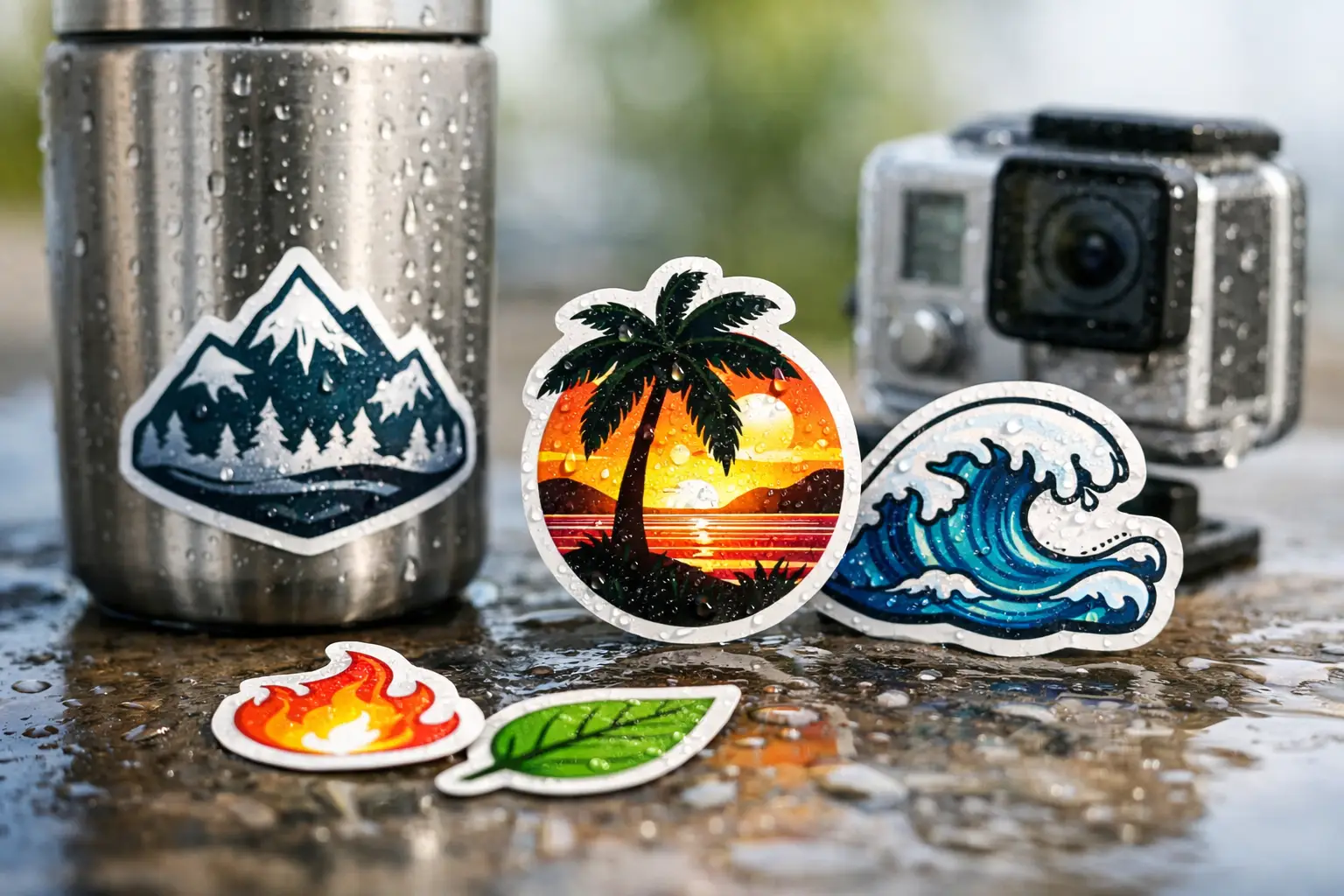
A product label can look perfect when it leaves the shop and still fail after one rainy delivery, a few hours in an ice bucket, or repeated handling. So, are stickers waterproof? Some are, but the answer depends on the complete sticker construction: face material, printed ink, protective finish, adhesive, and the surface where it is applied.
For business use, “waterproof” should mean more than surviving a few drops of water. A properly specified waterproof sticker should resist moisture without smudging, curling, peeling, fading quickly, or losing adhesion. That makes material selection especially relevant for food packaging, beverage bottles, cosmetic containers, outdoor equipment, delivery labels, event giveaways, and branded merchandise.
Are Stickers Waterproof by Default?
No. Standard paper stickers are generally not waterproof. Paper absorbs moisture, softens at the edges, and can tear or wrinkle when wet. Even if the printed design appears intact at first, exposure to humidity, condensation, spills, or washing can affect both the paper stock and adhesive.
Waterproof performance usually starts with a synthetic material, most commonly vinyl. Vinyl stickers do not absorb water like paper, making them a practical choice for applications exposed to rain, splashes, refrigeration, or damp hands. However, a vinyl face alone does not guarantee that the entire sticker will perform well outdoors or through repeated washing.
The ink and top finish matter too. A sticker can use water-resistant vinyl but still be vulnerable if the print is not protected from abrasion, UV exposure, cleaning products, or continuous moisture. The adhesive also has to stay bonded when the surface gets cold, wet, textured, or frequently handled.
What Makes a Sticker Waterproof?
A waterproof sticker is a combination of compatible production choices, not just a material name on an order form. Buyers should look at four working parts before choosing a stock.
Vinyl Face Material
Vinyl is the standard choice for waterproof custom stickers because it is flexible, durable, and moisture-resistant. It works well on bottles, jars, packaging, laptops, windows, outdoor signs, coolers, hard hats, and promotional items with smooth surfaces.
White vinyl is widely used because it provides a clean background for full-color logos, product information, QR codes, and promotional graphics. Clear vinyl is useful when the product or container should remain visible, such as on glass bottles, windows, and transparent packaging. Both can be waterproof when paired with suitable print and finishing options.
Not every plastic-style sticker is equal. Thin economy films may be suitable for short-term indoor promotions but may not offer the same outdoor durability, adhesion, or resistance to tearing as higher-grade vinyl. If the sticker will be exposed to weather or frequent handling, the intended life span should be part of the specification.
Protective Lamination
Lamination is often the difference between a moisture-resistant sticker and one built for real-world use. A clear laminate layer protects the printed surface from water, scratches, oils, finger marks, and routine cleaning. It can also improve resistance to fading in sunlight.
Gloss lamination gives colors a brighter, polished appearance and is commonly selected for retail packaging, beverage labels, and promotional decals. Matte lamination creates a lower-shine finish with a more subdued look. It can be a good option for premium packaging, corporate branding, or stickers that need readable text under direct light.
For waterproof applications, lamination protects the print, but the edges still need proper adhesion. Water can work its way under a sticker when corners lift or when a label is applied to an unsuitable surface. Rounded corners and die-cut shapes with smooth contours can reduce sharp points that are more likely to catch during use.
Ink and Print Method
The printed design must be able to handle the same conditions as the sticker material. Outdoor exposure can involve rain, sun, heat, dust, and cleaning. Indoor food and beverage use can involve condensation, refrigeration, oils, and regular wiping.
Print quality is not only about color accuracy. Fine text, barcodes, ingredient details, and small logos must remain readable after use. A protective laminate helps preserve the printed layer, particularly on frequently handled products such as bottles, reusable containers, equipment labels, and branded giveaways.
When ordering, explain whether stickers will be used indoors, outdoors, in refrigerators, on packaging, or on products that may be washed. This helps determine whether standard printed stickers are appropriate or whether vinyl with lamination is the better commercial choice.
Adhesive and Application Surface
A waterproof sticker can still fail if the adhesive does not match the surface. Smooth, clean, dry surfaces offer the strongest starting point. Glass, coated metal, rigid plastic, and smooth painted surfaces are generally easier to label than rough cardboard, fabric, unfinished wood, silicone, or low-energy plastics.
Cold surfaces create an additional challenge. A label applied to a chilled bottle or a container covered in condensation may not bond properly, even if the finished label is waterproof. Apply stickers at room temperature whenever possible, then allow the adhesive time to set before refrigeration, shipping, or outdoor placement.
For jars, bottles, and food containers, test one sample first. Check whether the label stays flat after refrigeration, whether it remains readable after condensation, and whether it holds when the container is handled. A small test can prevent a large batch of unusable packaging.
Water-Resistant vs. Waterproof Stickers
These terms are often used interchangeably, but they describe different levels of performance.
A water-resistant sticker can tolerate light moisture, occasional splashes, or a short period of damp conditions. It may be suitable for indoor products, takeaway packaging, short-term event labels, or items kept away from direct weather.
A waterproof sticker is designed for more regular moisture exposure. Depending on the material and finish, it can be suitable for outdoor decals, drinkware labels, refrigerated packaging, vehicle graphics, coolers, and equipment identification. Waterproof does not always mean dishwasher-safe, marine-grade, or permanent. Those are separate performance requirements and should be requested specifically.
For example, a laminated vinyl sticker may hold up well on a water bottle that is hand-washed, but repeated dishwasher cycles, high heat, and aggressive detergent can shorten its life. Similarly, a sticker may withstand rain but fade over time in constant direct sunlight unless it is produced for outdoor UV exposure.
Choosing Waterproof Stickers for Common Business Uses
The intended use should guide the specification. For short-run indoor promotions or dry retail packaging, paper stickers can be cost-effective and visually strong. They are a practical option when moisture is not part of the job.
For bottles, jars, cosmetic packaging, and chilled products, vinyl labels with a protective laminate are usually the safer selection. They help the design stay presentable despite condensation, splashes, and frequent handling. Restaurants, beverage brands, bakeries, and food sellers should also consider how oils and refrigeration affect labels during service and delivery.
For outdoor branding, equipment decals, window stickers, and vehicle-related uses, choose vinyl with lamination and discuss the expected duration of exposure. Outdoor use brings more than rain. Sunlight, temperature changes, dust, and abrasion all affect the finished result.
For promotional stickers handed out at events, a durable vinyl option often delivers better brand value. Customers may apply the sticker to laptops, phone cases, water bottles, toolboxes, or cars. A sticker that peels or fades quickly can reflect poorly on the business behind it.
How to Help Waterproof Stickers Last Longer
Even a well-produced vinyl sticker needs correct application. Wipe the application area clean and dry before placing the sticker. Dust, grease, condensation, and cleaning residue can reduce adhesion. Avoid touching the adhesive surface as much as possible during application.
Apply the sticker from one edge to the other and press firmly across the full design, especially around edges and corners. Let the adhesive set before exposing the item to water, refrigeration, heat, or heavy handling. If a container has deep curves, seams, or textured areas, use a sticker size and shape that can sit flat rather than bridge uneven surfaces.
For a business order, provide clear artwork and share the actual use case before production. A circular logo sticker for dry paper bags requires a different material choice than a die-cut decal for outdoor equipment. Seaonce customers can simplify that decision by selecting sticker materials and finishes based on where the product will be used, not only how it looks on screen.
The best waterproof sticker is the one specified for the job. Match vinyl, lamination, adhesive, and shape to the surface and environment, then test a sample under real conditions before committing to a full production run.