

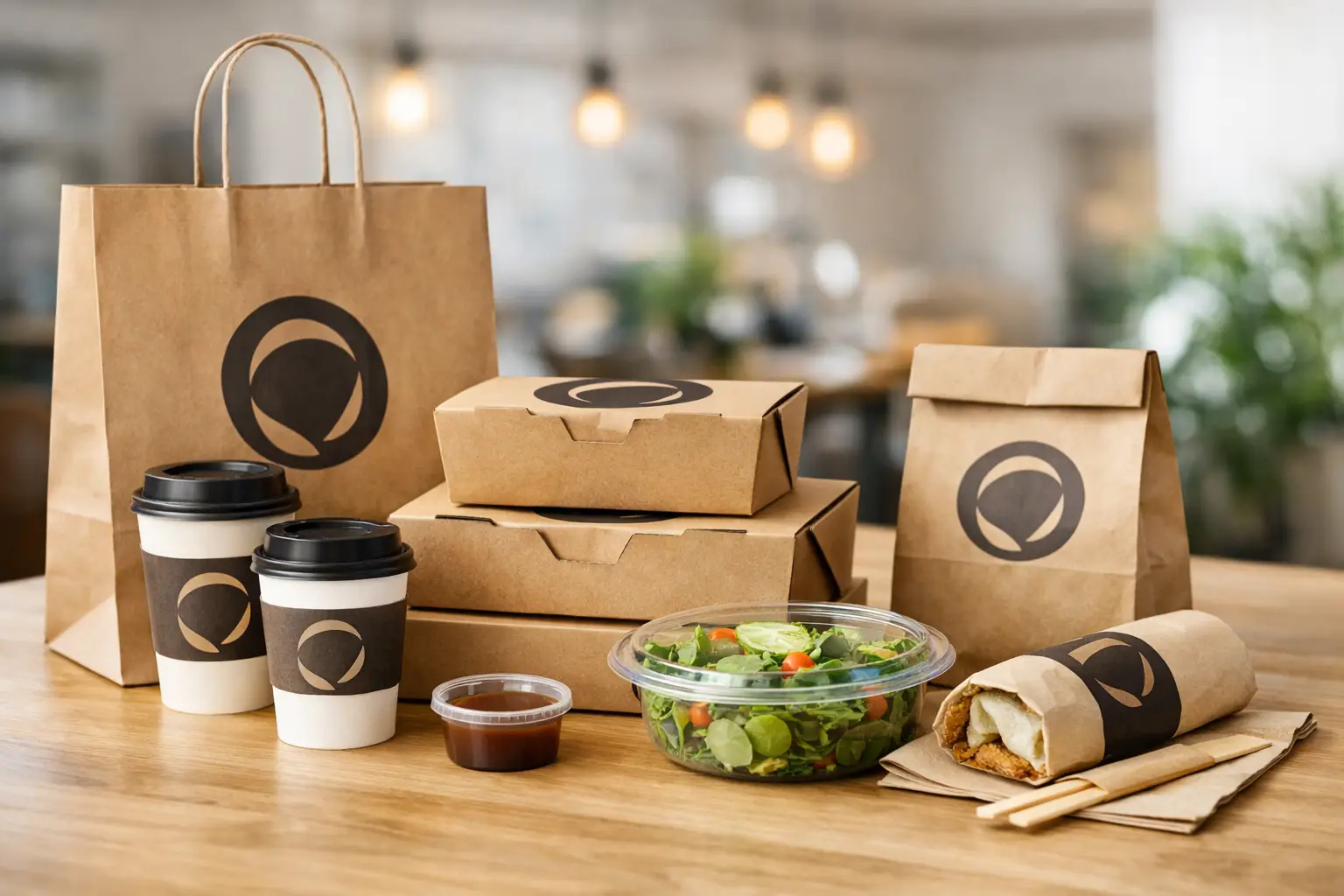
A delivery order has only a few seconds to make the right impression. The bag arrives at the door, the food is unpacked, and your customer sees whether the meal stayed hot, crisp, secure, and recognizable. Branded takeaway packaging puts your business name in that moment while giving food the protection it needs in transit.
For restaurants, cafes, bakeries, food trucks, caterers, and cloud kitchens, packaging is not an afterthought. It is an operating supply that gets used every day. The right choice needs to fit your menu, survive delivery handling, support your brand presentation, and stay within the cost per order you can sustain.
What Branded Takeaway Packaging Does for Your Business
Plain packaging can get food from the kitchen to the customer. Custom-printed packaging can also turn each order into a repeat brand touchpoint. A logo on a carry bag, a printed food box, or a branded sticker helps customers remember where the meal came from when the order is separated from the receipt or shared among several people.
This matters most for businesses with high delivery and takeout volume. A customer may see your restaurant only through a delivery app, but a clear logo, brand color, and readable contact detail on the pack give them something tangible to remember. It also improves presentation for office lunches, catered events, gift boxes, and orders posted on social media.
Branding should support function, not compete with it. A dark full-coverage print can look premium, but it may not be the best option for every low-cost bag or high-volume food container. A simple one-color logo, a clean label, or a kraft box with a black print often provides a professional result at a more practical unit cost.
Start With the Food, Not the Artwork
The first buying decision is not the logo position. It is the food format. Packaging that looks good but fails during transport creates complaints, refunds, and wasted product.
Hot and dry items such as fries, fried chicken, pastries, and pizza need ventilation or packaging that limits trapped steam. A fully sealed container may keep food warm, but it can soften a crispy product. For these items, the right balance between heat retention and airflow depends on delivery distance and hold time.
Saucy meals, curries, noodles, rice bowls, salads with dressing, and desserts require secure lids and materials that resist leaks and oil. A paper bowl may work for a short pickup order, while a sturdier bowl with a fitted lid may be the better choice for third-party delivery. Test filled samples before placing a larger order. Stack them, tilt them, and leave them in a delivery bag for the same time your average order spends on the road.
Cold drinks, milkshakes, coffee, and juices need their own packaging plan. Cup quality, lid fit, straw placement, and carrier strength all affect the customer experience. If your menu includes both hot and cold beverages, use clear product labeling so staff can select the correct cup and lid quickly during busy service.
Choose the Right Packaging Mix
Most food businesses do not need one package for every item. They need a small, organized system that covers their best-selling order types. This keeps stock manageable and helps staff pack consistently.
A typical setup may include food boxes for burgers or snacks, bowls or containers for meals, paper bags for carrying, drink cups for beverages, and branded stickers or labels for sealing and identification. Bakeries may add pastry boxes, cake boxes, tissue paper, and handles for larger packs. Catering operations may need larger trays, sleeves, menu cards, and tamper-evident labels.
Paper and kraft packaging are popular for their clean appearance and print compatibility. They work well for bags, sleeves, boxes, and wraps. However, material selection must match the food. Greasy products may need a grease-resistant barrier, while wet foods may require coated board or a food-safe container with a tighter closure.
Plastic containers can offer visibility and strong leak resistance, particularly for salads, desserts, sauces, and meal prep. They are not automatically the best fit for every brand or location. Local regulations, customer expectations, disposal options, and your food type should guide the decision. Where sustainability claims are used, keep them accurate and specific to the material and local disposal conditions.
Print Options That Make Sense at Scale
Custom packaging does not need complex artwork to work hard. In many cases, the most effective design is a logo, one supporting color, and key information such as a phone number, social handle, or ordering message. Leave enough clear space around the logo so it remains visible when a bag is folded or a box is stacked.
For high-volume bags and boxes, simple print layouts are usually easier to reproduce consistently. Fine lines, small reversed text, and large areas of solid ink may need extra attention depending on the substrate. Kraft stock, coated paper, white board, and corrugated materials all show color differently. A bright color on a white surface may print more muted on natural kraft paper.
If you want a higher-end presentation for bakery boxes, gift packs, premium catering, or corporate food orders, finishing can add value. Matte lamination creates a smooth, low-glare surface. Gloss lamination gives stronger color contrast and wipe resistance. Spot UV can highlight a logo or graphic element, while embossing adds a tactile detail. These options are best reserved for packaging that customers will notice and keep, rather than everyday items with a very short lifespan.
Printed labels are often the most flexible starting point. They can add a logo to stock containers, seal bags, identify flavors, show allergen information, or separate vegetarian and non-vegetarian orders. Die-cut stickers provide a shaped finish, while standard round or rectangular labels are efficient for routine sealing and branding.
Build a Packaging System for Faster Service
Packaging should make the packing station easier to run. If staff must search for multiple sizes, match unclear lids, or apply labels in the wrong place, errors increase during peak periods. Standardize the range where possible.
Use one or two bag sizes that fit most orders, then select container dimensions that stack inside them without crushing. Keep sauces, cutlery, napkins, and receipts in a predictable place. For multi-item orders, a printed or labeled seal can show that the bag was checked before handoff.
Consider what happens after the order leaves your counter. A large logo placed low on a bag may disappear when the customer holds it. A box design that looks sharp when open may be nearly invisible when stacked. Review packaging from the customer’s point of view: on a counter, inside a delivery bag, in a car, and at the doorstep.
For businesses operating several locations or franchises, consistent specifications matter. Record the bag size, container size, paper stock, print colors, and artwork version used for each item. This avoids a common problem where branches reorder similar-looking packaging that does not match the original brand standard.
Control Cost Without Making the Pack Look Cheap
The lowest unit price is not always the lowest operational cost. A weak bag that tears, an undersized box that leaks, or a poor lid that causes a drink spill can cost more than the savings on materials. Start by identifying the packaging items used on nearly every order, then prioritize quality and print consistency for those products.
Order quantities should reflect storage space, menu stability, and order volume. Larger print runs can reduce the per-unit cost, but only when you can store and use the stock before a menu change, rebrand, or seasonal campaign. New restaurants and businesses testing a fresh identity may be better served by a smaller initial run combined with branded stickers, sleeves, or stamps.
A practical cost-saving approach is to put full branding on the carry bag and use simpler food containers inside. Another option is to use stock kraft boxes with a high-quality custom label. This creates a coordinated look while avoiding unnecessary print complexity across every SKU.
Do not forget the less visible items. Napkins, cutlery packs, cup carriers, sauce cups, and tamper seals influence how complete an order feels. They do not all need custom printing, but they should match the standard you set for the main pack.
Prepare Artwork Before You Order
Good artwork reduces production delays and makes the final packaging easier to approve. Supply your logo in a clear vector format where available, such as AI, EPS, or print-ready PDF. Vector files retain sharp edges when scaled for bags, boxes, banners, and labels. High-resolution PNG files may be suitable for simple applications, but low-resolution screenshots are not.
Use CMYK color values for print work rather than relying only on screen colors. If brand color accuracy is critical, ask for a proof or sample before committing to a large quantity. Confirm the printable area, fold lines, bleed, safe margins, and direction of the artwork. A logo that is centered on a flat layout can shift visually once a box is folded.
Keep required food information separate from promotional copy. Ingredients, allergens, reheating instructions, use-by dates, and regulatory details may need room on the package or a secondary label. Plan for them from the start rather than covering your branded print with a last-minute sticker.
The best packaging is the packaging your team can pack quickly, your drivers can carry safely, and your customers recognize before they even open the food. Start with your top-selling orders, test the full journey, and build a branded range that is ready for daily service.