

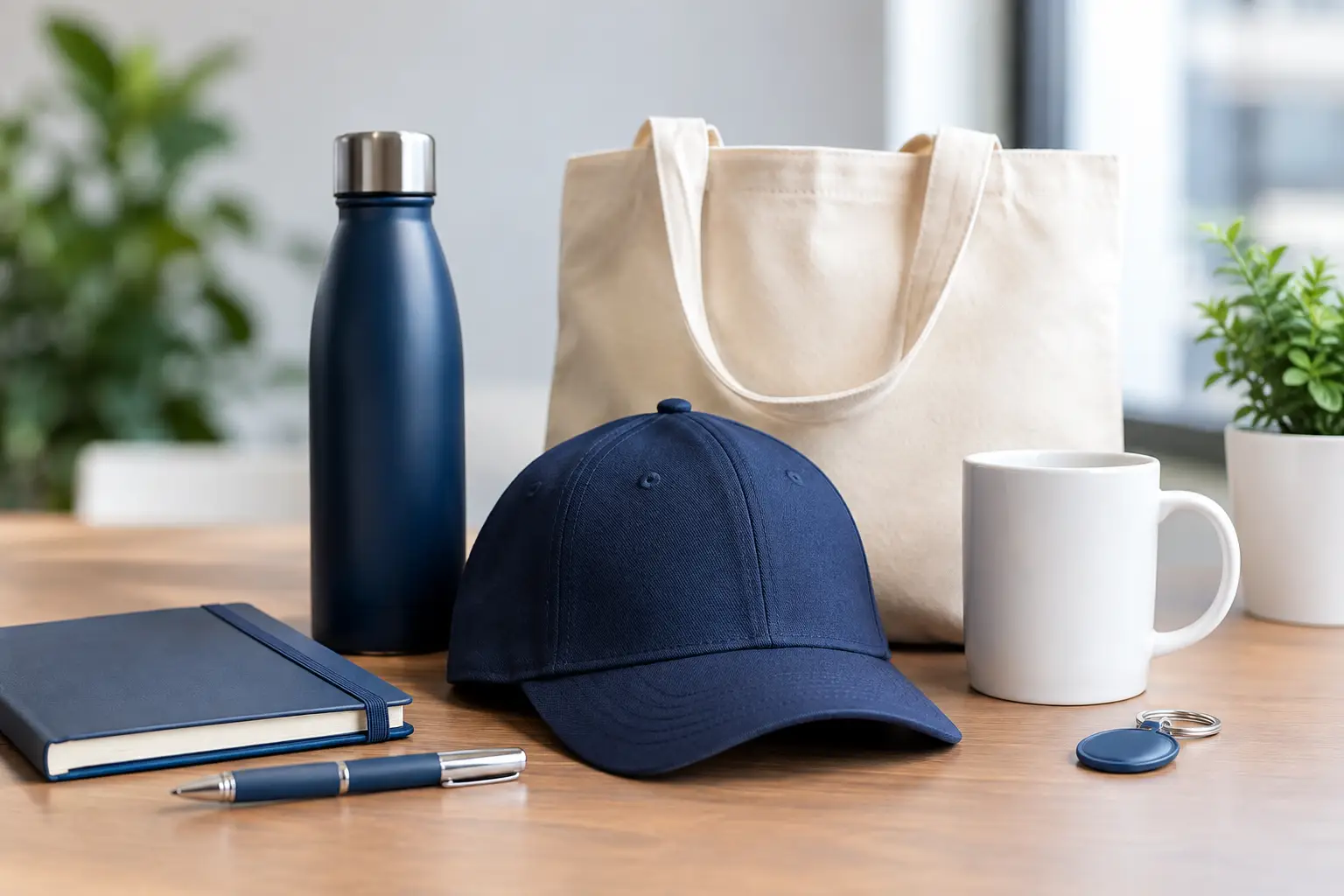
A restaurant can print a thousand menus, but a branded insulated mug carried to work every morning may create more repeat brand exposure. That is the practical value of promotional merchandise: useful items that keep a business name, logo, or message in front of customers after the first interaction is over.
For small businesses, retailers, event organizers, and corporate buyers, the best item is not always the cheapest giveaway. It is the product people will actually use, keep, and associate with a positive experience. A well-chosen promotional item can support a product launch, reward employees, improve event attendance, or make a routine customer purchase feel more complete.
Choose Promotional Merchandise for the Job
Start with the purpose, not the product catalog. A trade show giveaway has different requirements than restaurant staff uniforms or employee recognition awards. When the purpose is clear, selecting the right format, print method, quantity, and budget becomes much easier.
For high-volume events, compact products such as key chains, pens, stickers, and branded bags are practical because they are easy to distribute and transport. They work best when the logo is clear at a small size and the message is limited. A crowded design on a key chain or pen is difficult to read and rarely makes the intended impression.
For customer loyalty or premium gifting, consider mugs, USBs, caps, quality tote bags, or apparel. These items generally cost more per unit, but they offer greater perceived value and can stay in use for months or years. A local real estate agency may give branded tote bags to new homeowners, while a technology company may use USBs for conference kits or client presentations.
Uniforms serve a different function. Branded T-shirts, chef coats, aprons, caps, and workwear help customers identify staff while creating a consistent look across a team. For restaurants, salons, delivery services, retail stores, and event crews, uniforms are promotional merchandise with an operational role. The item is seen by customers, but it also supports professionalism during daily work.
Match the Item to the Audience
A useful product for one customer group may be irrelevant to another. Before ordering, consider where recipients work, travel, shop, and spend time. The goal is to select an item that fits naturally into that routine.
A coffee shop customer may appreciate a reusable mug. Parents attending a school event may use a durable branded tote bag. Corporate event attendees may value a notebook, USB, or insulated drinkware. Visitors at a family festival may respond well to low-cost caps, stickers, or key chains. The product does not need to be complicated. It needs to be useful enough to avoid being discarded.
There is also a difference between promotional items that attract new attention and items that strengthen an existing relationship. A low-cost giveaway can encourage booth visits or social sharing at an event. A higher-value gift can thank a long-term customer, reward a top-performing employee, or support a partnership. Treating every recipient the same can waste budget. Segmenting the order often produces better results.
Put the Brand Mark Where It Can Be Seen
A logo that looks sharp on a business card may not work on fabric, curved drinkware, or a small plastic item. Promotional merchandise needs artwork prepared for the product surface and decoration area. This is where many otherwise good orders lose impact.
Keep the design focused. A strong logo, business name, phone number, short slogan, or social handle may be enough. If the item is small, use the logo alone rather than forcing several lines of contact information into a limited print area. For apparel, think about viewing distance. A left-chest logo can be clean and professional, while a larger back print may be better for staff identification at busy events.
Color selection matters as well. A dark logo may disappear on a dark cap. A detailed full-color design may require a print method suited to gradients and small visual elements. Sublimation is often useful for full-color graphics on compatible products, while simpler one-color printing can be cost-effective for straightforward logos. The right method depends on the item material, artwork, order quantity, and expected use.
When ordering branded apparel, confirm garment color, print location, sizing breakdown, and whether the design is intended for screen printing, embroidery, heat transfer, or sublimation. A low price is valuable only if the finished product fits the application. Outdoor staff shirts, for example, may need durable decoration and fabric suited to frequent washing.
Build a Budget Around Use and Quantity
The most affordable unit price is not automatically the best buying decision. A 5,000-piece order may look attractive, but only if the business has a reliable way to distribute those items. Promotional stock that sits in storage is not generating attention.
Plan the order around a realistic distribution period. Estimate event attendance, monthly customer volume, employee headcount, or campaign duration. Then allow a reasonable extra quantity for replacements, late registrations, new staff, and future follow-up activity.
Costs typically change based on product material, decoration method, number of print colors, print positions, and quantity. A simple key chain with a one-color logo will usually have a different price structure than a full-color mug or embroidered cap. Higher quantities can reduce unit cost, but they also increase the risk of unused inventory if the design includes a date, seasonal message, or temporary campaign offer.
For recurring needs, standardize a few core branded items. A retailer may reorder shopping bags, staff T-shirts, stickers, and mugs throughout the year. Keeping the logo, colors, and artwork consistent makes repeat ordering faster and reduces the chance of mismatched branding across suppliers and campaigns.
Use Promotional Items With Other Print Materials
Promotional products work best when they are part of a complete customer touchpoint, not a standalone object. A branded mug at a corporate event can be paired with a brochure, presentation folder, name badge, and roll-up display. A new restaurant opening can combine staff uniforms, menus, window stickers, flyers, loyalty cards, and tote bags for a coordinated launch.
This approach also simplifies purchasing. Instead of sending separate orders to different vendors for stationery, signage, apparel, packaging, and giveaways, businesses can organize the campaign as one branded set. Seaonce supports this type of order with commercial print products, display materials, customized apparel, packaging, and branded giveaway items in one catalog.
Consistency is more valuable than adding every available product. Use the same logo version, core colors, and message across business cards, banners, stickers, uniforms, and merchandise. Specialty options such as spot UV, embossing, velvet lamination, or die-cut shapes can add impact to selected printed pieces, but they should support the campaign rather than compete with it.
Avoid Common Ordering Mistakes
The first mistake is choosing an item because it is popular rather than because it fits the recipient. A premium metal bottle can be a strong corporate gift, but it may be unnecessary for a short local promotion where branded stickers or key chains will reach more people. The opposite is also true: a very low-cost item may not be suitable for thanking a major client.
The second mistake is using artwork that was not designed for the product. Check logo readability, print size, color contrast, and placement before production. If the item has a limited decoration area, simplify the design. Clear branding beats tiny text every time.
The third mistake is ordering too close to the event date. Custom production requires time for artwork approval, printing or decoration, finishing, packing, and delivery. Build in time for revisions, especially when multiple departments need to approve the order or when apparel sizes must be collected from staff.
Finally, do not overlook the practical details. A tote bag needs enough strength for its intended contents. A mug should suit the audience and usage setting. Apparel needs an accurate size range. USB capacity should match the files being distributed. These details determine whether the item becomes useful or forgettable.
A good promotional item gives people a reason to keep your brand nearby. Select it with the same care you would use for your storefront sign, business card, or staff uniform, and it can continue working long after the event table is packed away.