

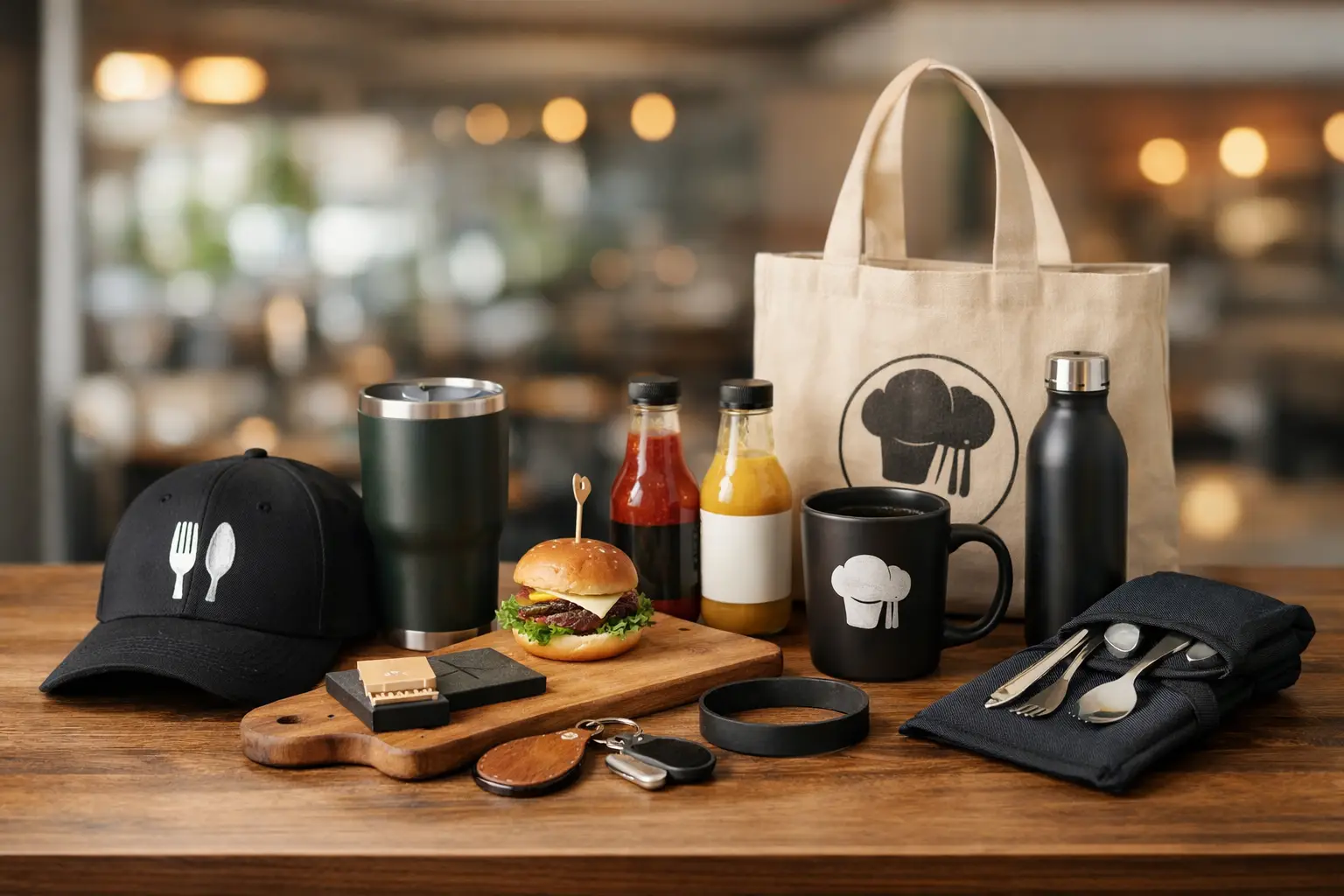
A busy lunch rush gives restaurants only a few seconds to make an impression. The best promotional products for restaurants keep working after the meal is served, whether they travel home in a takeout bag, sit on a customer’s desk, or appear in a social post. The right item should support a real operating need first, then carry your logo, colors, offer, or contact details in a format people will actually keep.
For most restaurants, the highest-value promotional products are not novelty giveaways. They are practical branded items that improve packaging, help staff look consistent, increase repeat orders, and make the restaurant easier to remember. Start with the products customers see most often, then add event and loyalty items when the budget allows.
12 Best Promotional Products for Restaurants
1. Branded takeout bags
Paper and reusable bags are high-visibility packaging for delivery, pickup, catering, and leftovers. A clean logo printed on the front turns every order into local advertising without adding another item to the customer’s hand.
For cafes, bakeries, and fast-casual locations, kraft paper bags suit a practical, natural look. Full-service restaurants and caterers may prefer stronger handled bags for larger orders. Keep the design simple: logo, phone number, website or ordering message, and one recognizable brand color are usually enough.
2. Custom food packaging stickers
Die-cut stickers are one of the most cost-effective tools in restaurant branding. Use them to seal takeout boxes, label drink cups, close pastry bags, identify sauces, or add a quick message to delivery orders.
Stickers also work well when you use stock packaging rather than ordering fully printed boxes. A high-quality sticker gives standard containers a branded finish while allowing smaller purchase quantities. For refrigerated items or greasy packaging, choose a material and adhesive suited to the surface and storage conditions.
3. Printed menus and menu inserts
Menus are sales tools, not just item lists. A well-printed menu makes food photography, signature dishes, add-ons, and higher-margin beverages easier to notice. For restaurants that change specials frequently, menu inserts provide more flexibility than reprinting an entire menu.
Choose paper stock based on use. A disposable dine-in menu or takeout menu can use a standard coated stock. For repeated table service, heavier stock with lamination holds up better against spills and frequent handling. Matte lamination is easy to read under restaurant lighting, while spot UV can highlight a logo or featured category.
4. Loyalty cards
Loyalty cards give customers a reason to return before they try a competitor. Coffee shops, smoothie bars, pizza counters, dessert stores, and quick-service restaurants can use stamp cards for a simple offer such as buy nine, get the tenth free.
A standard business-card size is easy to carry and inexpensive to replace. Use a writable uncoated area for stamps, dates, or initials. If your program includes a higher-value reward, add terms such as expiration date, one card per customer, or exclusions in readable type.
5. Branded gift cards and holders
Gift cards bring in revenue before a meal is served and introduce the restaurant to new customers. They are especially useful for holidays, teacher gifts, employee recognition, and local corporate orders.
PVC cards offer a durable, professional option for physical gift cards. Pair them with branded card holders or small envelopes so the purchase feels like a complete gift. Restaurants with seasonal promotions can print limited-edition designs while keeping the core logo and redemption details consistent.
6. Staff uniforms, T-shirts, and chef coats
Uniforms make a restaurant look organized across the host stand, dining room, kitchen, food truck, and delivery handoff area. Branded T-shirts work well for casual concepts, while embroidered or printed polos suit managers and front-of-house teams. Chef coats and aprons add a more polished look for open kitchens, catering operations, and culinary events.
Do not over-design staff apparel. A logo on the left chest and a larger back print are enough for most teams. Consider garment color carefully: black hides stains, while lighter colors may better match a bakery, cafe, or health-focused concept. Ordering common sizes in reserve prevents a rushed reorder when new employees start.
7. Caps and aprons
Caps and aprons are practical restaurant workwear that also build visual consistency. They are particularly useful for baristas, food truck crews, counter-service teams, outdoor event staff, and barbecue concepts.
An embroidered logo can provide a premium finish on caps, while screen printing or heat transfer may be more suitable for apron graphics and short-term event use. Check logo size before production. Fine details that read well on a menu may not reproduce clearly on a small cap front.
8. Branded drinkware
Custom mugs, tumblers, and reusable cups work best when they fit the restaurant model. A neighborhood cafe can sell branded mugs as merchandise or use them as a loyalty reward. A brewery, juice bar, or meal-prep business may use tumblers for customer gifts, staff incentives, or event promotions.
Drinkware has a higher unit cost than stickers or cards, so it should support a specific goal. Reserve it for frequent customers, influencer events, grand openings, catering clients, or retail merchandise rather than handing it out to every diner.
9. Key chains and bottle openers
Small branded key chains and bottle openers are useful for bars, pizzerias, burger restaurants, breweries, and neighborhood pubs. Their value comes from repeat visibility. Customers may keep them on keys, in a kitchen drawer, or near a home bar for years.
Use short copy. A logo, location, and simple call to action such as “Order Again” or “Visit Us” is more effective than a crowded design. These items also make practical additions to a gift card bundle or grand-opening giveaway.
10. Custom coasters
Coasters protect tables while creating an extra branded touchpoint for dine-in customers. They are a strong choice for bars, wine restaurants, cafes, lounges, and venues with a beverage-forward menu.
Use coasters for more than a logo. Add happy-hour hours, a QR code for reservations or online ordering, a featured cocktail, or an upcoming event. Because coasters are replaced regularly, they are ideal for time-sensitive offers and seasonal campaigns.
11. Table tents and countertop displays
Table tents are not traditional giveaways, but they are among the most effective restaurant promotional products because they influence orders at the point of purchase. Place them on tables, host stands, pickup counters, and bar areas to promote specials, desserts, loyalty programs, catering, or social media contests.
A small printed display can move attention toward an item with good margin. For best results, focus each table tent on one action. Asking customers to scan a code, order a dessert, join a rewards program, and follow three social accounts on one card creates clutter and reduces response.
12. Catering folders, flyers, and postcards
Catering is often a high-value revenue channel, and it needs professional leave-behind materials. Flyers and postcards can promote office lunches, party trays, holiday meals, and private events. Presentation folders are useful for wedding venues, corporate administrators, hotel partners, and event planners reviewing larger catering packages.
Use strong food images only when they are professionally photographed. Otherwise, lead with clear package information, serving counts, order deadlines, and contact details. A postcard with a limited-time catering offer can be distributed locally or included in every delivery order.
How to Choose Restaurant Promotional Products That Pay Off
Start with the customer journey. A delivery-heavy restaurant should prioritize bags, labels, inserts, and reorder promotions. A dine-in restaurant may get more value from menus, coasters, table tents, and staff uniforms. A catering business needs polished folders, flyers, gift cards, and branded apparel that looks professional off-site.
Then consider frequency. Products used every day usually provide better value than one-time giveaways. Stickers, takeout bags, menus, uniforms, and loyalty cards may be reordered often, but they reach customers consistently. Higher-cost items such as mugs, caps, and bottle openers should have a defined role in a campaign or merchandise plan.
Print finish matters, but only when it supports the item’s use. Lamination helps menus last longer. Spot UV and embossing can make gift cards or premium catering materials feel more substantial. Waterproof or durable materials may be necessary for labels, outdoor menus, or beverage-related items. A specialty finish is not automatically better if it increases cost without improving durability or customer perception.
Build a Practical First Order
For a new restaurant or a brand refresh, begin with the products that affect daily operations: menus, stickers, takeout bags, staff shirts, and loyalty cards. This combination covers packaging, in-store presentation, staff visibility, and repeat business without creating a large inventory of novelty items.
Once those basics are in place, add products based on a clear opportunity. A restaurant launching catering can order flyers and folders. A bar planning a grand opening can add coasters and bottle openers. A cafe with loyal regulars can test branded mugs or reusable tumblers. Seaonce can help keep these recurring print and promotional categories in one ordering workflow, which simplifies reorders when stock runs low.
The most effective restaurant promotional product is the one customers see at the right moment and staff can use without extra effort. Put your budget behind useful items, keep the branding clear, and make every printed piece give customers one good reason to come back.