

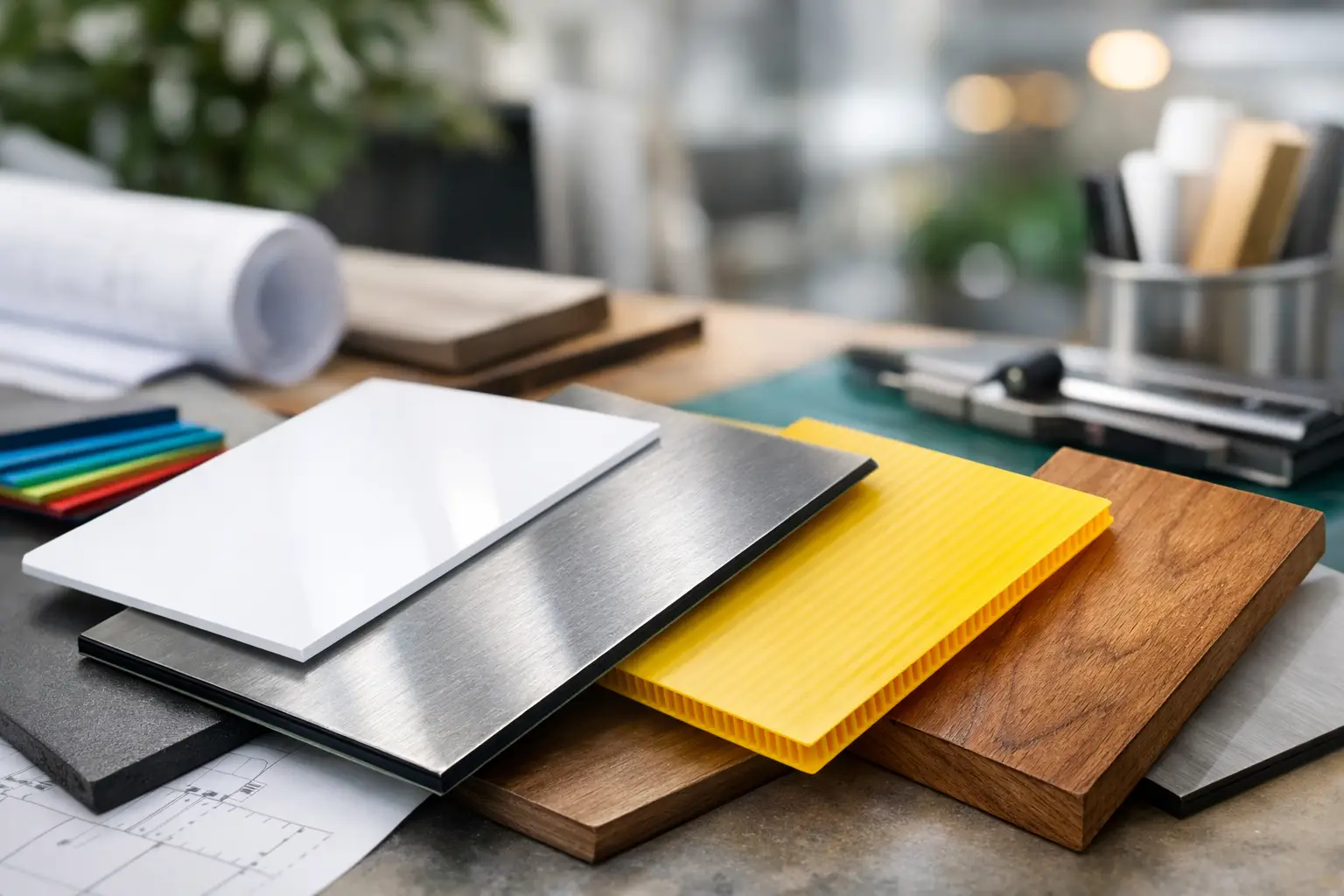
A sign can look sharp on screen and still fail at the job site. The usual reason is not the artwork. It is the substrate. This guide to best sign board materials explained helps business owners choose a board that fits the location, expected lifespan, budget, and mounting method before sending artwork to print.
A temporary open-house sign, a restaurant wall menu, and a storefront panel need very different materials. Choosing the least expensive option without considering weather, rigidity, and finish can lead to curling, fading, cracked corners, or an installation that costs more than the sign itself.
Best Sign Board Materials Explained by Use
The right sign board starts with one practical question: where will it be used? Indoor signs usually prioritize print quality and appearance. Outdoor signs need to handle sun, rain, wind, and temperature changes. Signs that move from location to location need to stay light enough for easy transport.
Material thickness matters, too. A thin board may work in a frame or against a wall, while a freestanding sign needs more rigidity. Before ordering, confirm the final dimensions, whether holes or standoffs are needed, and whether the sign will be installed flat, hung, or placed in a sign holder.
Foam Board for Indoor Promotions
Foam board consists of a lightweight foam center with smooth paper or plastic faces. It is a common choice for indoor point-of-sale displays, presentations, directional signs, photo boards, event welcome signs, and short-term promotions.
Its main advantage is low weight. Large foam board signs are easy to carry, mount with adhesive strips, or place on an easel. The smooth surface also supports clear full-color graphics, making it a practical option when appearance matters but the display is temporary.
Foam board is not designed for wet conditions. Rain can damage the paper-facing layers, and the board can dent or warp if handled roughly. Use it inside or in a covered space, not as a long-term exterior storefront sign.
Corrugated Plastic for Affordable Outdoor Signs
Corrugated plastic, often called coroplast, has a fluted interior similar to cardboard but is made from polypropylene plastic. It is light, water-resistant, and economical for temporary outdoor signage.
This material is widely used for real estate signs, construction notices, campaign signs, yard signs, parking directions, school events, and seasonal sales. The internal channels allow wire stakes to slide into the board, which makes installation fast for lawn signage.
Corrugated plastic performs well for short- to medium-term outdoor use. It can flex in strong wind, particularly at larger sizes, so it is not the best choice for permanent wall-mounted signage. For a more finished look, use it with a frame or choose a rigid PVC or aluminum composite panel instead.
PVC Board for Durable Indoor and Outdoor Signs
PVC board, also sold as expanded PVC or Sintra-style board, is a rigid plastic sheet with a smooth, matte surface. It is one of the most flexible sign materials for businesses because it works well indoors and outdoors, is moisture-resistant, and produces clean printed graphics.
Use PVC for retail signs, menu boards, office branding, wall displays, trade show graphics, property signs, directional panels, and mounted logo signs. It is more durable than foam board and generally offers a more professional finish than corrugated plastic.
PVC is available in different thicknesses. Thinner options are suitable for wall applications and framed signs, while thicker boards give added stiffness for larger panels. For exterior use, proper mounting is essential. A board that is too thin for its size may bow over time, especially in heat or wind.
Aluminum Composite Material for Long-Term Exterior Use
Aluminum composite material, often shortened to ACM or ACP, has two aluminum faces bonded to a solid plastic core. It is rigid, weather-resistant, and built for signs that need to stay in place for years rather than weeks.
ACM is a strong fit for storefront panels, building signs, parking signs, construction site signs, property management signs, wayfinding systems, and branded exterior displays. It resists warping better than plastic boards and handles rain and sunlight well when printed with outdoor-rated inks.
The trade-off is cost and weight. ACM costs more than corrugated plastic and foam board, and it requires more secure mounting. For a permanent or high-visibility sign, that investment usually makes sense. A panel that stays flat and professional through changing weather protects the look of the business behind it.
Acrylic for Premium Branded Displays
Acrylic is a rigid plastic with a polished, glass-like appearance. Clear, white, black, and colored acrylic boards are used when the sign itself needs to feel premium, not merely functional.
It works especially well for reception signs, office logos, salon signage, room plaques, donor boards, retail wall displays, and menu panels. Printed acrylic can be mounted with standoffs to create depth between the wall and the sign, giving a clean finished appearance.
Acrylic is more expensive than PVC and requires careful handling because edges can chip or crack under impact. It is best for locations where presentation is a priority and the sign will not be moved often. For a similar rigid panel at a lower cost, PVC is usually the more practical choice.
Aluminum Signs for Tough, Functional Applications
Solid aluminum sign boards are made for demanding environments. They are commonly used for regulatory signs, traffic and parking signs, safety notices, industrial facilities, equipment labels, and long-term outdoor wayfinding.
Aluminum does not rust, performs well in wet conditions, and holds up against sun exposure. It can be paired with reflective vinyl for visibility near roads, parking lots, and low-light areas. If the sign needs to meet a safety, directional, or compliance purpose, aluminum is often worth considering.
For decorative storefront graphics, ACM may provide a more cost-effective option with a similar flat metal appearance. Solid aluminum is the better fit when strength and long service life are the main purchasing factors.
Match the Board to the Print Finish
The material is only one part of the finished sign. Print method, protective lamination, and finishing details affect how it looks and how long it lasts.
A matte finish reduces glare and is useful for indoor menus, office signs, and displays viewed under bright lighting. Glossy finishes make colors appear more vivid, but reflections can make small text harder to read. For outdoor signs, UV-resistant printing and protective lamination help maintain color and reduce surface wear.
Cutting and mounting should be planned before production. Standard rectangle boards are the most cost-efficient. Custom contour cutting, drilled holes, rounded corners, routed shapes, and standoff mounting create a more tailored result but add production steps. Supply artwork at the final sign proportion and keep critical text away from edges, holes, and corners.
A Practical Buying Check Before You Order
Use these five checks to narrow down the material quickly:
- Location: Choose foam board for indoor displays, corrugated plastic for temporary exterior use, and PVC, ACM, or aluminum for longer-term outdoor signs.
- Lifespan: Match the material to the campaign duration. A weekend event does not need an ACM panel, while a storefront sign should not rely on foam board.
- Size: Larger signs need more rigidity. Thin boards can bow or flex when oversized.
- Mounting: Confirm whether you need stakes, drilled holes, adhesive backing, frames, screws, or standoffs.
- Viewing distance: Use larger type and simpler graphics for roadside, window, and parking signs. Fine details work better on close-viewed indoor boards.
Avoid Common Sign Board Mistakes
The first mistake is selecting a material based only on price. Low-cost boards are valuable for short promotions, but replacing a damaged sign quickly removes the savings. Consider the full job: printing, installation, exposure, and the cost of a reprint.
The second mistake is treating every outdoor location the same. A covered patio, a sunny storefront window, and an exposed roadside installation face different conditions. Wind load, direct sunlight, moisture, and mounting surface all change the right specification.
The third mistake is using indoor-style artwork for a long-distance sign. A board can have excellent print quality and still be hard to read. Keep the main message short, prioritize contrast, and make the business name, offer, or direction visible at the distance where customers will first see it.
Seaonce customers can simplify repeat orders by keeping approved sign sizes, artwork files, and material choices consistent across locations. That is especially useful for retailers, restaurants, event organizers, and property managers who need matching signs throughout the year.
A sign board is a working business asset, not just a printed panel. Choose the material for the conditions it will face, and the finished sign has a better chance of staying clear, straight, and on-brand when customers see it.