

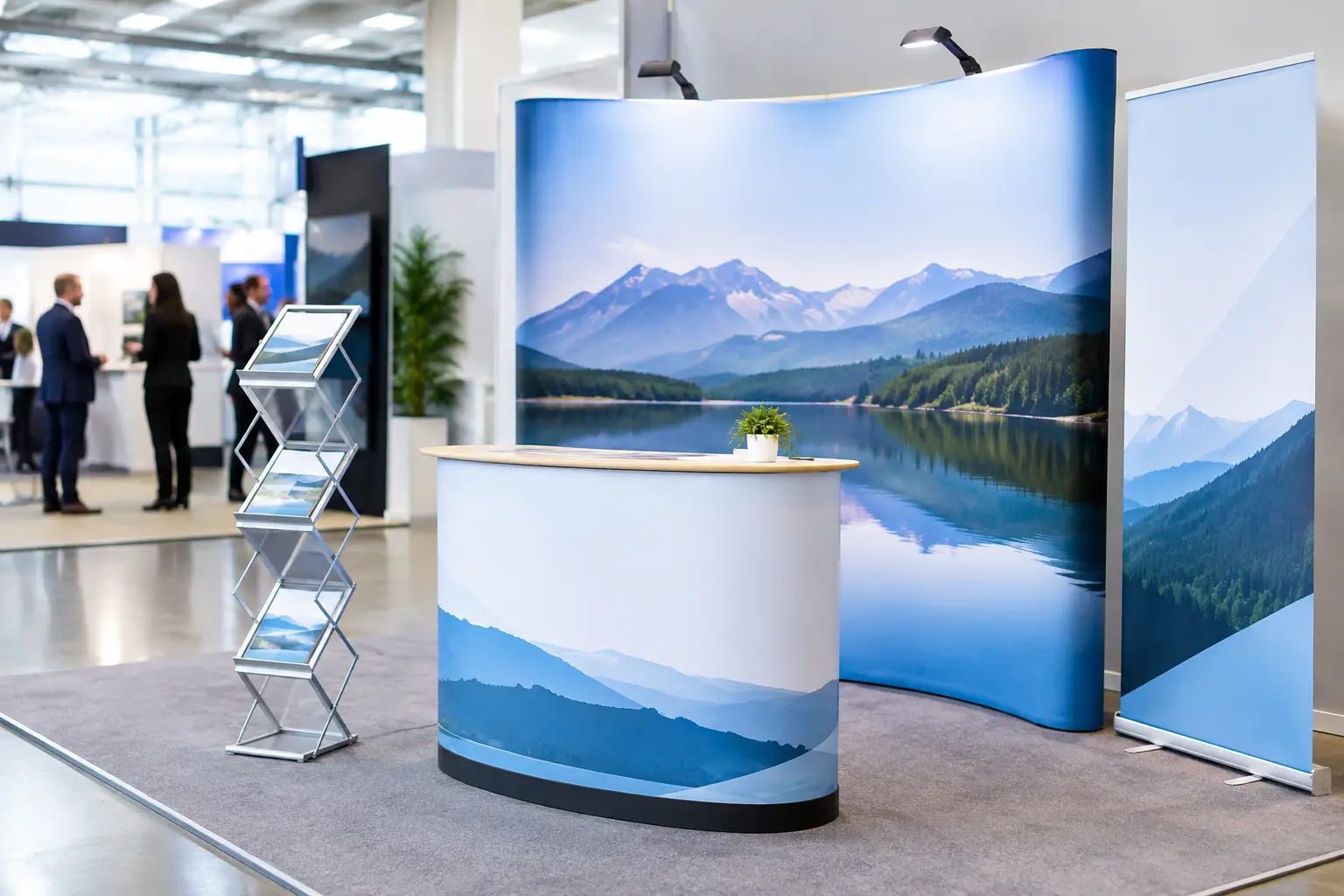
A crowded exhibit hall gives visitors only a few seconds to notice your brand. The best trade show display materials make that first impression work harder: they keep graphics sharp under event lighting, fit the venue and booth size, travel without unnecessary freight cost, and hold up through repeated setup.
The right choice is rarely one material for every job. A lightweight roll-up banner may be ideal for a one-day local expo, while a fabric backdrop and rigid PVC signs can make more sense for a larger booth with multiple product zones. Start with how often you exhibit, how you transport displays, where the display will be used, and how close attendees will stand to it.
Best Trade Show Display Materials by Display Type
Trade show displays usually combine flexible graphics, rigid signage, and portable hardware. Each has a different role in the booth.
Vinyl for banners and outdoor-ready graphics
Vinyl is one of the most common banner materials because it is economical, durable, and easy to print in large sizes. It works well for retractable banners, hanging banners, sponsor walls, directional signs, and displays that may be exposed to dust, moisture, or frequent handling.
For indoor booths, smooth banner vinyl gives strong color reproduction and a clean finish for logos, product photos, and large promotional messages. If your display will be placed near a window, entrance, loading area, or outdoor activation, choose a heavier vinyl stock and proper finishing such as hemmed edges and grommets. These details prevent curling, tearing, and stress around mounting points.
Vinyl is practical, but it is not always the premium-looking option. Large vinyl graphics can show glare under direct spotlights, and repeated folding may leave creases. Store banners rolled rather than folded whenever possible.
Fabric for backdrops and premium booth walls
Fabric displays are a strong choice for branded backdrops, tension walls, step-and-repeat photo areas, and portable exhibit systems. Dye-sublimation printing places color directly into polyester fabric, producing a matte surface with minimal glare. This is especially useful when attendees will photograph your booth or when your display includes detailed images and dark color fields.
Fabric is also easy to transport. Many backdrop graphics fold into a carry bag and can be washed or steamed if needed. Stretch fabric systems create a smooth, fitted appearance over an aluminum frame, while pillowcase-style graphics cover the structure from one side to the other.
The trade-off is setup. A fabric wall needs a compatible frame and careful installation to avoid wrinkles or uneven tension. It may also cost more than a basic vinyl banner, but it is a better long-term investment for businesses that attend conferences, retail events, and corporate exhibitions regularly.
PVC foam board for rigid indoor signs
PVC foam board is lightweight, rigid, and widely used for price boards, product information signs, counter displays, menus, and booth-mounted branding. It provides a flat printing surface that keeps text readable and graphics clean at close viewing distance.
For indoor trade shows, PVC board is often more practical than heavier materials. It can be mounted to walls, placed on easels, fitted into display stands, or used as a branded panel behind shelves and tables. Thickness matters here. Thin boards are easier to carry but can bend on larger signs, while thicker boards feel more stable and professional.
PVC foam board is not the best option for repeated shipping without protection. Corners can dent, and large panels require flat packing. Use it for displays that stay at one location, travel by vehicle, or can be produced locally for each event.
Corrugated plastic for temporary and directional signage
Corrugated plastic is a lightweight fluted material used for temporary signs, directional arrows, parking signs, booth notices, and short-term promotions. It is water-resistant and budget-friendly, making it useful for outdoor events and high-volume signage requirements.
This material is not intended for close-up premium presentation. Small text and detailed product photography are better on PVC board, fabric, or vinyl. Corrugated plastic performs best when the message is simple: booth number, event direction, sale announcement, registration point, or sponsor identification.
Acrylic for polished counter displays
Acrylic signs add a more finished look to reception counters, display tables, product showcases, and premium service booths. Clear, frosted, or colored acrylic can support printed logos, QR codes, pricing, and product instructions while keeping the presentation clean and structured.
Acrylic is heavier and more fragile than foam board, so it is usually best for smaller formats. It works well when your business needs a permanent branded sign for a showroom, salon, restaurant, clinic, or office event setup. For trade shows, pack acrylic pieces with edge protection and avoid using them as the only major display element.
Match the Material to Booth Conditions
Before ordering, consider the environment. Indoor convention centers usually allow lighter materials because weather exposure is not a concern. Still, air conditioning, bright overhead lighting, crowded aisles, and strict setup schedules affect what performs well.
If your booth is in a high-traffic aisle, use rigid panels or stable banner hardware for any display at hand level. Lightweight paper signs can curl, tear, or look worn before the event ends. For outdoor festivals and pop-up markets, vinyl banners and corrugated plastic are more reliable than paper-based materials. Add weighted bases, secure mounting, and weather-conscious finishing.
Viewing distance also changes the material decision. A large backdrop viewed from 10 to 20 feet away needs bold graphics and fabric or vinyl that can cover the required size. A tabletop product sign viewed from two feet away needs crisp small text, so PVC board or acrylic is usually a better fit.
Print Finish Matters as Much as the Base Material
The material creates the structure, but the finish affects how the display looks under event lighting and how long it stays presentable. Matte surfaces reduce glare and are usually safer for text-heavy signs, photography backdrops, and dark brand colors. Gloss finishes make colors appear more vivid, but fingerprints and reflected light can become visible.
For rigid signs, lamination adds surface protection and makes cleanup easier. Matte lamination is practical for menus, price lists, and instructional signage. Gloss lamination can work for promotional product images where color impact is the priority. Specialty options such as spot UV or embossing are best reserved for small premium pieces, such as branded counter cards or presentation folders, rather than large-format booth graphics.
Do not use finishing simply because it looks premium on a sample. A high-gloss display in a venue with strong overhead lights may be harder to read than a basic matte sign. The final use should guide the finish.
Build a Display Mix Instead of Ordering One Large Sign
A booth performs better when each display has a clear task. Your main backdrop should identify the brand and primary offer. A roll-up banner can highlight one product, service, promotion, or benefit. Rigid signs can organize pricing, product features, demonstrations, and directions. Counter cards can support conversations after visitors stop.
For a practical starter setup, many small businesses need one branded backdrop or large banner, two retractable banners, a few rigid product signs, and printed handouts such as flyers, brochures, or business cards. This mix gives you visibility from the aisle and useful information at the table without overloading the booth.
Keep the same logo placement, brand colors, typefaces, and message hierarchy across every item. When a visitor sees a banner first and a flyer later, both should clearly belong to the same business. Seaonce can help businesses order large-format displays alongside everyday print materials, reducing the need to coordinate separate suppliers for event collateral.
Check Portability, Replacement Cost, and Reuse
The lowest material cost is not always the lowest event cost. A cheap display that tears during setup or looks dated after one use may need to be replaced quickly. A fabric backdrop with a reusable frame can cost more initially, but only the printed graphic may need replacing when your campaign changes.
Retractable banner systems are another example. The printed vinyl or fabric graphic is important, but the base and carrying case affect how well the display survives transport. If you exhibit often, choose hardware built for repeated use rather than treating every event as a one-time setup.
Ask how each item will travel. Displays carried in a car have different requirements from displays shipped by freight or checked as airline baggage. Foldable fabric, roll-up banners in cases, and compact modular frames reduce handling problems. Large rigid panels may be worth the effort when they will remain in a showroom or be used for a major event where presentation quality matters more than portability.
Prepare Artwork for the Material You Choose
Even the right material can look poor with incorrect artwork. Use high-resolution images, vector logos, readable fonts, and colors that match your brand files. Keep critical text away from hems, grommets, edges, and frame channels. For fabric graphics, allow for wrap areas and tension around the frame. For rigid boards, account for drill holes, stands, or mounting hardware.
Avoid filling every available inch with information. Trade show visitors should understand what you sell before they reach your table. Use a strong headline, one primary visual, and a clear next action such as requesting a quote, scanning a code, viewing a sample, or speaking with your team.
Choose materials that fit the job you need them to do, then protect the investment with the right finish, hardware, and packing. A well-planned display system can be updated one piece at a time as your promotions, products, and event calendar change.