

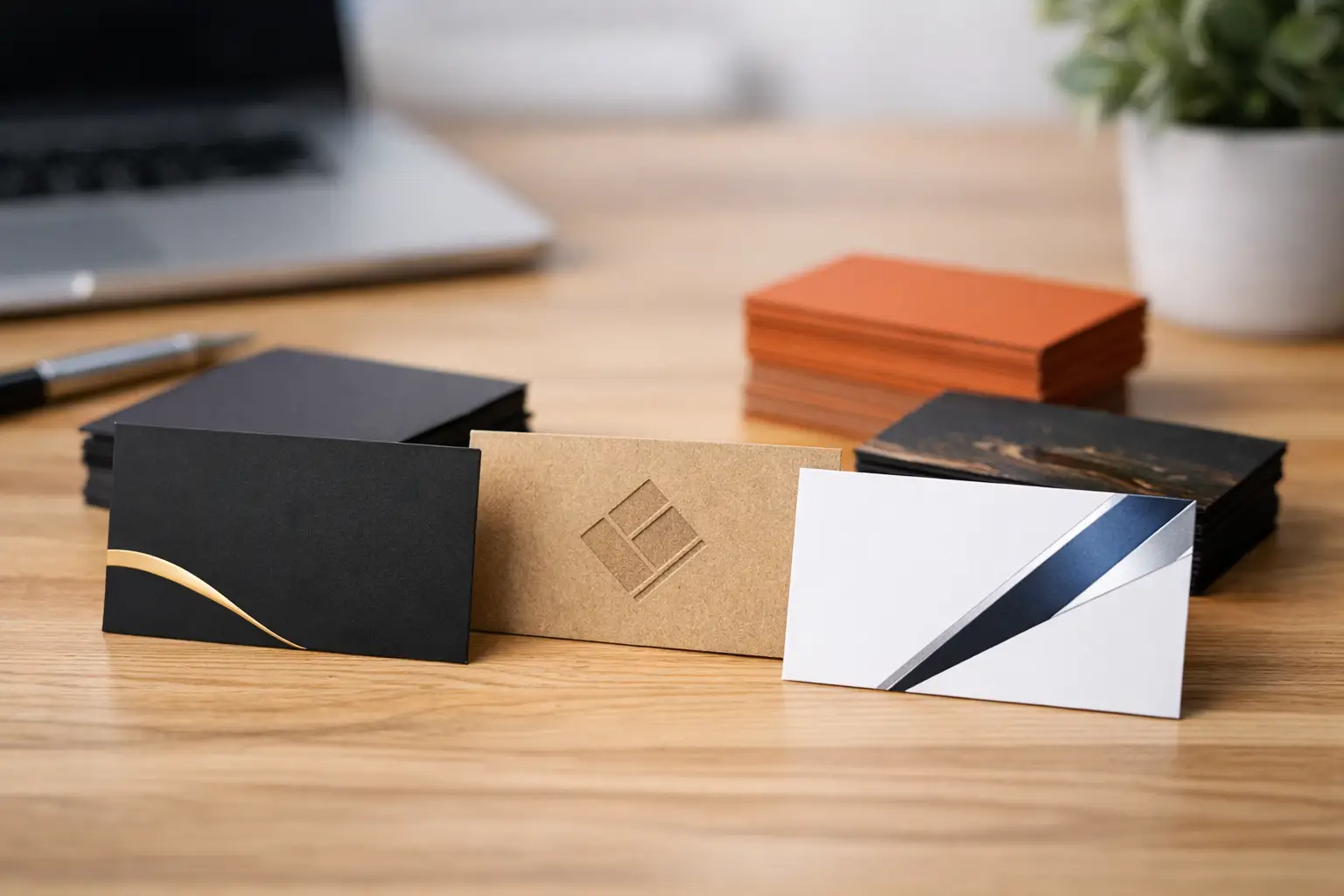
A business card still gets judged in about three seconds. The paper feel, print quality, finish, and layout all signal whether your brand looks established or thrown together. That is why custom business cards are not just a basic office print item. They are a practical sales tool that needs the right stock, the right finish, and the right information.
For a startup meeting investors, a salon booking local clients, or a restaurant owner building vendor contacts, the card has one job – make the next step easy. If the design is crowded, the stock feels weak, or the finish does not match the business, the card works against you. A good card looks professional, holds up in a wallet, and reflects the kind of business you run.
What custom business cards actually need to do
Custom business cards are often treated like a small purchase, but they have a direct effect on first impressions. They need to identify the brand clearly, give accurate contact details, and support how the business wants to be perceived. That sounds simple, but the choices around material, coating, thickness, and print style all change the result.
For some buyers, a standard coated card on a reliable stock is enough. It is affordable, fast to reorder, and suitable for daily use. For others, especially in premium services, luxury retail, beauty, hospitality, or real estate, specialty finishes matter more. Velvet lamination, spot UV, embossing, or PVC stock can help the card stand out, but only if they fit the brand. A flashy finish on a simple local service card can feel unnecessary. A plain uncoated card for a high-end brand can feel underwhelming. The right option depends on use case, audience, and budget.
Choosing the right stock for custom business cards
Paper stock is the first decision because it affects durability, feel, and print appearance. A thinner card may lower cost, but it can also bend easily and look less substantial. Heavier stocks usually feel more credible in hand, especially when cards are exchanged in formal meetings or sales settings.
Coated stocks are popular for sharp color and clean graphics. They suit logos, photos, and modern layouts well. Gloss finishes can add brightness, but they also create more shine, which is not ideal for every brand. Matte finishes reduce glare and often look more controlled and professional. If the brand identity uses muted tones or minimalist design, matte generally works better.
Uncoated stocks have a different purpose. They offer a softer, more natural feel and are easier to write on, which helps for appointment cards, personal notes, or cards used by consultants and service businesses. The trade-off is that colors may appear less vibrant than on coated surfaces.
PVC business cards sit in another category. They are more durable, water-resistant, and visually distinctive. They fit businesses that want a modern, durable presentation, but they cost more than standard paper cards. They are better suited for brands that want a premium or unconventional look rather than high-volume low-cost distribution.
Finishes that change the feel of the card
The finish is where many buyers either improve the card significantly or overcomplicate it. Lamination, spot UV, foil effects, and embossing all add impact, but each one changes both appearance and handling.
Velvet lamination gives the card a soft-touch feel and a more premium surface. It is a strong option for luxury services, boutiques, beauty brands, consultants, and agencies because it feels refined without being loud. Spot UV works best when used selectively, usually to highlight a logo, pattern, or brand name. It adds contrast against matte or velvet surfaces, but if overused, it loses the effect.
Embossing adds texture by raising part of the design. It works well for logos or names where tactile detail supports a premium brand position. The key is restraint. Too many effects on one card can make it look busy and push up unit cost without adding much value.
If the goal is practical volume for handouts, events, and daily networking, a clean laminated or matte card is often the better buy. If the goal is selective use in high-value meetings, premium finishing can justify the extra spend.
Size, shape, and layout decisions
Standard size remains the safest choice because it fits wallets, card holders, and desk organizers. It also keeps replacement and reorder decisions simple. That matters for businesses with recurring demand and multiple staff members.
Custom shapes and die-cut formats can help certain brands stand out, especially in creative industries, entertainment, food service, or event promotion. But there is a trade-off. Non-standard cards may cost more, take longer to produce, and store less conveniently. If the shape interferes with readability or contact details, the novelty does more harm than good.
Layout matters just as much as shape. Many business cards fail because they try to fit too much into a small space. Keep the hierarchy clear. Brand name or logo first, then person’s name and role if needed, then contact information. White space is not wasted space. It helps the card look organized and easier to scan.
What to include and what to leave off
The best custom business cards are selective. Most businesses need the brand name, contact person, phone number, email, and website. A physical address may matter for walk-in retail, restaurants, clinics, and offices, but not for every business. Social media handles can be useful if they are active and customer-facing. If they are rarely updated, they can weaken the impression instead of improving it.
A QR code can be useful when it leads to something specific such as a digital menu, booking page, portfolio, or contact card. It should not be added just because it is available. If the destination is not mobile-friendly or does not help the recipient take action quickly, the code wastes space.
Taglines and service lists need discipline. A short phrase that clarifies the business can help, especially for startups or local service brands. A long list of every service usually creates clutter. If the brand offers broad printing, signage, packaging, and promotional products, the card should present that clearly without turning into a mini catalog.
Matching the card to the business type
Different industries need different card styles. A law office, accounting firm, or medical administrator usually benefits from a conservative layout, solid stock, and restrained color use. Trust and clarity matter more than visual experimentation.
A restaurant, catering company, salon, or retail brand may want stronger color, coated stock, and a finish that adds personality. These businesses often rely on local referrals and repeat contact, so the card should feel memorable without being difficult to read.
For event organizers and sales teams, durability matters because cards are handled often and in volume. For premium consultants, designers, or luxury service providers, fewer cards with better material and finishing can make more sense than a large run of basic stock.
That is why there is no single best card. The right choice depends on where the card is handed out, how often it is used, and what kind of impression the brand needs to create.
Ordering custom business cards without costly mistakes
Most problems happen before printing starts. Low-resolution logos, incorrect phone numbers, weak color contrast, and inconsistent branding create expensive reprints. Before placing an order, check that the artwork matches the final dimensions, text is readable at actual size, and brand colors are consistent with other printed materials.
It also helps to think beyond one order. If the business will need matching flyers, brochures, stickers, packaging, or signage later, consistency should start with the business card. Buyers often save time when they source recurring print products from one supplier instead of rebuilding files and specifications across multiple vendors. For businesses ordering across categories, that convenience matters as much as price.
If premium finishes are involved, review whether they support the layout or compete with it. Spot UV needs contrast. Embossing needs space. Velvet lamination works best with designs that are already clean and balanced. Specialty options can improve the final product, but only when the base design is strong.
Seaonce serves buyers who need that range of options in one place, from standard cards to specialty finishes and broader branded print requirements. For many businesses, that matters because business cards are rarely the only item on the purchasing list.
Custom business cards as a repeat-order product
Business cards are not a one-time buy. Staff changes, contact updates, event cycles, and rebranding all create repeat demand. That makes consistency, reorder speed, and material availability more important than many first-time buyers expect.
A card that looks good once but cannot be matched later creates avoidable problems. Standardized print packages, clear stock options, and visible finish choices make repeat ordering easier, especially for offices, growing teams, and multi-location businesses. If different employees need cards over time, using the same layout and stock keeps the brand presentation consistent.
A business card does not need to be complicated to work well. It needs to be well chosen. Start with the brand, decide how the card will be used, and pick a stock and finish that support that purpose. When the materials, design, and information all line up, the card stops being a formality and starts doing its job.