

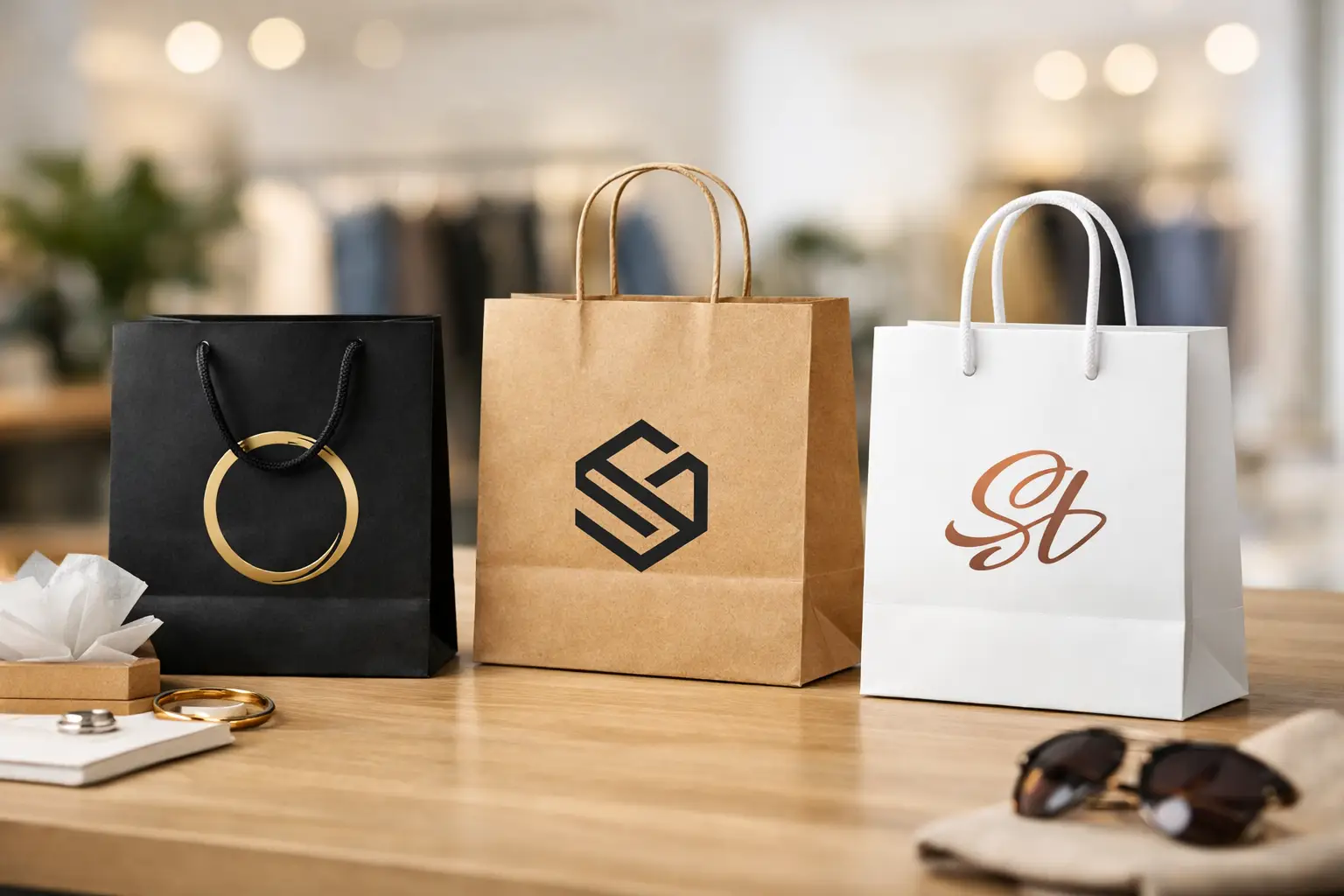
A plain bag does the job once. A branded bag keeps working after the sale. For retailers, food businesses, event teams, and growing brands, custom paper bags with logo are not just packaging – they are part of the customer experience, part of your brand presentation, and often part of your day-to-day marketing.
If you hand over a product in generic packaging, the transaction ends at the counter. If you hand it over in a well-printed paper bag with the right size, stock, handle, and finish, your brand leaves the store with the customer. That matters for boutiques, bakeries, takeout counters, trade shows, corporate gifting, and promotional events where presentation affects how your business is remembered.
Why custom paper bags with logo make sense
The main reason businesses buy branded bags is simple – visibility. Your logo, colors, and design move through malls, sidewalks, office buildings, conferences, and delivery handoffs. You are turning routine packaging into brand exposure without adding a separate advertising channel.
There is also a practical side. Paper bags help standardize presentation across locations, staff, and order types. A customer picking up pastries, apparel, cosmetics, documents, or event kits sees the same identity every time. That consistency is valuable, especially for businesses already investing in business cards, flyers, stickers, menus, uniforms, or signage.
Paper bags can also support perceived value. Customers tend to notice when packaging feels considered rather than improvised. A stronger paper stock, clean logo placement, and suitable handle option can make even a modest purchase feel more polished. That does not mean every order needs premium finishing. It means the bag should match the product and the brand position.
Where branded paper bags work best
Retail is the obvious use case, but not the only one. Fashion stores, gift shops, bookstores, cosmetic brands, and specialty food outlets use custom paper bags because customers carry purchases out in full view. In these settings, bag quality influences brand perception immediately.
Restaurants, cafes, bakeries, and dessert brands also use them for takeaway and delivery packaging, especially for lighter items. For food service, the decision usually comes down to size range, grease resistance needs, handle strength, and whether the bag must hold boxed items, cups, or multiple containers.
Event organizers often need branded bags for registration kits, brochures, giveaways, certificates, and sponsor materials. Corporate teams use them for conferences, onboarding packs, internal events, and client handovers. In both cases, the bag works as packaging and as part of the visual setup.
For small businesses and startups, custom paper bags with logo can be one of the easiest branded assets to introduce. Compared with more complex packaging systems, paper bags are straightforward to order, simple to distribute, and useful across daily sales.
Choosing the right bag size and format
The best-looking print will not help much if the bag size is wrong. Oversized bags make small products look underpacked. Undersized bags create handling problems and can damage presentation at the point of sale.
Start with what the bag needs to carry most often. A jewelry store may need compact bags for boxes and pouches. A clothing retailer may need medium and large formats for folded garments. A bakery may need wider-bottom bags for boxed pastries or takeaway packs. Event teams may need bags sized around A4 documents, brochures, folders, and merchandise.
Handle style matters too. Twisted paper handles are common for retail and event use because they are cost-effective and easy to carry. Flat handles can work for lighter loads and higher-volume usage. Some businesses choose die-cut handles for a cleaner look, though that depends on bag structure and expected weight.
A practical order usually includes more than one size. Many businesses try to save by standardizing on a single bag, but that can lead to wasted space, higher packaging costs, and awkward presentation. If your product mix varies, a small-and-medium or medium-and-large combination often works better.
Paper stock, strength, and print quality
This is where buying decisions become more specific. Paper bags are not one-size-fits-all. GSM, paper type, bag construction, and base reinforcement affect how the bag performs in real use.
Lighter paper stocks may be fine for leaflets, lightweight accessories, or low-cost promotional handouts. Heavier stocks are better for apparel, gift items, boxed products, and repeated handling. If the bag needs to support weight, survive transit, or hold a premium look, strength should not be treated as a minor detail.
Print method and color coverage also affect the result. A simple one-color logo can be clean and cost-efficient, especially for high-volume orders. Full-color printing makes more sense when the design relies on brand colors, patterns, or product imagery. The right choice depends on your artwork and budget, not on what sounds more premium.
Dark background printing, heavy ink coverage, or complex designs may change cost and production considerations. Businesses ordering at scale should think about legibility as much as style. A logo that disappears into a busy design does not help brand recall.
Design choices that improve the result
Most paper bag artwork works best when it stays clear and functional. Put the logo where it reads easily from a normal carrying angle. Leave enough spacing around the mark. If you include contact details, social handles, tagline, or store name, keep them secondary to the main branding.
Many buyers try to use the whole bag as a flyer. That usually weakens the result. A paper bag is moving packaging, not a crowded ad layout. Strong brand color, a recognizable logo, and a clean composition usually outperform overloaded designs.
If your business already uses branded materials such as stickers, labels, menus, brochures, or uniforms, match the bag design to those assets. Repeating the same colors and visual identity helps customers recognize your business faster. For stores and restaurants that care about shelf presentation and customer handoff, this consistency matters.
Premium finishes can help, but only when they match the use case. For example, some printed materials benefit from lamination, spot UV, or embossing, but paper bags are handled differently than cards or brochures. Added finishing should support the bag’s purpose, not complicate production or raise unit cost without a visible return.
Cost trade-offs businesses should consider
Price matters, especially for businesses buying packaging in recurring quantities. The real decision is not simply cheap versus expensive. It is whether the bag performs well enough for the product and supports the brand standard you want customers to see.
If you choose the lowest-cost option and the handles fail, print looks weak, or the size does not fit your common items, you will pay for it in replacements and poor presentation. On the other hand, over-specifying every bag can also eat into margin, particularly for high-volume takeaway or promotional use.
A better approach is to match the bag spec to the job. Basic branded bags work for mass distribution, retail counters, and everyday transactions. Stronger or more polished options make more sense for boutiques, gifting, corporate events, and premium product lines. It depends on order frequency, product weight, and how much the bag contributes to perceived value.
This is one reason businesses prefer buying from suppliers with a wider print catalog. If you are already ordering stickers, flyers, packaging inserts, signage, or promotional items, keeping branded bags in the same purchasing workflow simplifies procurement and helps maintain consistency.
Ordering custom paper bags with logo without delays
The easiest orders are built around clear specifications. Before placing an order, confirm bag size, quantity, handle type, paper stock, color requirements, logo placement, and artwork format. If your business has more than one branch or department ordering separately, standardize the approved version first.
It also helps to think ahead about storage and reorder timing. Paper bags are recurring-use packaging, so running out can create problems fast. If your sales pattern is predictable, it is smarter to reorder before stock gets tight instead of treating packaging as a last-minute purchase.
For new businesses, starting with a practical quantity and one or two proven sizes is usually the best move. Once you see how customers use the bags and which products move most often, you can expand the range. A supplier like Seaonce fits that buying pattern well because businesses often need bags alongside everyday print items and branded materials from the same storefront.
Good packaging does not need to be complicated. It needs to fit the product, carry the weight, print cleanly, and represent the brand without wasting budget. If your current packaging feels generic or inconsistent, custom paper bags with logo are one of the simplest upgrades you can make that customers will notice right away.