

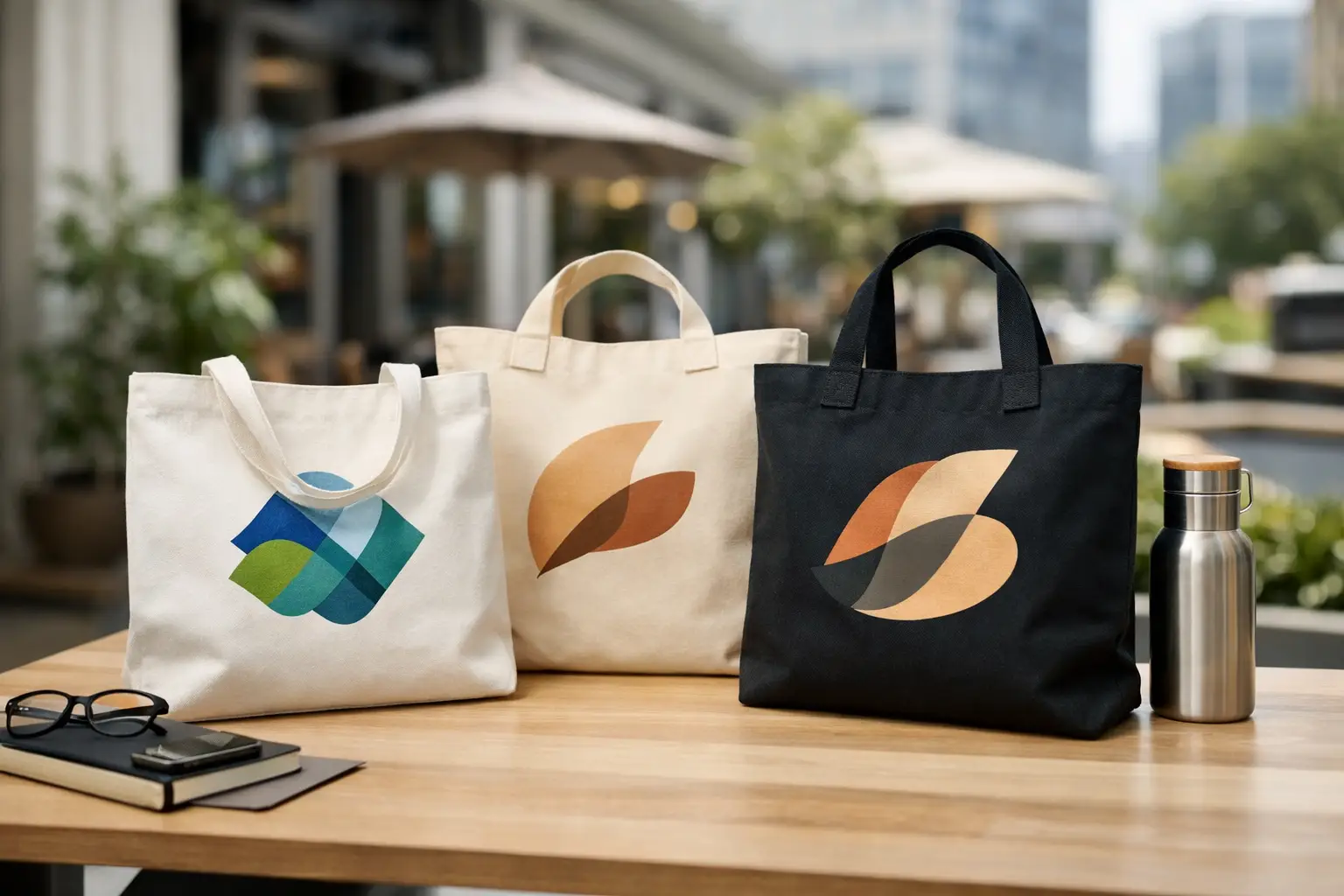
A tote bag handed to a customer at checkout, packed for a trade show, or included in a welcome kit keeps working long after a flyer is discarded. Custom printed tote bags give businesses a usable promotional item with repeated logo visibility, while helping customers carry purchases, documents, groceries, uniforms, and event materials.
For small businesses, retailers, restaurants, schools, and corporate teams, the right bag is not simply the lowest-priced option. Material, handle length, bag size, print area, and order quantity all affect how the finished product looks and how often it gets used. Selecting the right specification first helps avoid a bag that feels too light, too small, or unsuitable for the intended audience.
Why Custom Printed Tote Bags Work for Business
A branded tote has a longer life than many disposable promotional products. A customer may use it for shopping, commuting, gym clothes, or everyday errands. Each use places your logo in front of new people without requiring another ad spend.
Tote bags also solve a practical packaging need. Boutiques can use them for premium purchases, bookstores can offer them as merchandise, and event organizers can fill them with brochures, badges, notebooks, and sponsor materials. Restaurants and food businesses may use them for retail items, catering kits, or staff giveaways. The bag becomes part packaging, part promotional merchandise.
The best results come when the design and bag purpose match. A heavy canvas tote with a simple one-color logo feels appropriate for a premium retail store. A lightweight non-woven bag may make more sense for a large conference where quantity and budget matter most. Neither option is automatically better – the job determines the product.
Choose the Right Tote Bag Material
Material is the first buying decision because it affects cost, print appearance, carrying strength, and perceived value.
Cotton Tote Bags
Cotton is a familiar, natural-feel option for retail, lifestyle brands, schools, and community events. It provides a good surface for printed artwork and generally feels more substantial than thin synthetic giveaway bags. Standard cotton weights are suitable for light daily items, while heavier fabric gives a more premium feel and better support for books, groceries, and product bundles.
Natural beige cotton is often selected for a simple, eco-conscious appearance. White cotton creates a cleaner base for colored logos and detailed artwork. Keep in mind that unbleached natural fabric can vary slightly in tone, so a very precise white background or delicate color palette may reproduce differently than on a white bag.
Canvas Tote Bags
Canvas is a heavier cotton-based fabric designed for better durability and a stronger retail presentation. It works well for stores, corporate gifting, museum shops, real estate closing gifts, and branded merchandise intended to be retained. The higher material cost can be justified when the tote is part of a premium customer experience rather than a one-day handout.
Canvas is also a strong choice for larger bags because it holds its shape better under weight. For businesses selling products in-store, that extra strength can prevent the bag from looking worn after only a few uses.
Non-Woven Tote Bags
Non-woven polypropylene totes are lightweight, economical, and commonly used for trade shows, awareness campaigns, school events, and high-volume retail promotions. They are available in many colors, which can reduce the need for a full printed background.
This format is useful when you need hundreds or thousands of bags and want a clear logo at a controlled cost. The trade-off is perceived value. A non-woven tote is excellent for event distribution, but it may not fit a luxury product launch or premium gift set.
Jute and Specialty Materials
Jute bags offer a textured, rustic look suited to gift shops, organic food brands, wedding favors, and seasonal packaging. Their natural fibers make them visually distinctive, but fine artwork and small text may not reproduce as cleanly as they do on smooth cotton or canvas. Use bold logos, simple type, and high-contrast artwork for the best result.
Select a Size and Handle Style That Gets Used
A tote needs enough capacity for its real job. A compact 10 x 12-inch bag can work for small retail items, documents, or promotional samples. A standard shopping tote is more versatile for apparel, brochures, and everyday purchases. Larger gusseted bags are better for groceries, boxed products, conference materials, and multi-item kits.
The gusset matters when depth is needed. A flat tote is easy to store and economical to distribute, but it has limited space for bulky items. Side or bottom gussets increase carrying capacity and improve the bag’s shape when filled.
Handle length affects usability just as much. Short handles are suitable for hand carrying and gift packaging. Long shoulder handles are usually more practical for shoppers, commuters, and event attendees who need to carry the bag for several hours. If the bag will hold heavier products, choose reinforced handles and a stronger fabric weight.
Printing Options for Custom Printed Tote Bags
The print method should support your artwork, quantity, and bag material. A simple logo does not require the same process as a full-color photo or a multicolor campaign design.
Screen printing is a common choice for bold logos, solid colors, and repeat orders. It delivers strong color coverage and is especially cost-effective at higher quantities. It is ideal for one-color or limited-color artwork, such as a business name, icon, slogan, or event logo.
Heat transfer printing works well for detailed graphics, smaller runs, and multicolor designs. It can reproduce gradients and photographic elements that would be difficult to achieve through basic screen printing. The finish may feel different from ink printed directly into the fabric, so it is worth considering how the design will feel when the tote is handled.
Digital or direct-to-film processes may be suitable for complex artwork and flexible order quantities, depending on the tote material. For specialty bags, ask whether the selected print method is compatible with the surface before finalizing your order.
Print placement should be planned early. A centered front logo is the standard choice for most promotional bags. A larger design creates stronger visibility from a distance, while a smaller chest-style mark can look more refined. If you need a logo on both sides, confirm that the added print area is included in the specification and price.
Prepare Artwork That Prints Clearly
Tote printing rewards clean artwork. Use vector files where possible, especially for logos, text, and line art. Vector formats maintain sharp edges when scaled for a large print area. If you are supplying a raster image, use a high-resolution file at the final print size to avoid blurred edges or visible pixelation.
Avoid placing important text too close to the bag edges, seams, handles, or gusset folds. A tote is not a perfectly flat sheet, and small shifts can be more noticeable near the boundaries. Keep fine text readable, simplify thin lines, and use strong contrast between the artwork and bag color.
For dark bags, light ink colors such as white, cream, yellow, or bright brand colors often provide the clearest result. For natural cotton, black and dark green usually print cleanly, while pale colors may look softer because of the fabric tone. If color accuracy is critical, provide brand color references and request confirmation of the available ink match.
Order Quantity, Budget, and Use Case
The lowest unit price usually comes with higher quantities, but ordering more bags than you can distribute is not always economical. Start with the campaign purpose. A one-time event with 500 registered attendees may require a quantity that covers attendees, staff, speakers, and a small surplus. A retail store may prefer recurring batches based on monthly foot traffic and storage space.
Your budget should include the bag, print colors, print locations, setup requirements, and shipping. A one-color front print on a standard bag is typically the most cost-controlled format. Adding a second side, multiple ink colors, premium canvas, gussets, zippers, or custom labels increases the final cost, but may be worthwhile for merchandise or customer gift programs.
At Seaonce, businesses can coordinate branded tote bags with related print products such as flyers, stickers, business cards, event banners, and customized apparel, helping keep campaign colors and messaging consistent across the order.
A Practical Tote Bag Brief Before You Order
Before submitting artwork, define the bag’s end use, preferred material, finished size, handle type, bag color, print location, number of print colors, and required quantity. This gives your team and print supplier a clear production brief rather than a vague request for “logo bags.”
Also consider the distribution moment. A giveaway tote should be easy to carry while visitors move through an event. A retail tote should complement the products inside it. A staff tote may need room for documents, uniforms, or personal items. When the bag is specified around that real use, it is far more likely to leave the building with your brand still visible.