

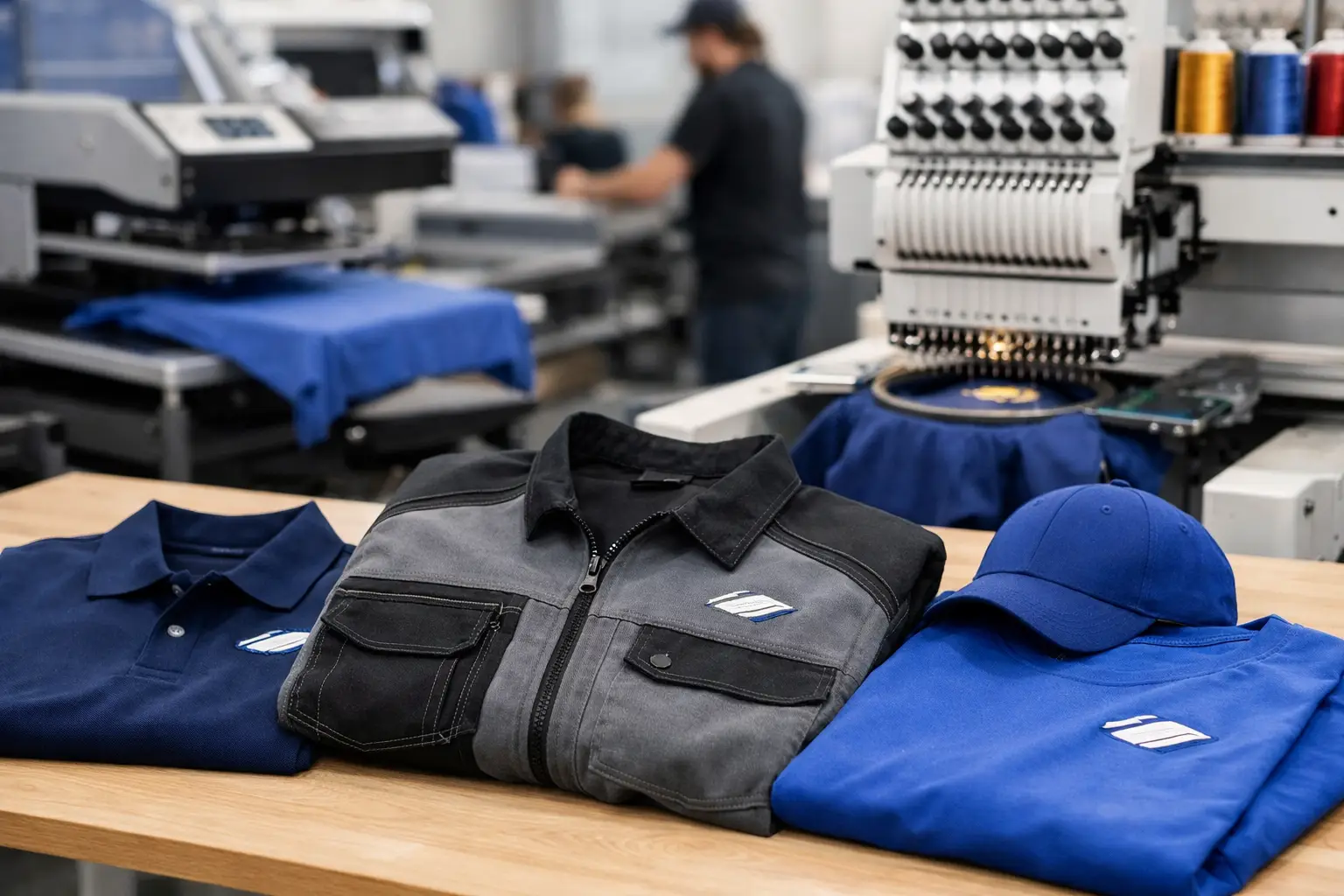
A stained apron at the host stand, a faded polo on the sales floor, and three different shirt colors on the same crew send the wrong message fast. Custom work uniforms printing fixes that problem at the source by giving your staff a consistent, usable uniform that looks like part of one business, not a mix of last-minute purchases.
For most companies, uniforms are not just about appearance. They affect how customers read your brand, how comfortable staff feel during a shift, and how often you need to reorder. A restaurant owner, site supervisor, clinic manager, or retail operator usually needs the same thing – reliable branded apparel that fits the job, holds up in regular use, and can be reordered without starting over every time.
What custom work uniforms printing actually needs to deliver
The right uniform has to do three jobs at once. It needs to identify your business clearly, suit the daily work environment, and stay cost-effective across repeat orders. If one of those pieces is off, the uniform becomes a problem instead of a working asset.
A chef coat with the wrong print method can crack or peel after repeated washing. A security shirt with poor contrast can reduce logo visibility. A housekeeping polo in the wrong fabric can look worn after a short cycle of use. That is why buying uniforms based on price alone usually creates more cost later.
In practical terms, custom work uniforms printing should start with use case, not decoration. Before selecting a logo position or garment color, it makes more sense to ask where the uniform will be worn, how often it will be washed, and what level of presentation the staff needs in front of customers.
Choosing garments for custom work uniforms printing
Not every work uniform starts with the same blank apparel. A front-desk team, warehouse crew, delivery staff, and restaurant kitchen all need different garment types because the working conditions are different.
Polos are a common choice for retail, hospitality, customer service, and office-facing teams because they look structured without being too formal. T-shirts usually work well for events, logistics, casual service businesses, and promotions where comfort and cost control matter most. Chef coats, aprons, and caps are more role-specific and need branding that fits around seams, pockets, and heavy washing conditions.
Fabric matters just as much as garment style. Cotton can feel comfortable and print well, but blends often hold shape better through repeated wear. Polyester-rich garments can support sublimation in some cases, but that only works when the garment construction and color are suitable. Heavier fabrics may last longer in demanding environments, while lighter options can be better for heat, movement, and long shifts.
Sizing is another point buyers often underestimate. If you are ordering for a mixed team, a narrow size run creates fit problems immediately. It is better to confirm available sizes early, especially for larger crews or businesses with multiple departments. Reorders are easier when the product line has stable availability.
Print methods and where they make sense
Different print methods suit different uniforms. There is no single best method for every job.
Screen printing is often the right fit for larger uniform runs with simple artwork and solid colors. It gives good consistency and keeps unit cost under control when quantities increase. For work shirts used every day, it is usually a dependable option if the artwork does not require complex color blending.
Heat transfer works well for names, numbers, small-run personalization, and certain logo applications. It is useful when each garment needs unique data, but durability depends on the transfer material, placement, and wash conditions. For some businesses, that trade-off is worth it because personalization matters.
Embroidery gives a more structured, premium finish, especially on polos, jackets, caps, and chef wear. It performs well for chest logos and name placement, but it is not always the best choice for large graphics or lightweight fabric. Dense stitching can affect drape and comfort, so logo size should stay practical.
Sublimation is ideal for specific polyester garments where all-over or embedded color is needed. It does not sit on top of the fabric the way some surface print methods do, but it only works within the right garment and color conditions. For many standard workwear applications, it is not the default option.
When reviewing custom work uniforms printing, the best question is not which method is best overall. The better question is which method matches the garment, artwork, and wash cycle you expect.
Logo placement affects more than appearance
Most uniform orders focus on the left chest logo first, and for good reason. It is clean, readable, and suitable for a wide range of industries. But placement should still follow the job role.
A restaurant may need a chest logo on polos, embroidered branding on chef coats, and a larger back print on delivery shirts. A construction or field service team may benefit from back logos with stronger visibility at distance. An event crew may want front and back branding so attendees can identify staff quickly in crowded spaces.
Placement also has to work around garment details. Pockets, plackets, seams, zippers, and reflective strips can limit print area. On aprons and specialized workwear, the printable area may be smaller than expected. Good artwork on the wrong placement still produces a weak result.
Keeping branding consistent across departments
Many businesses do not need one uniform. They need a uniform system.
That might mean one logo, one color family, and different garment types for different roles. A restaurant can keep servers in branded polos, kitchen staff in chef coats and aprons, and delivery personnel in printed tees or jackets while maintaining one recognizable brand look. A retail business can use one logo file and approved colors across cashier uniforms, stockroom wear, and promotional event apparel.
This is where sourcing from a broad print supplier makes a practical difference. If your business already orders flyers, menus, stickers, banners, packaging, and staff apparel, keeping color and logo usage aligned becomes easier. Seaonce serves that kind of buyer – businesses that want day-to-day print and branded wear from one ordering source instead of patching together multiple vendors.
Cost, quantity, and reorder planning
Uniform buying works better when you think past the first batch. The lowest first order is not always the lowest operating cost.
If a shirt style gets discontinued, if the print fades early, or if the fabric does not hold up, your next reorder can turn into a full replacement cycle. That affects consistency and budget. It is usually smarter to choose garments and print methods that can be reordered in the same spec later.
Quantity also changes the best production approach. A ten-piece personalized order may need a different print method than a 200-piece standard staff run. Small businesses often start with a limited batch, then add staff uniforms in stages. In that case, artwork setup, color consistency, and ongoing product availability matter more than just opening price.
If your business has seasonal hiring, expansion plans, or multiple branches, order planning should account for that. It helps to standardize logo files, placement, garment colors, and approved apparel types early so future purchases stay clean and consistent.
Common mistakes in custom work uniforms printing
The most common mistake is choosing fashion over function. A shirt may look sharp online but perform poorly in a hot kitchen, active retail floor, or outdoor work setting.
The second mistake is using artwork that was never prepared for apparel. Logos designed for paper print do not always translate cleanly to embroidery or fabric printing. Fine lines, gradients, and very small text can become production issues depending on the method.
Another common issue is ignoring wash performance. Work uniforms are not occasional-use promotional items. They get worn, washed, stored, and reused hard. That means fabric and print durability should be treated as basic buying criteria, not optional extras.
Finally, some buyers order without thinking about expansion. If your new team members join next month and the exact garment is no longer available, your brand look starts drifting right away.
What to prepare before placing an order
A smoother order starts with a few clear decisions. You should know which staff roles need which garments, what logo version will be used, where branding should appear, and whether any uniforms need individual names or titles. It also helps to know your likely reorder pattern, because that affects product selection from the start.
If you are managing multiple items, such as polos, chef coats, caps, and aprons, keep one approved branding standard across them. Consistency is what makes the whole set look professional, even when garment types differ.
Custom work uniforms printing works best when it is treated like part of your operating system, not a last-minute add-on. The right uniform makes staff easier to identify, reinforces brand presence every day, and saves time when reorders come around. If the garments fit the job and the print method fits the garment, you end up with something useful – not just branded clothing, but a practical part of how your business shows up.