

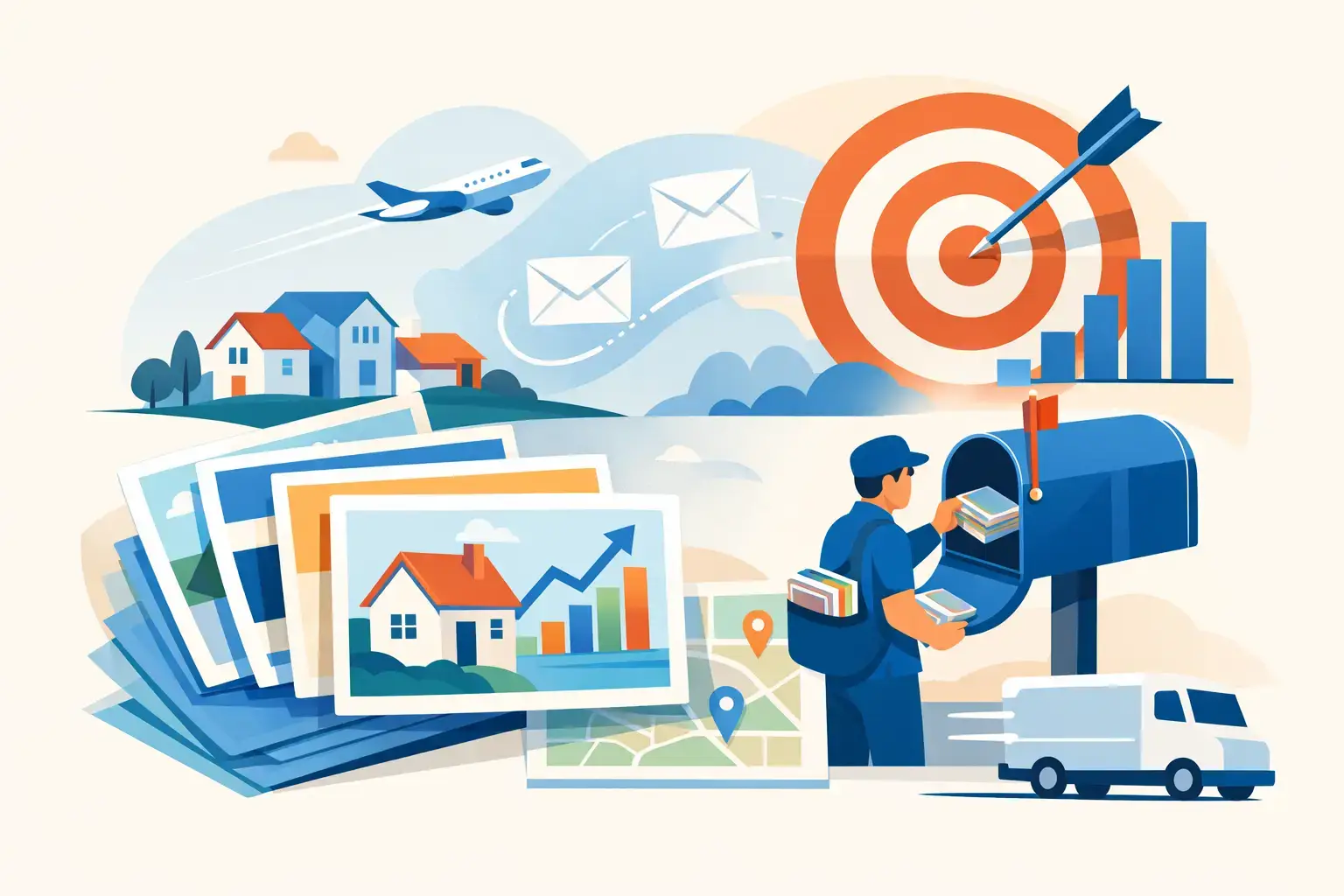
A restaurant can open on a busy corner, hang a banner, post on social media, and still miss the people living three blocks away. That is where eddm postcard printing earns its place. It gives local businesses a direct way to reach nearby households without building a mailing list first, which makes it practical for grand openings, seasonal offers, service-area promotions, and neighborhood awareness campaigns.
For many businesses, the appeal is simple. Every Door Direct Mail lets you target carrier routes instead of individual names and addresses. You choose the neighborhoods, prepare a qualifying mail piece, and distribute at scale through USPS. If your goal is broad local coverage rather than one-to-one personalization, postcards are usually the most efficient format.
Why eddm postcard printing works for local marketing
EDDM is built for saturation. A pizza shop, dental office, gym, real estate team, salon, auto repair business, or home service company often needs reach more than precision. If the offer is relevant to a local radius, getting into a high percentage of mailboxes can outperform narrower targeting.
Postcards work especially well because they do not need to be opened. The message is visible immediately. That matters when recipients spend only a few seconds deciding whether to keep or discard a piece of mail. A strong headline, a clear image, one promotion, and a visible phone number or QR code can do the job quickly.
The trade-off is just as important. EDDM is not ideal when you need narrow demographic targeting, account-based outreach, or detailed personalization. It is a route-based product. If your audience is “everyone within these neighborhoods,” it fits. If your audience is “property managers with 50+ units,” standard direct mail data may be a better route.
Choosing the right postcard format for EDDM
Not every postcard qualifies the same way, and not every size performs the same way. In most cases, businesses choose larger postcard formats because they create better visibility in the mailbox and offer more room for the offer, image, and required mailing elements.
Larger sizes can feel more substantial and usually support bigger photos, stronger calls to action, and better readability. That is useful for restaurants showing menu highlights, event organizers promoting a date and location, or retailers pushing a limited-time sale. Smaller formats may lower print cost, but if the design feels cramped, savings on paper can cost response.
Paper stock also affects results. Thin stock can be economical for short campaigns, but heavier cardstock usually feels more credible and holds up better during handling. A business promoting a premium service may want a sturdier stock to match the brand impression. A high-volume promotional drop focused on price may prioritize quantity over finish.
Glossy coating can make food, retail products, and photography-heavy designs look sharper. Matte can feel easier to read and more understated. If you want a more upscale presentation, options like soft-touch or velvet lamination can improve the hand feel, but those upgrades only make sense if the return justifies the added unit cost. For many EDDM campaigns, clean print, solid color, and durable stock matter more than specialty finishing.
Design decisions that affect response
EDDM postcard printing is not just about meeting postal specs. It is about producing a mail piece that survives the fast sort in a household. Most recipients will not study your postcard. They will scan it.
That means the front should carry the main job. A clear headline, one primary visual, and one offer usually outperform crowded layouts. Trying to advertise every service on one postcard often weakens the message. A plumber advertising drain cleaning, water heater repair, leak detection, remodeling, repiping, and emergency service on one side may end up saying nothing clearly.
The back needs structure. Contact information should be obvious. Business name, phone, website, store address if relevant, and a simple next step should be easy to find. If you use a coupon, promo code, or QR code, place it where it stands out without competing with the mailing indicia and addressing area.
Photos and branding should match the type of buyer you want. A discount postcard can look promotional without looking cheap. A premium service postcard should avoid clutter, weak images, and inconsistent typography. First-time buyers often focus on the offer. Repeat marketers know the print quality and layout also shape trust.
Common mistakes in eddm postcard printing
One of the biggest mistakes is treating the postcard like a flyer. Flyers are often content-heavy. EDDM postcards need faster communication. If the recipient cannot understand the offer in a glance, response usually drops.
Another problem is weak route selection. Even the best postcard underperforms if the selected carrier routes do not match the service area or customer value. A daycare center may want family-heavy neighborhoods. A luxury home service brand may not want blanket coverage across every nearby route. Route density, household count, and local fit all matter.
Print specifications can also cause delays. Improper sizing, missing clear zones, low-resolution artwork, or layout conflicts with USPS mailing requirements can slow production or create compliance issues. That is why standardized print packages are useful. They reduce avoidable setup problems and help businesses move from artwork to mailing faster.
Businesses also underestimate frequency. One drop can generate response, but repeated exposure often performs better. A postcard seen once may be ignored. The same brand appearing two or three times over a month can become familiar enough to prompt a call, visit, or scan.
How to plan an EDDM postcard campaign
Start with the objective, not the print specs. If the goal is foot traffic, the offer should drive an in-person visit. If the goal is phone leads, the call tracking number should be prominent. If the goal is awareness before an opening, timing and route saturation may matter more than a discount.
Then work backward into quantity, size, and stock. High-volume campaigns often need cost control. Standard cardstock with full-color printing may be the right balance. If the campaign is smaller and the transaction value is higher, upgrading to a heavier stock can make sense.
Timing matters more than many buyers expect. Restaurants may want mail to land before weekends. Tax services need seasonal timing. Event promotions need enough lead time to act, but not so much that the card gets forgotten. Home service offers can perform differently by season, especially for HVAC, lawn care, roofing, or holiday-related services.
Creative should match the offer window. A broad brand-awareness card can stay relevant longer. A flash sale card needs urgency. If there is an expiration date, make it visible and realistic. Too short and some recipients miss the window. Too long and the urgency disappears.
Print quality, cost, and what to prioritize
Buyers often ask whether premium finishing improves EDDM performance. Sometimes it does, but often the bigger drivers are route selection, headline strength, and offer clarity. A postcard with average stock and strong messaging can outperform a more expensive piece with poor layout.
That does not mean print quality is secondary. Crisp color, readable type, accurate trimming, and dependable cardstock all affect how professional the piece feels. If a postcard arrives looking flimsy or poorly printed, the brand impression suffers fast. For local businesses trying to look established, consistency matters.
Cost is best evaluated by response potential, not by unit price alone. A cheaper postcard may save on production but reduce impact. A larger format may cost more yet deliver stronger visibility and a better response rate. The right choice depends on the campaign economics. A low-ticket offer may need strict cost control. A high-margin service can support a stronger print package.
This is also where broad product access helps. Businesses already ordering menus, flyers, business cards, signage, or branded packaging often benefit from sourcing postcards from the same supplier instead of splitting jobs across vendors. It keeps print buying simpler and helps maintain brand consistency across materials.
When EDDM postcards make the most sense
EDDM postcard printing is a strong fit when the market is local, the offer is easy to understand, and the business needs coverage quickly. It works well for openings, local service promotions, event pushes, store announcements, and repeat neighborhood marketing.
It is less effective when the message depends on detailed education or highly segmented targeting. In those cases, a brochure, sales letter, or list-based direct mail campaign may be better. The postcard wins when speed, visibility, and local reach are the priorities.
For most businesses, the practical question is not whether postcards work. It is whether the format, route selection, and offer are aligned. If those three pieces are right, EDDM can be one of the most direct ways to put a local promotion in front of real households without overcomplicating the buy.
If you are planning your next neighborhood campaign, keep the decision simple: choose a postcard size people will notice, a stock that fits the value of your offer, and a message that can be understood before the mailbox closes.