

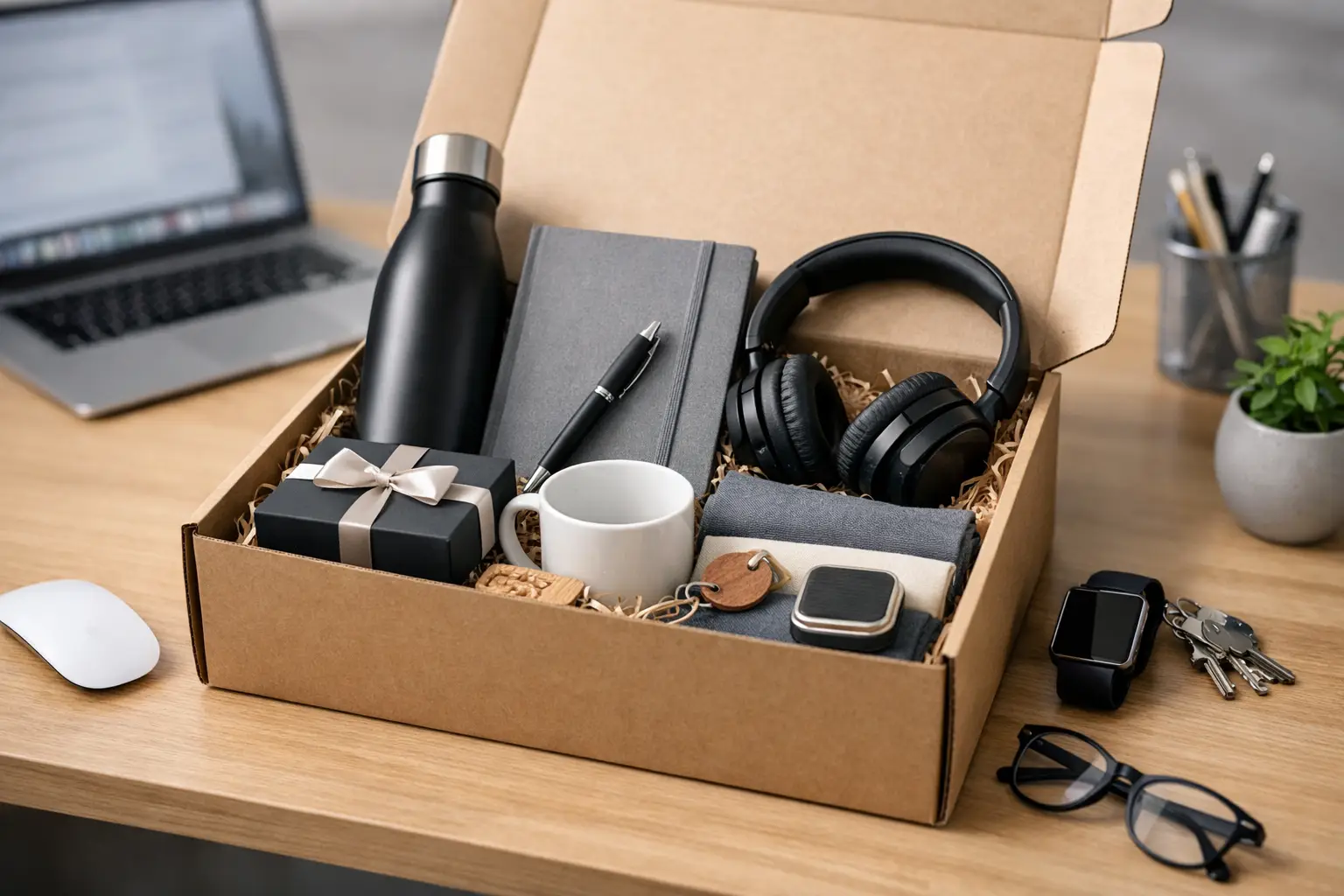
A new hire’s first desk setup says more than a welcome email ever can. The best employee welcome kits give people the tools they need on day one while putting your brand in front of them in a useful, professional format. For small businesses, restaurants, retail teams, startups, and corporate offices, the goal is not to fill a box with random giveaways. It is to create a practical set of branded items employees will actually use.
A good kit also reduces last-minute onboarding work. Instead of sourcing stationery, uniforms, ID cards, packaging, and promotional items from several vendors, build a repeatable package with standard specifications, quantities, and branding files. That makes every new hire’s arrival easier to organize.
What the Best Employee Welcome Kits Include
The contents depend on the employee’s role, work location, and how often the company hires. A remote employee may value a notebook, mug, and shipping-friendly apparel. A restaurant server needs a uniform item and operational materials. An office-based hire may need printed stationery, a badge holder, and desk accessories.
Start with items that serve a purpose during the first month. Branded products should feel connected to the job, not like leftover event merchandise. A clean logo treatment, consistent brand colors, and good print quality matter more than adding too many low-value pieces.
Core branded items for most teams
For most companies, a practical welcome kit combines four product types: a personal item, a work tool, an identity item, and a presentation item. This creates a complete package without pushing the budget too high.
A branded T-shirt, polo, cap, chef coat, or apron gives the employee something wearable and visible. Choose the garment based on the workplace. Cotton T-shirts work well for startups, events, warehouses, and casual retail teams. Polo shirts fit customer-facing office and service roles. Restaurants may require embroidered or printed chef coats, aprons, and caps that can handle frequent washing.
A notebook, notepad, pen, USB drive, or desk calendar gives the kit daily utility. Printed notepads and branded pens are cost-effective for larger teams, while USBs can be more useful for roles that handle files, presentations, or sales materials. For a more polished office package, add business cards with the employee’s name, title, phone number, and email address.
An ID card or PVC employee badge supports security and professional presentation. PVC cards are durable, easy to carry, and suitable for staff identification, membership-style programs, and access control systems. Add a lanyard or badge holder when employees need to display identification while working.
Finally, use a branded box, tote bag, or paper bag to hold the kit together. Custom packaging makes a small selection of products feel organized and intentional. It also helps when kits are handed out at orientation sessions or shipped to remote hires.
Four Welcome Kit Formats That Fit Different Teams
Rather than buying one generic set for every department, use a core kit and adjust it by role. The following formats cover common hiring needs without creating an overly complex procurement process.
- Starter office kit: Include a branded notebook, pen, business cards, PVC ID card, ceramic mug, and a printed welcome card. This works for administrative staff, sales teams, coordinators, and new corporate hires.
- Retail and service kit: Add a branded T-shirt or polo, cap, name badge, notepad, pen, and reusable tote bag. This format is suitable for stores, hospitality businesses, delivery teams, salons, and customer-facing staff.
- Restaurant team kit: Use an apron, chef coat or T-shirt, cap, PVC ID card, order pad or NCR pad, and a printed policy sheet. If staff members take orders or handle receipts, make operational print materials part of the package instead of treating them as separate purchases.
- Remote employee kit: Pack a T-shirt, mug, notebook, pen, USB drive, laptop sticker, and welcome postcard in a branded mailing box. Keep the package compact enough to ship without high delivery costs, especially when onboarding several remote employees at once.
The right format depends on what employees need immediately. A mug may be appreciated, but it should not replace the required uniform or work stationery. Start with operational essentials, then use promotional products to make the kit more memorable.
Choose Materials and Finishes for Real Use
A welcome kit represents your business long after orientation. Thin paper, weak adhesive, poor color matching, or garments that fade after a few washes can make the package feel disposable. Specify materials based on how each product will be used.
For welcome cards, policy inserts, and employee information sheets, use a paper stock that feels substantial but remains easy to write on or file. A 250 GSM to 350 GSM card stock is a strong choice for a welcome card, while standard office paper works better for multi-page instructions. If the card will carry a premium brand message, velvet lamination gives a soft matte finish. Spot UV can highlight a logo or name without covering the entire design in gloss.
Business cards should match the company’s normal customer-facing standard. A 300 GSM or 350 GSM card stock with matte, gloss, velvet lamination, embossing, or spot UV can work depending on the brand. Keep employee cards readable. Specialty finishes are useful for logos and visual details, but small text, phone numbers, and email addresses need clear contrast.
For employee ID cards, PVC is usually the practical option. It holds up better than laminated paper badges and gives a consistent appearance across the team. Use a clear photo area, a readable name field, job title, and company logo. If you print barcodes or QR codes, test them at actual scanning size before ordering the full quantity.
For apparel, consider the garment color, fabric weight, print method, and laundering requirements. Screen printing is a solid choice for simple, high-volume designs. Embroidery works well for polos, caps, aprons, and chef coats where a durable logo is needed. Sublimation is best suited to compatible fabrics and all-over color applications. A large front print may suit an event T-shirt, while a small left-chest logo usually looks more appropriate for uniforms.
Keep Branding Consistent Without Overdesigning
Employee kits are most effective when every piece looks like it belongs to the same company. Use the same approved logo version, color values, typefaces, and tone across apparel, cards, mugs, stickers, and packaging. Do not stretch logos to fit unusual product shapes or place detailed artwork on very small print areas.
A simple system works best: full-color logo for packaging and printed cards, one-color logo for pens and small items, and a simplified embroidery-ready logo for garments. This gives you flexibility without weakening recognition.
It also helps to separate permanent items from seasonal ones. Your ID cards, business cards, notebooks, and uniforms should use evergreen branding. Holiday stickers, campaign cards, event badges, or limited-edition apparel can change without making the core kit look outdated.
Set a Budget That Can Scale With Hiring
The best employee welcome kits are repeatable. A kit that looks impressive but takes too long to assemble or costs too much per person will be difficult to maintain as the team grows. Build around a target per-hire budget, then create standard, upgraded, and role-specific versions.
A basic package might include a welcome card, notebook, pen, PVC badge, and branded T-shirt. A higher-value package can add a mug, tote bag, USB drive, business cards, and custom packaging. The price difference often comes from apparel, packaging, print finishes, and the number of personalized items.
Personalization needs planning. Business cards, name badges, and ID cards require employee details before production. Keep a simple onboarding spreadsheet with names, titles, departments, shirt sizes, phone extensions, and delivery locations. This reduces spelling errors and prevents reprints.
For companies with recurring hiring, order non-personalized stock in larger quantities. Branded notebooks, pens, mugs, bags, stickers, and standard apparel can be held for future hires. Then place smaller variable-data orders for business cards, ID cards, and role-specific materials. A broad supplier catalog such as Seaonce can make this easier by keeping print, apparel, packaging, and promotional items within one ordering workflow.
Pack and Present the Kit Properly
Assembly affects the perceived value of every item inside. Place the welcome card on top, followed by the items the employee should use first. Fold apparel neatly, protect mugs or fragile items, and keep cards flat so corners do not bend. If the kit includes several printed documents, use a folder or envelope rather than loose sheets.
Before rolling out the package, inspect one complete sample. Check print color, logo placement, spelling, garment sizing, card details, and packaging fit. This is especially useful when combining different materials such as paper cards, PVC badges, embroidered apparel, and promotional merchandise.
A welcome kit does not need luxury products to make a strong first impression. It needs useful items, reliable specifications, and branding that looks consistent from the first card to the last uniform. Build the package around the employee’s actual workday, and each new hire will receive something they can use with confidence from their first shift.