

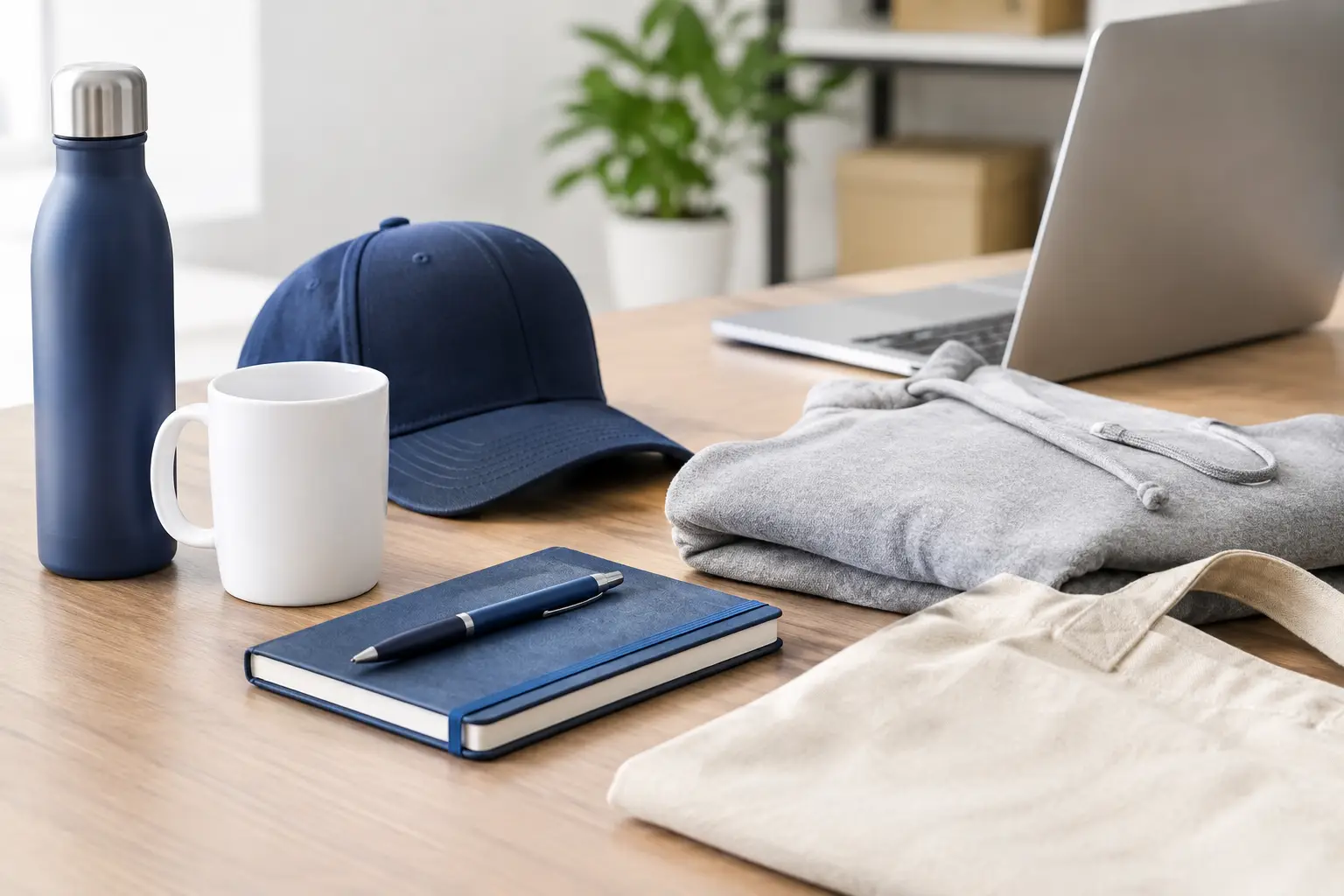
A giveaway can put your logo in front of a customer for months, but only if the item is useful, the print is clear, and the order arrives when needed. This guide to branded merchandise sourcing helps businesses buy promotional products with fewer surprises – from choosing the right item to confirming artwork, quantities, and delivery timing.
Start With the Job the Merchandise Must Do
Do not begin with a product catalog. Begin with the purpose of the order. Merchandise for a trade show serves a different purpose than uniforms for restaurant staff, appreciation gifts for employees, or branded packaging for retail orders. The right product is the one that fits the use case, audience, and available budget.
For high-volume events, low-cost practical items such as pens, key chains, stickers, tote bags, and mugs can work well. A small item with a clear logo is often more valuable than a premium item that forces you to cut the quantity too far. If the goal is customer retention or executive gifting, consider higher-perceived-value products such as insulated drinkware, USBs, awards, or embroidered apparel.
Think about where the product will be used. A restaurant may get more repeat exposure from branded chef coats, aprons, caps, menus, and takeaway stickers than from novelty giveaways. A construction company may need durable workwear, PVC ID cards, safety signage, and vehicle decals. A startup preparing for a launch may need T-shirts, roll-up displays, business cards, flyers, and event giveaways at the same time.
Guide to Branded Merchandise Sourcing: Set Your Specifications
A branded product is not one decision. It is a set of specifications that affect price, appearance, durability, and production time. Before requesting a quote or adding items to cart, define the core details: product type, quantity, color options, logo placement, print method, and delivery date.
Quantity has a direct effect on unit cost. Ordering 500 pens is generally more economical per piece than ordering 50, but only if you will use them. Avoid buying large quantities simply because the unit price looks better. Seasonal promotions, changing logos, product launches, and storage limitations can turn an apparent saving into dead inventory.
Also decide whether the item needs a single-color logo, full-color artwork, individual names, or variable data. A simple one-color imprint may be enough for a pen or key chain. A full-color design may be essential for a branded mug, sublimated T-shirt, product box, or retail sticker. Personalized names on uniforms, awards, certificates, or employee gifts require additional setup and careful spelling checks.
Choose Materials for Real-World Use
Material affects how a product feels and how long it lasts. Cheap plastic may suit a short campaign, while metal, canvas, ceramic, cotton, or insulated stainless steel can support a more premium brand position. There is no universal best choice. The correct material depends on how frequently the item will be handled and what customers expect from your business.
For apparel, ask about fabric weight, often shown in GSM, as well as fit, blend, washability, and decoration area. Lightweight cotton T-shirts can be effective for large event teams and promotional campaigns. Heavier cotton, cotton-poly blends, polos, hoodies, and chef coats may be better for repeat workplace use. A low price is not useful if the garment shrinks, fades, or loses shape after a few washes.
For printed packaging and paper-based merchandise, compare stock thickness and finishing. Matte or velvet lamination creates a softer premium look, while gloss lamination can make colors appear more vivid. Spot UV, embossing, foil, and die-cut shapes add impact, but they also increase production requirements and cost. Use specialty finishes where people will hold and inspect the item, such as presentation folders, gift boxes, premium cards, or product labels.
Match the Print Method to the Product
Print method matters as much as the item itself. Screen printing is commonly used for bold designs and larger apparel runs. Digital printing is useful for full-color artwork and shorter runs. Sublimation works well on suitable coated products and polyester garments because the design becomes part of the surface rather than sitting on top of it. Embroidery gives uniforms, caps, and workwear a durable textured finish.
Each method has trade-offs. Fine gradients may not reproduce well in a limited-color screen print. Embroidery can make small text difficult to read. Full-color printing can increase the cost of a low-quantity order. Ask for the recommended decoration method based on your artwork, item color, expected use, and quantity rather than choosing only by the lowest displayed price.
Prepare Artwork Before Production
Artwork errors are expensive because they are often discovered only after printing. Supply your logo in a high-resolution format, ideally vector artwork such as AI, EPS, PDF, or SVG when available. Vector files allow the design to scale cleanly across small key chains, large banners, apparel, signage, and packaging.
Check logo colors against your brand guidelines. A digital screen can display color differently from ink on paper, fabric, ceramic, plastic, or metal. If exact brand matching is critical, specify Pantone colors when the print process supports them. For standard promotional orders, a clear approved proof is usually the most practical control point.
Keep small details realistic. Thin lines, fine text, and complex color transitions can disappear on small print areas. A logo that looks excellent on a brochure may need a simplified version for a pen, cap, badge, or USB. Build an artwork approval process that includes the correct spelling, contact details, logo version, imprint position, and final quantity.
Compare Suppliers Beyond the Headline Price
A low product price can hide setup fees, artwork charges, delivery costs, minimum quantities, or limitations on print colors. Compare total order cost, not just the item price. The comparison should also include stated production time, proofing process, available material options, and whether the supplier can handle related print needs in the same order.
One-source purchasing can reduce procurement work when you need promotional merchandise alongside business cards, brochures, stickers, packaging, banners, or uniforms. It also makes it easier to keep logo files, colors, and finishes consistent across your campaign materials. However, specialized orders may still need extra attention. For example, a complex embroidered uniform program or custom molded product can have different lead times than standard flyers or printed mugs.
Before placing a substantial order, confirm these practical points:
- The minimum order quantity and price breaks at higher quantities.
- The final decoration area, number of print colors, and product color selected.
- The artwork format required and whether a proof will be provided.
- Production time after artwork approval, plus shipping or delivery time.
- Replacement policy for damaged, misprinted, or incomplete orders.
For a new product or an important campaign, order a sample where possible. A sample is especially useful for apparel sizing, paper texture, packaging fit, drinkware quality, and color-sensitive branding. It costs more time upfront, but it can prevent a much larger problem across hundreds of units.
Plan Timing Around the Approval Date
The date you need merchandise is not the date production begins. Production generally starts after artwork, product details, and proof approval are complete. A delayed response to a proof can push the whole schedule back, particularly when an order includes multiple items or specialty finishes.
Work backward from your event, opening date, staff onboarding, or campaign launch. Leave time for artwork updates, proof approval, production, shipping, and inspection when the goods arrive. If merchandise is required for a fixed-date trade show, avoid making the order dependent on last-minute logo changes or uncertain attendance estimates.
It is also smart to separate urgent essentials from optional items. If your opening needs staff T-shirts, menus, signage, business cards, and branded bags, prioritize the items that affect operations first. Add premium giveaways or decorative extras only when timing and budget allow.
Build a Reorder System
Branded merchandise works best when it becomes part of routine purchasing, not a scramble before every event. Keep approved artwork files, product specifications, prior order quantities, and color selections in one place. Record what sold, what was given away, and what remained in storage.
Over time, this lets you identify reliable core items. A local retailer may reorder branded bags and stickers monthly, while a corporate office may replenish mugs, notebooks, awards, and employee apparel quarterly. Standardizing a few products improves consistency and makes reordering faster, while leaving room for limited campaign items when a launch or event calls for something new.
Choose merchandise people can use, specify it clearly, and allow enough time for proofing. That approach produces promotional products that look professional in customers’ hands and make the next order easier to place.