

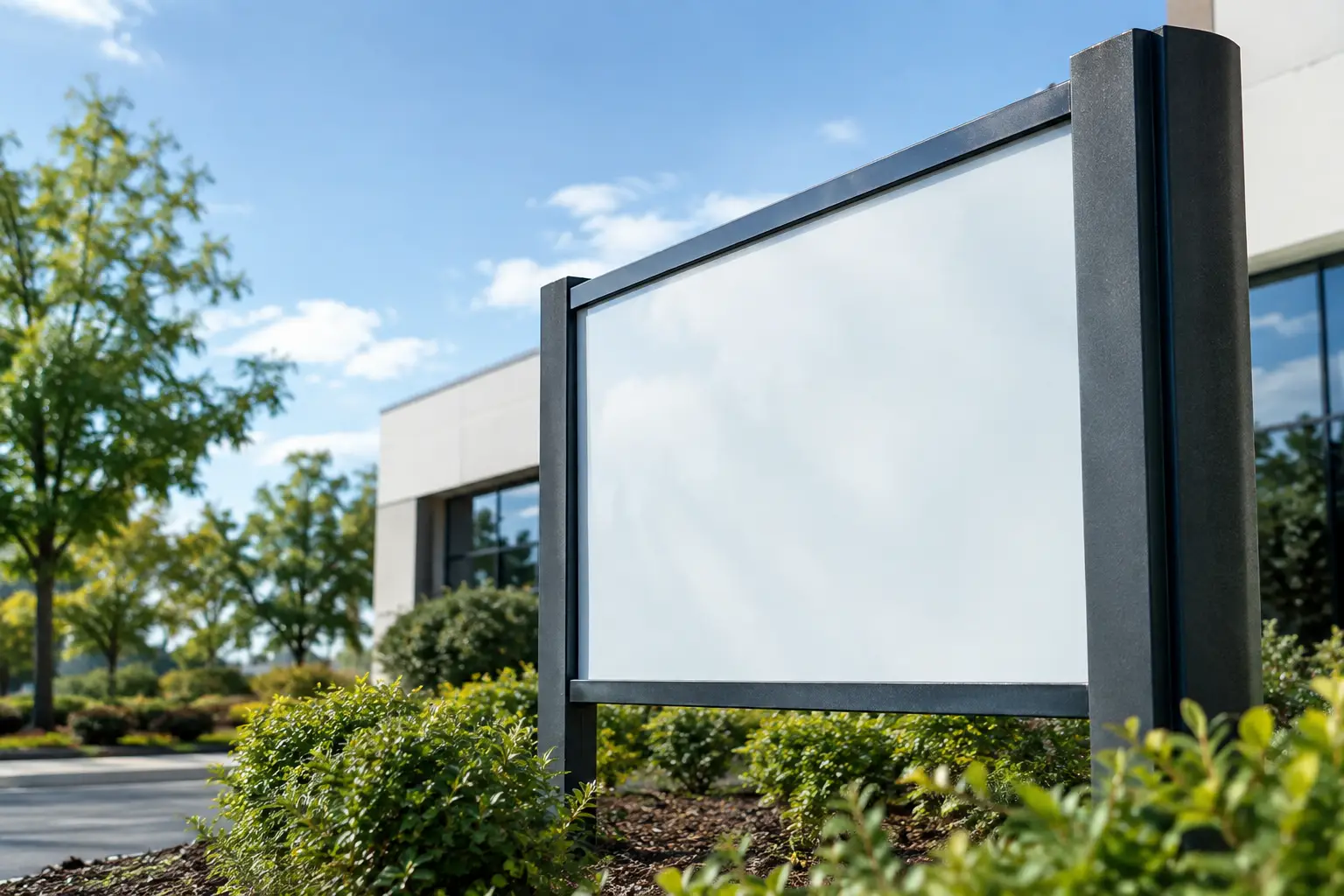
A storefront sign that fades after one summer, a banner that tears at the corners, or a yard sign that bends in the first heavy rain costs more than a replacement. It can make a business look unprepared at the exact moment customers are deciding whether to stop, call, or buy. This guide to outdoor sign durability helps buyers match sign materials, print methods, and installation details to the conditions the sign will actually face.
Outdoor signage is not one product category. A weekend event banner, a real estate yard sign, a permanent building panel, and a restaurant sidewalk sign have very different exposure levels. Choosing the lowest-priced material can be sensible for a short campaign. For long-term use, however, material thickness, UV resistance, finishing, and mounting deserve as much attention as the artwork.
Start With the Sign’s Exposure Level
Before selecting a substrate, define how long the sign needs to perform outdoors. A temporary promotion may only need a few days or weeks of clean visibility. Construction site panels, directional signs, storefront graphics, and property signs may need to remain readable for months or years.
Sunlight is often the main cause of visible decline. UV exposure gradually fades printed colors, especially reds, yellows, and some bright spot colors. Direct afternoon sun is more demanding than a shaded location, even when both signs are technically outdoors. Rain, humidity, salt air, road dust, lawn equipment, and temperature swings add further stress.
Wind is a separate issue. A sign can use an outdoor-rated material and still fail early if it is too large for its mounting method. A solid panel catches more wind than a mesh banner. A banner with weak grommet spacing may tear even when the vinyl itself remains in good condition. Think about exposure first, then buy the material and hardware for that use case.
Guide to Outdoor Sign Durability: Material Selection
The base material determines how a sign handles water, impact, flexing, and long-term display. Print quality matters, but no ink or lamination can fully compensate for a substrate that is wrong for the job.
Vinyl Banners for Promotions and Events
Vinyl banners are a practical choice for sales, grand openings, sports events, trade booths, temporary fencing, and seasonal messaging. They are water-resistant, easy to roll for storage, and available in large sizes without the cost of rigid panels.
For standard outdoor use, a heavier banner stock generally provides better tear resistance and a more substantial appearance. Hemmed edges and metal grommets help distribute stress when the banner is installed with bungee cords or appropriate fasteners. Avoid pulling a banner tightly with thin rope through unsupported eyelets. That concentrates force at the corners and can lead to tearing.
Windy locations require extra planning. Mesh banner material allows air to pass through, reducing wind load, but it does not produce the same solid color density as standard vinyl. This trade-off is worthwhile for fence wraps, open lots, and exposed outdoor installations.
Coroplast Signs for Short-Term Outdoor Display
Corrugated plastic, often called Coroplast, is lightweight, water-resistant, and economical. It is commonly used for yard signs, political signs, parking notices, real estate signs, directional signs, and short-term retail promotions.
Its fluted construction works well with wire stakes, but it can bend or crease under repeated wind pressure. Use a suitable thickness and avoid oversized panels on light stakes. Coroplast is a good fit when affordability and fast replacement matter more than multi-year performance.
Aluminum Composite Panels for Long-Term Signage
Aluminum composite material, also called ACM, combines aluminum skins with a solid plastic core. It offers a clean, professional surface for storefront signs, property identification, directional panels, parking signs, and business information boards.
Compared with corrugated plastic, ACM is stiffer, more impact-resistant, and better suited to permanent installation. It costs more, but it is usually the better value when the sign will remain in place for an extended period. Proper drilling, edge clearance, and corrosion-resistant mounting hardware matter, particularly in wet or coastal areas.
PVC and Foam Board for Protected Exterior Areas
PVC board is often selected for signs installed under awnings, in covered entryways, or on sheltered exterior walls. It has a smooth print surface and looks more polished than temporary corrugated plastic. Foam board is best kept for indoor displays or very protected, short-duration exterior use because moisture and impact can damage its edges and core.
If the sign will receive direct rain and sun, confirm that the selected board and print method are rated for outdoor application. A covered patio is not the same as a fully exposed roadside location.
Print, Ink, and Finish Affect How Long Signs Look Good
A sign can remain physically intact while still looking old because the printed image has faded, scratched, or peeled. For outdoor display, ask whether the print process is designed for exterior conditions and how long the expected color performance will last in direct sun.
Lamination adds a protective film over the printed surface. It can reduce scratching, moisture exposure, and UV-related fading while making the sign easier to wipe clean. Gloss lamination can make colors appear more vivid, but it may create glare in direct sunlight. Matte lamination reduces reflections and is often easier to read from multiple angles, though it may not make colors look as bright.
For rigid panels, printed vinyl applied to the board may provide an additional layer of surface protection, especially when paired with lamination. Direct printing can be efficient and effective for many applications, but buyers should compare the expected use, finish, and replacement schedule rather than assuming every printed sign performs the same outdoors.
Dark backgrounds and full-coverage color blocks deserve attention. They can show dust, scratches, and fading more clearly than lighter designs. If the sign will sit near a road or parking area, use high-contrast text and avoid relying on subtle tones for key information.
Design Choices That Protect Readability
Durability is not only about whether a sign survives. It is also about whether people can still read it after months of exposure. Start with a high-contrast color combination, large lettering, and a simple message. A crowded sign loses impact quickly when sunlight, dirt, or viewing distance reduces visual clarity.
Keep essential details away from edges, grommets, folds, and mounting holes. A phone number or offer placed too close to a banner hem can become difficult to read after installation. For panel signs, leave adequate margins around drilled areas so fasteners do not cover text or graphics.
Use vector logos and high-resolution artwork. Low-quality files may look acceptable on a screen but become visibly soft or pixelated at sign size. For a large banner or storefront panel, artwork setup is part of product quality, not an afterthought.
Mounting Is Often the Weak Point
The best outdoor material can fail when mounted incorrectly. Match the installation method to the substrate, wall surface, sign size, and wind conditions. A small PVC panel on a covered wall needs different hardware than a large ACM sign mounted to a fence.
For banners, use reinforced hems, properly spaced grommets, and bungee cords where movement is expected. Bungees allow limited flex and reduce the shock load caused by gusts. Avoid using indoor tape, lightweight string, or small nails as permanent solutions.
For rigid signs, use washers where appropriate to spread pressure around screw holes. Do not overtighten fasteners, which can crack plastic panels or distort the sign face. Mounting holes should be drilled with enough space from the edge, and signs should be checked periodically after severe weather.
Freestanding signs need stable bases. A sidewalk sign placed in an exposed location may require added weight or a wind-rated frame. Yard signs should be inserted securely into the ground, with the panel aligned so it does not act like a loose sail.
Plan for Maintenance and Replacement
Outdoor signs need basic care, especially in high-traffic or high-exposure locations. Clean them with a soft cloth, mild soap, and water when dirt builds up. Avoid abrasive pads and harsh solvents that can damage laminated surfaces or printed graphics.
Inspect signs after storms for loose fasteners, torn grommets, curled edges, and shifting stakes. A small repair made early can extend the useful life of the display. Store reusable banners dry, rolled rather than sharply folded, and away from prolonged heat.
It also helps to separate permanent brand signage from changeable promotional messaging. An ACM storefront panel may stay in place for years, while sale offers, event dates, menu specials, or directional notices can be produced as lower-cost banners, Coroplast signs, or window graphics. This approach controls replacement costs without reducing the quality of your core business identity.
Choose outdoor signs based on where they will work, how long they need to last, and what failure would cost your business. The right combination of material, print finish, and installation keeps your message visible longer and makes each sign order work harder.
Your comment is awaiting moderation.
Выбирая экраны для проекторов, вы можете выбрать оптимальный вариант, учитывающий качество и стоимость.
Экран для проектора — важная часть любой презентационной системы . Он обеспечивает яркое, четкое и насыщенное изображение, что особенно важно для деловых встреч и образовательных мероприятий.
Чтобы получить лучшее качество, нужно обращать внимание на тип и качество материала экрана. Например, тканевые модели обладают хорошей универсальностью, а экранные поверхности из специально обработанных материалов обеспечивают высокую яркость и контрастность.
От правильного выбора зависит качество изображения и комфорт во время просмотра . Кроме того, важно учитывать размеры помещения и расстояние до экрана, чтобы он был максимально удобен для зрителей.
На рынке представлены разные виды экранов: портативные, фиксированные и выдвижные . Портативные модели легко переносить и устанавливать, а стационарные обеспечивают более стабильное качество изображения и долговечность.
Не менее важным аспектом является материал поверхности экрана . При выборе необходимо учитывать условия освещения в помещении и желаемое качество изображения.
Простая установка и компактность делают некоторые модели более привлекательными . Правильный подбор и установка экрана помогают добиться максимально высокого качества презентации или просмотра.