

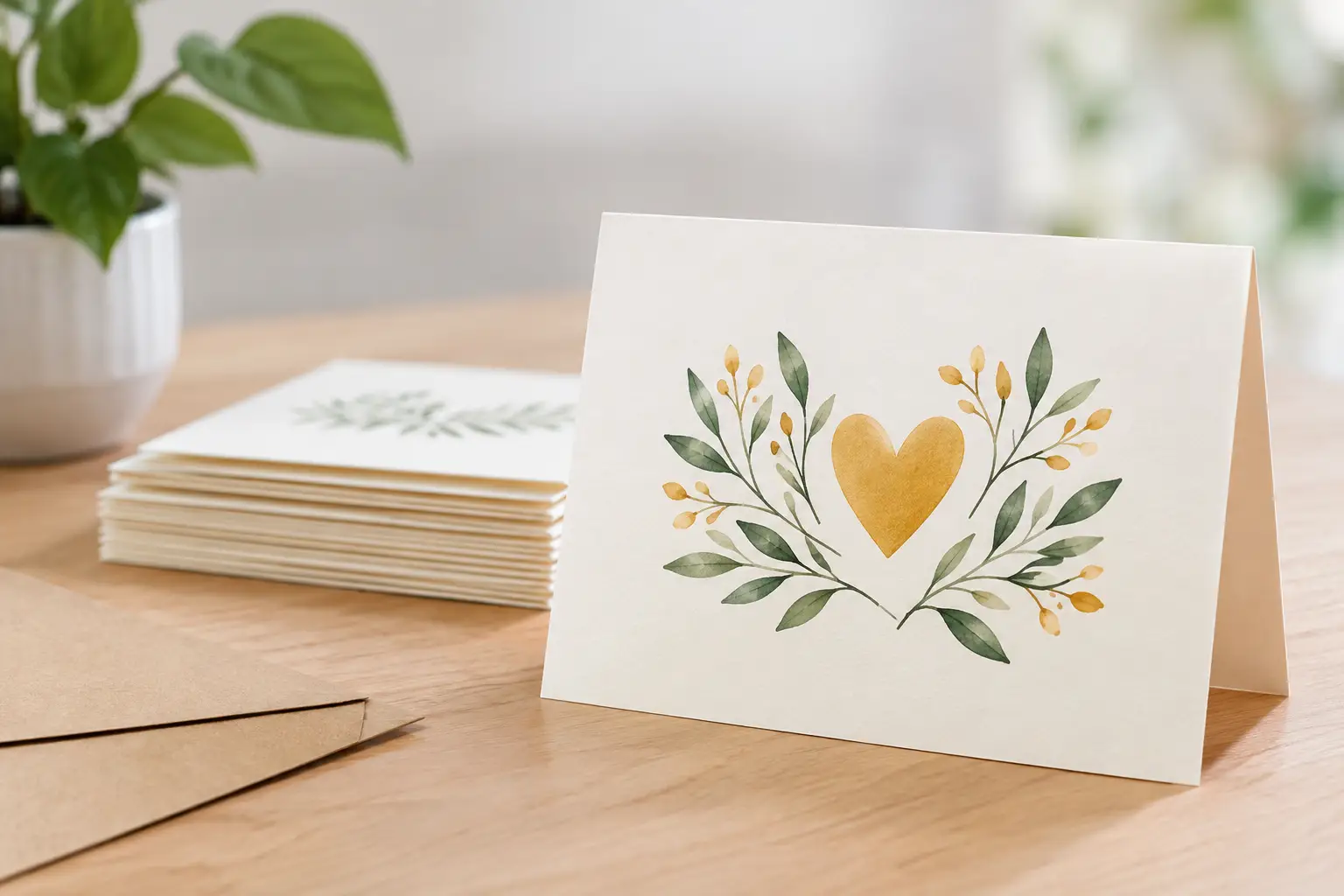
A customer opens an order, sees the product they paid for, and finds a short card with their name, a genuine thank-you, and the business logo. That small addition can make a routine delivery feel considered. Printed thank you cards give retailers, service providers, restaurants, event teams, and corporate buyers a low-cost way to add a professional branded detail where it matters most: after the purchase, meeting, gift, or event.
Unlike a quick email, a physical card stays in the package, on a desk, or pinned to a board. It can reinforce your identity long after the transaction is complete. The key is choosing a card format, stock, finish, and message that suit how your business actually uses it.
Where Printed Thank You Cards Work Best
Thank you cards are not limited to gift shops or handmade products. A local boutique can place one inside every shopping bag. A restaurant can add one to catering orders. A real estate office can send one after a closing, while a salon can include one with a retail product purchase. Corporate administrators may use branded cards for employee recognition, client gifts, holiday packages, and vendor communications.
For e-commerce sellers, the card often does two jobs. It thanks the buyer and provides a gentle next step, such as sharing a review, following a social account, or using a future-purchase offer. Keep that second message restrained. A card crowded with terms, QR codes, discount codes, and product photos stops feeling personal and starts looking like another flyer.
Event organizers can use thank you cards after fundraisers, conferences, weddings, and launch events. In these cases, matching the card to invitations, menus, signage, name badges, or packaging creates a more organized presentation. If your event has several printed components, order them together so colors and brand details remain consistent.
Choose the Right Card Size and Format
The best size depends on the message and where the card will be placed. Standard flat cards are efficient for package inserts and bulk distribution. Folded cards provide more writing space and are a better fit for client gifts, employee milestones, and more formal correspondence.
A 4 x 6 inch card gives room for a logo, a short note, contact details, and a promotional message without feeling cramped. Smaller formats work well inside compact shipping boxes, product bags, and envelopes. If the card will be handwritten, avoid making it too small. Staff need enough blank space to add a name or a meaningful line without covering preprinted artwork.
Portrait and landscape formats are both practical. Landscape cards often fit a logo and short message neatly across the front. Portrait cards can feel more like traditional stationery. For businesses that use a distinctive brand shape or visual style, a custom die-cut card may stand out, but it can increase production cost and may be less convenient to store or mail.
Paper Stock Sets the First Impression
Paper weight and surface affect how a card feels before anyone reads it. For most business thank you cards, a sturdy cover stock is the practical choice. Thin paper can bend in shipping and may look less premium when inserted with a higher-value product.
Uncoated stock is a strong option when you plan to write on cards by hand. It accepts pen ink more easily than coated paper and gives a warm, stationery-like appearance. This makes it suitable for boutiques, salons, bakeries, professional services, and client relationship teams that want every card to include a personal note.
Glossy stock makes colors appear brighter and works well for image-led designs, bold graphics, and product photography. However, glossy surfaces can be difficult to write on cleanly. If handwriting is part of the plan, test your pen before placing a large order.
Matte stock offers a clean, modern look with less shine. It works across many industries and handles detailed text well. Velvet lamination adds a soft-touch surface that can make a simple card feel more substantial. It is especially effective for premium retail, beauty, hospitality, and corporate gifting, although it costs more than standard stock and is usually best reserved for cards with a higher perceived value.
Use Finishes for a Reason
Special finishes should support the design, not compete with the message. Spot UV can highlight a logo, brand pattern, or short phrase with a raised glossy effect over a matte or velvet surface. Embossing creates a tactile logo or border that is noticeable without requiring extra color. Foil effects can work for holiday cards, luxury packaging, awards, and formal client gifting.
These options are useful when the card represents your brand in a high-touch setting. A jewelry retailer, law office, premium food business, or hotel may benefit from a more refined finish. For high-volume package inserts, standard full-color printing on durable stock is usually the smarter buying decision. The card still needs to look good, but the unit cost must make sense for every order shipped.
When comparing finishes, consider handling. Cards placed inside shipping boxes may rub against products or packing materials. A laminate can add protection, while uncoated stock may show marks more easily. If cards will be mailed, use envelopes that protect corners and reduce scuffing.
Write a Message Customers Will Read
A good thank-you message is short, specific, and easy to scan. It should sound like a real business speaking to a real customer, not a generic slogan. Start with appreciation, then add one useful line about the purchase, service, or relationship.
For example: “Thank you for your order. We appreciate your support and hope you enjoy your new items.” A restaurant might say, “Thank you for choosing us for your event. We are grateful to be part of your table.” A B2B supplier can use a more direct message: “Thank you for your continued business. We appreciate the opportunity to support your team.”
Avoid overloading the card with every service you offer. Your website, brochure, menu, or catalog can carry the full sales message. On a thank you card, one call to action is enough. You might invite customers to reorder, leave feedback, tag your business, or contact your team for their next project.
Personalization has value, but it depends on volume. Handwriting a name and signature is practical for a small shop shipping dozens of orders each week. For hundreds or thousands of orders, print a strong standard message and reserve handwritten notes for VIP clients, large orders, repeat buyers, or milestone purchases. This protects your team’s time while keeping the gesture meaningful.
Prepare Print Files Before Ordering
Clean artwork prevents delays and unexpected results. Set your design to the final card size, then include bleed around the edges so background colors and images print cleanly after trimming. Keep text, logos, and important details inside a safe margin away from the cut line.
Use high-resolution images and CMYK color settings for print files. RGB artwork can look different once printed, particularly with bright blues, greens, and neon-style colors. If accurate brand color is essential, use established color values and request a proof where available. Small color differences are more noticeable when a thank you card sits beside branded packaging, stickers, business cards, or product labels.
Check spelling, phone numbers, social handles, and promotional codes before approval. Thank you cards are often ordered in quantity, so a minor error can become an expensive one. Print a small batch first if you are trying a new stock, finish, or design layout.
Order Quantities That Match Your Use
Buying in bulk lowers the cost per card, but only when the design will remain usable. A seasonal promotion, limited-time coupon, staff name, or dated event message should be ordered in smaller quantities. Evergreen cards with your logo and a simple thank-you message are safer for larger runs.
Think about storage too. Cards need a dry, flat area away from direct sunlight and heavy boxes. If you process frequent orders, keep them near your packing station with stickers, tissue paper, branded bags, and other fulfillment materials. That simple setup makes it more likely the card is included consistently.
Seaonce makes it easier to source printed thank you cards alongside business stationery, packaging items, stickers, apparel, and promotional materials, helping businesses keep recurring print purchases in one ordering flow.
A thank you card does not need an elaborate design to do its job. Choose a clear message, reliable stock, and a finish that fits your budget. When it arrives at the right moment and looks like it belongs to your brand, it becomes a practical reason for customers to remember who served them well.